Jean Berret: An independent path
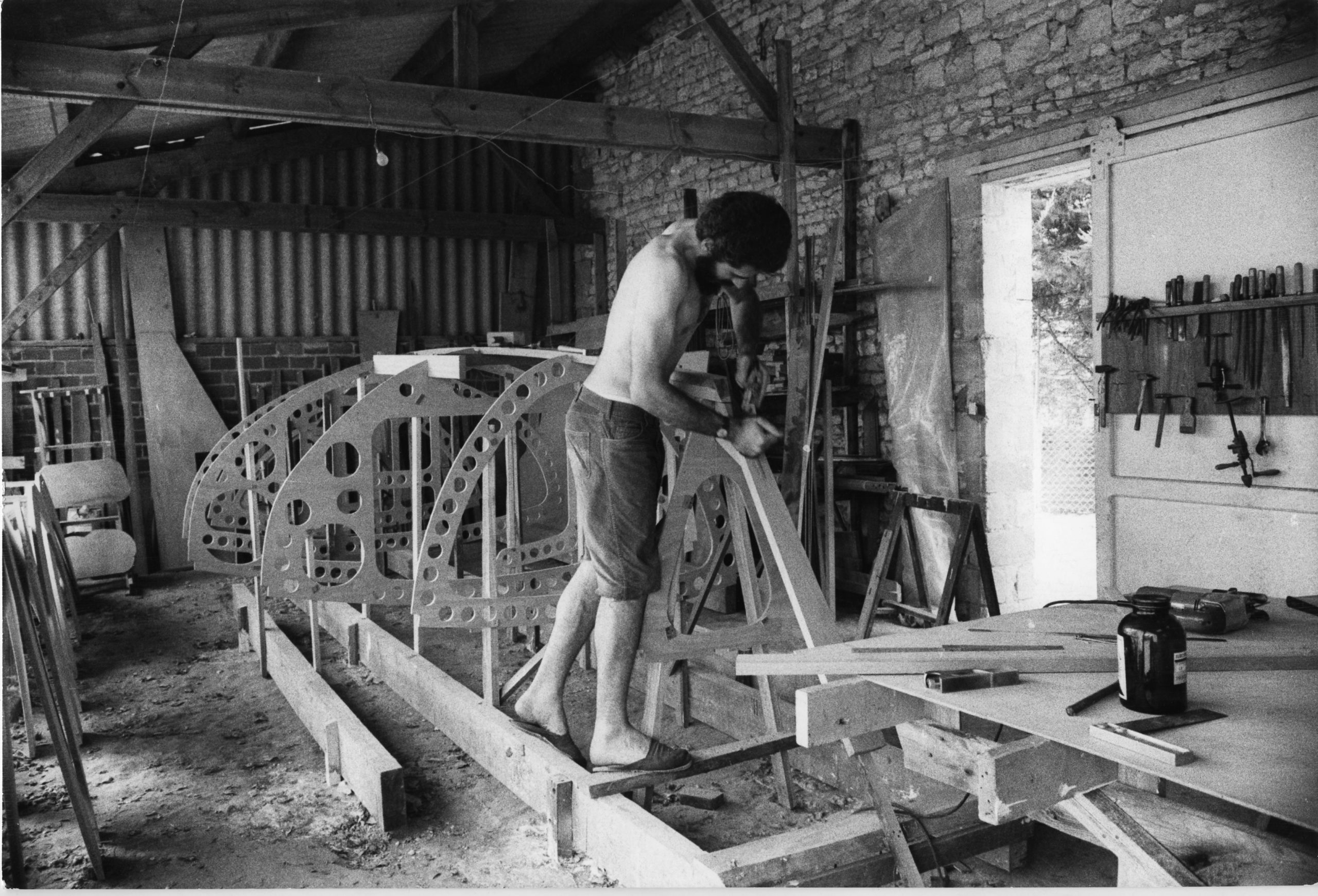
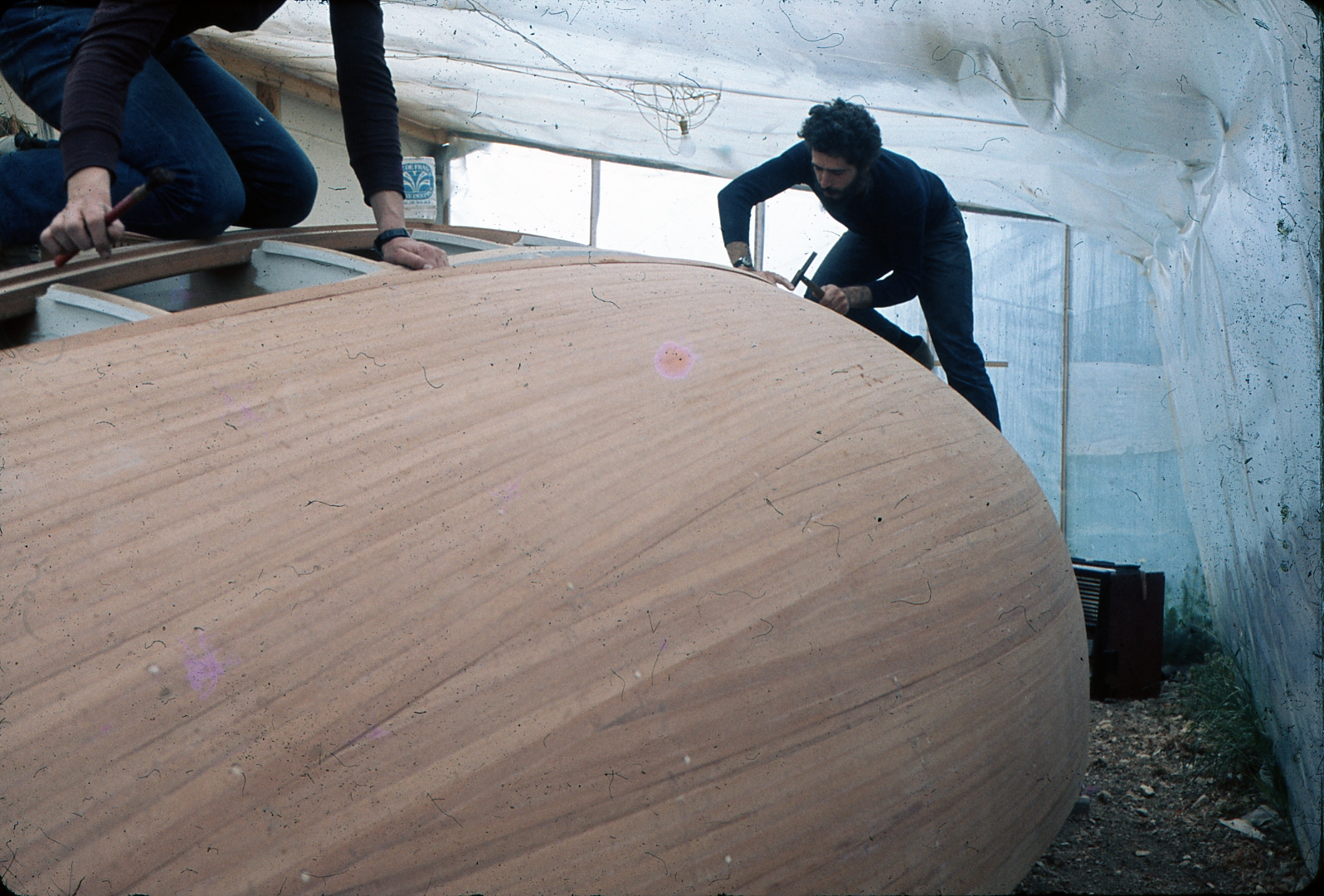
“To make the keel for this boat, we poured molten lead that we had stored in bottles into a mold”. We could listen to him for hours talk about the entirely amateur construction of his first yacht. Because, with him, everything seems simple. He gives the impression of having designed his life just as gracefully, breaking the mold, free from conventions or constraints, except those he created himself.
The naval architect Jean Berret has proven that you can be the architect of your own life. As a child, he drew a locomotive. As a young man, he designed Corail railway carriages. But perhaps the railway line was too rigid for the direction that his life would take. He learned to turn chance into necessity, adding a good touch of daring to spice everything up.
This son of a Parisian architect seemed lost to education. At the start of high school, his results were so bad that he was “redirected” to a technical college. Where he earned a diploma in carpentry. Paradoxically, the woodwork that he loved rekindled his taste for intellectual learning. From then on, everything seemed easy. Skipping grades, entering the École Boulle, and later the École des Arts Décoratifs…
At the same time, his first turns on the water off Fouras, at the far end of La Rochelle Bay, led him to take sailing lessons with his father at the Touring Club de France. And when his father had the brilliant idea to buy a Corsaire, the young Jean already knew as much, if not more than him. Very soon, between regattas, he had complete freedom to spend time out at sea with his friends. An irreplaceable school of both sailing and life.
This giant, over six foot two, would have liked to design small boats. Like the Vaurien, which taught him everything about wind and hull balance, or the famous Corsaire, which gave him a taste for the open sea and a passion for racing. “I really admire Jean-Jacques Herbulot”, he confides. “Just like Philippe Harlé with the Muscadet, he successfully designed boats that were extraordinarily simple. And yet very seaworthy”.
Jean Berret stands tall among architects, not just for his height, but for his boldness and creativity. He is simply too modest to boast about it.
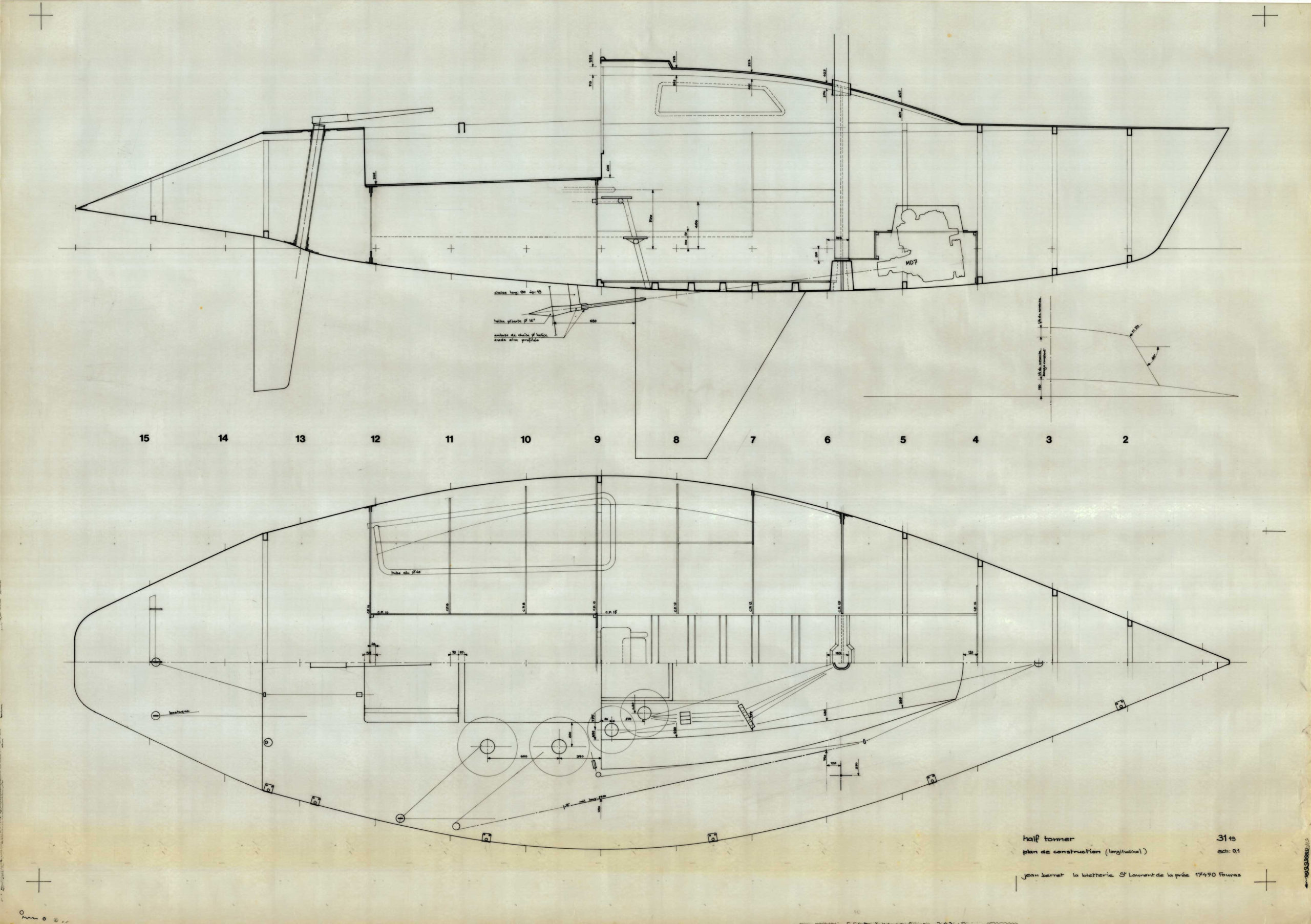
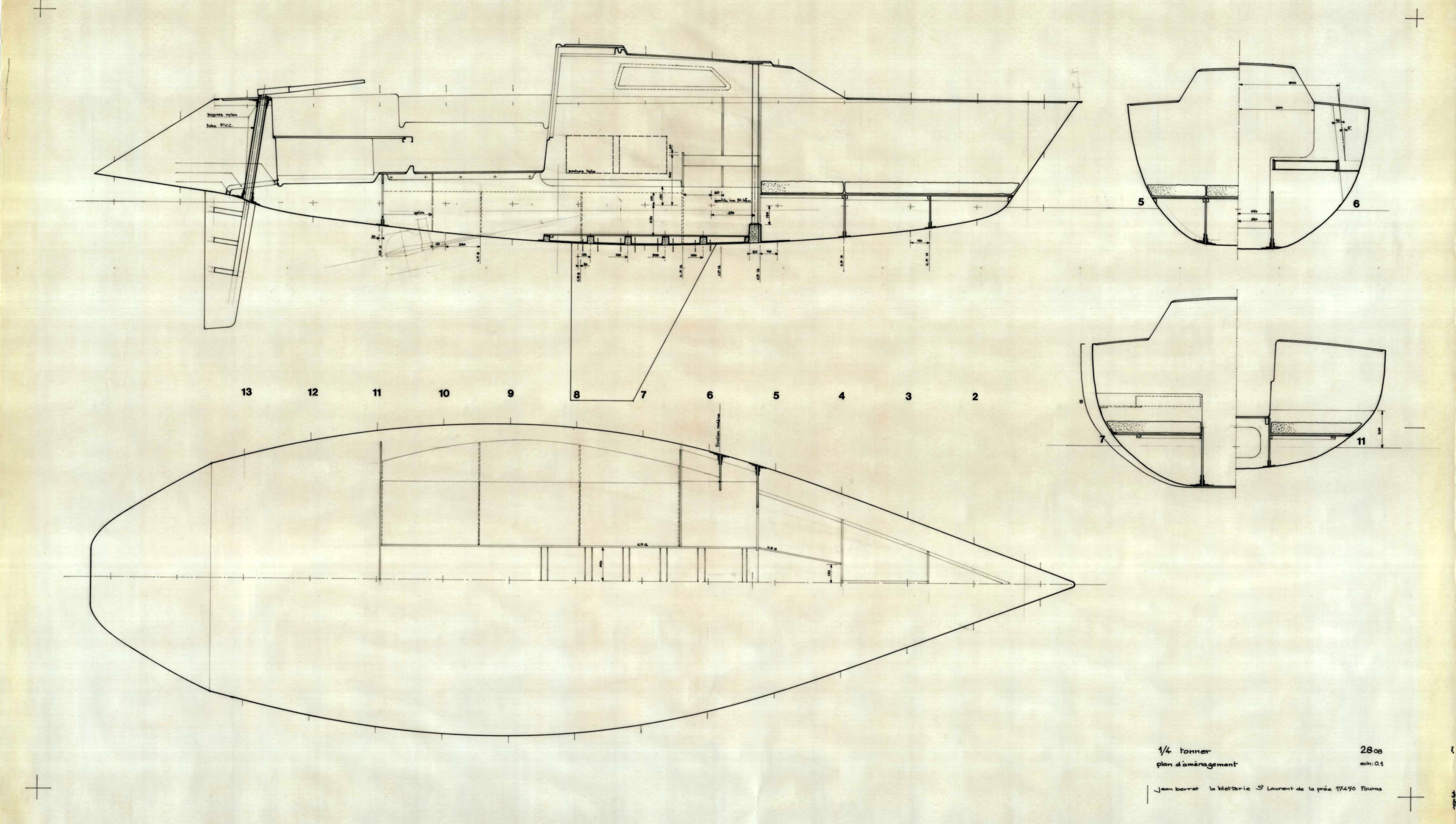
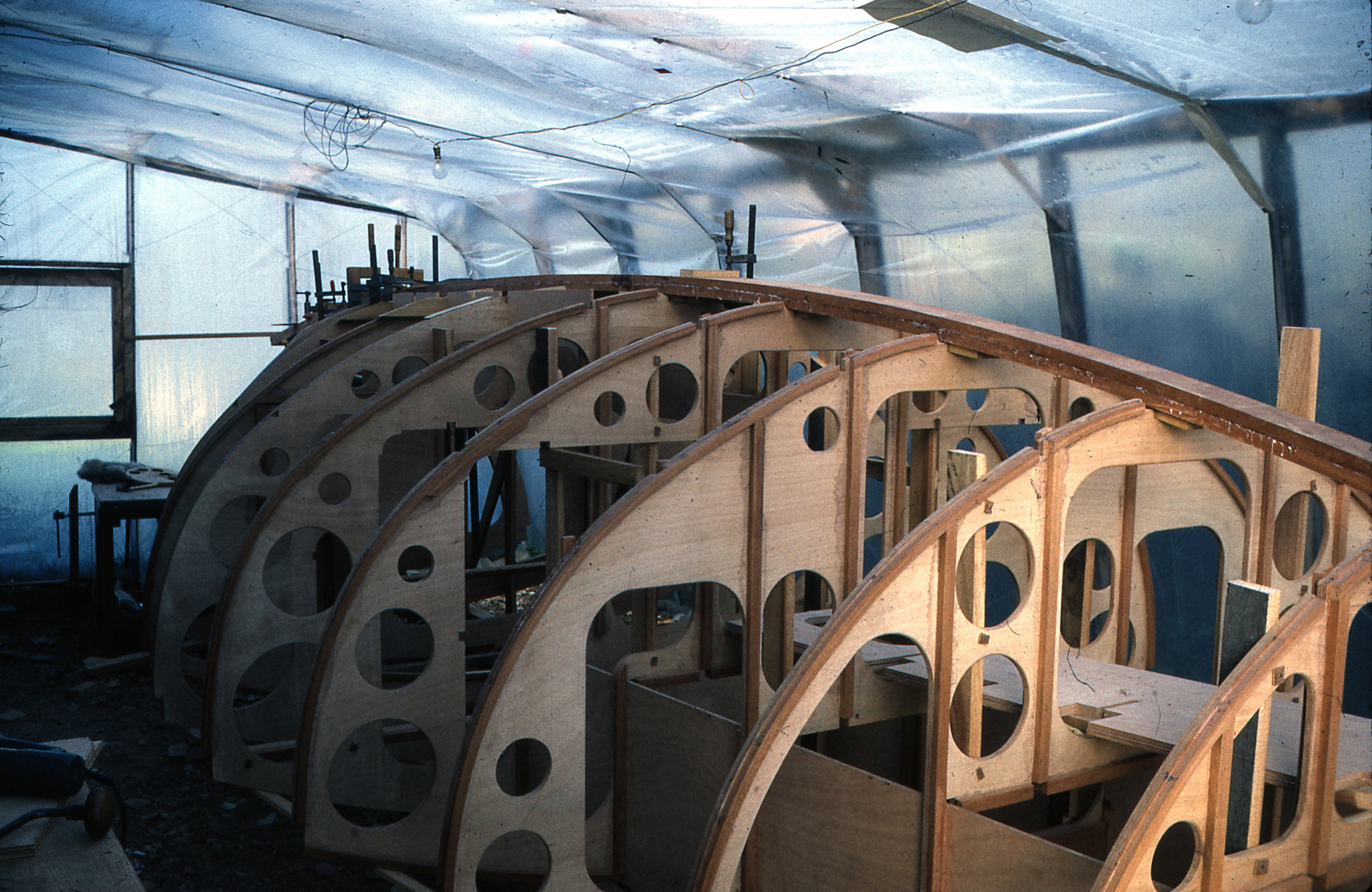
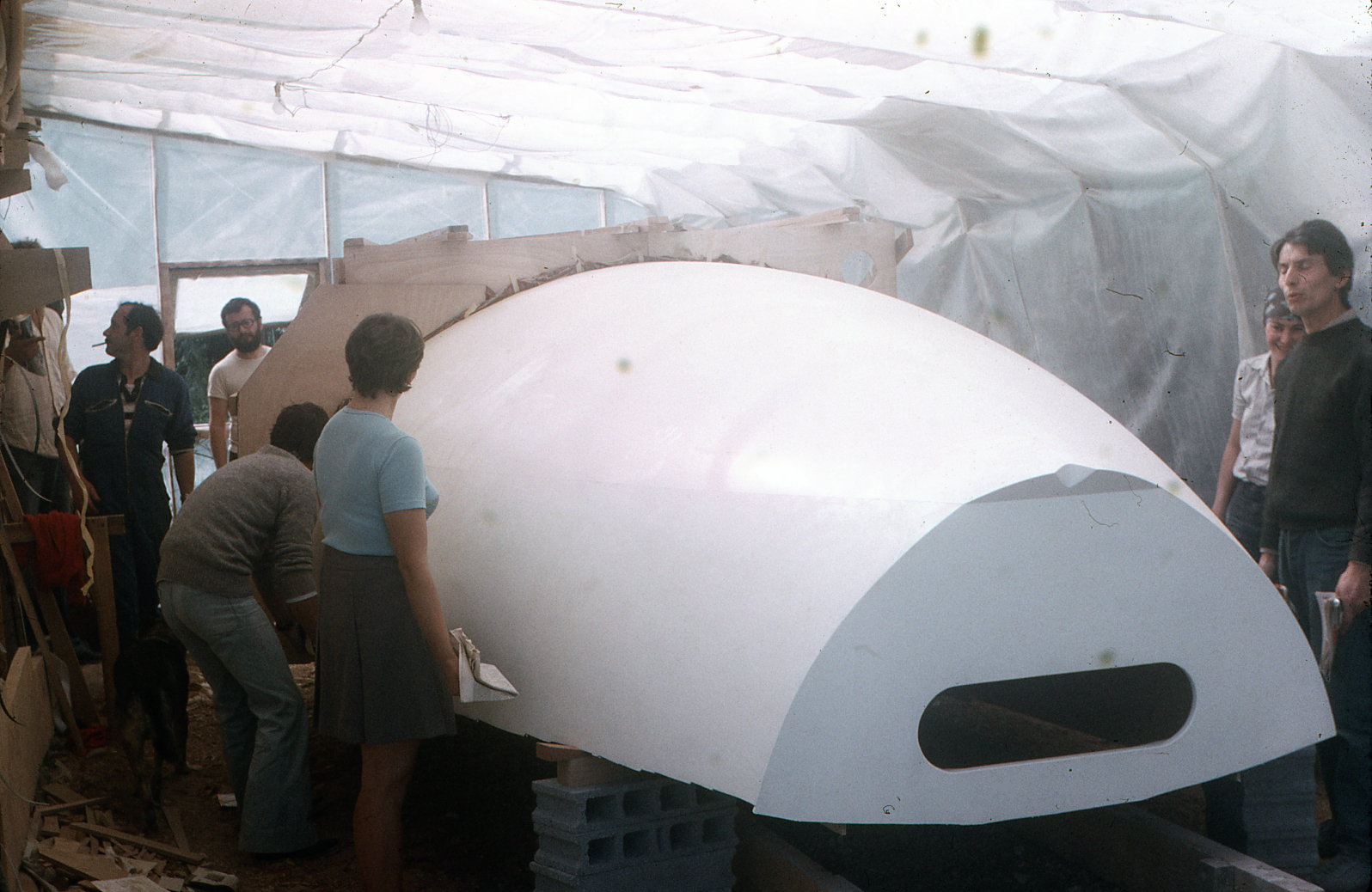
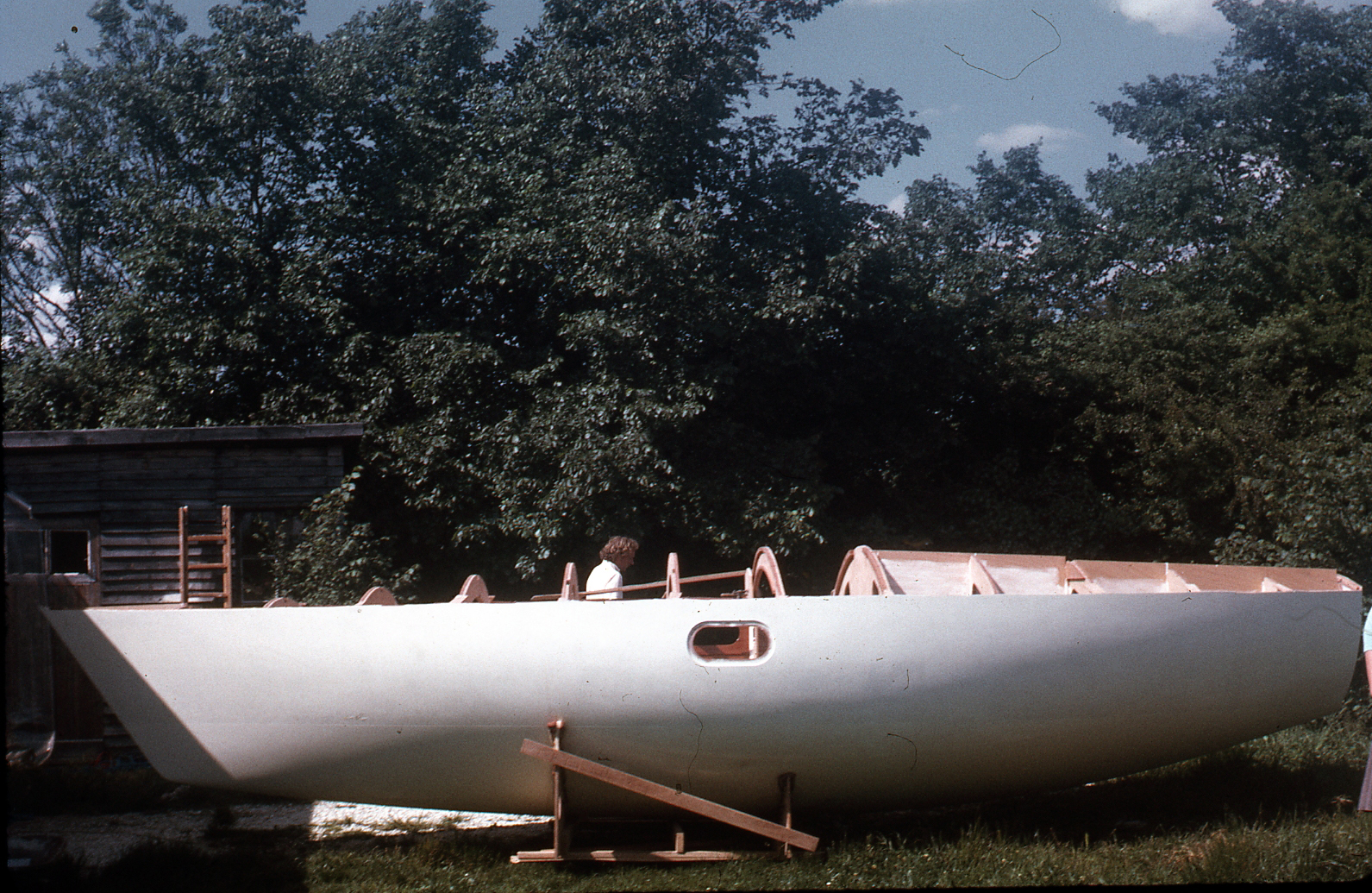
Before wisely devoting his first professional years to industrial design, working on mechanical diggers, weighing scales, hairdryers, ski bindings, and SNCF train carriages, the young enthusiast spent his free time at the Arts Décos to bring his first yacht to life. An 8m unit in molded wood, a material he mastered thanks to his initial training, that took shape under a makeshift shelter in his grandmother’s garden with a few friends who, like him, had broken open their piggy banks. He says that he got the idea from a design competition launched by a boating magazine. Christened Bémol, this boat met the rating requirements for the Quarter Tonner racing class at the time. Barely dry, the boat was launched on the River Seine. The crew of friends sailed her to Le Havre, then Cowes, the Mecca of sailing on the Isle of Wight. He wanted to get started by competing in the legendary Cowes-Dinard race. These young men did not have any doubts at all. “Our result was pitiful, the boat was not ready or broken in, and the technical issues piled up”. But the experience they gained was invaluable.
However, this Bémol was not the turning point. Jean had got married, he and his wife had twins, and he wanted to see them grow up somewhere other than Paris. And Jean wanted to sail more himself. He did not feel fulfilled with his career in industrial design. Naturally bold and daring, he applied for a position with the design team at Quéré Paillard, a yard in La Rochelle. Not only was his application accepted, he was the design team on his own for two years… until the company went bankrupt.
Berret found himself in La Rochelle and unemployed. A shipwreck? Not quite. The French National Assembly had just passed a law granting one year of generous unemployment benefits. The young designer took advantage of this to create another 8 meter yacht. And build it with his group of friends and future crew mates, once again in a garden, and once again in molded wood.
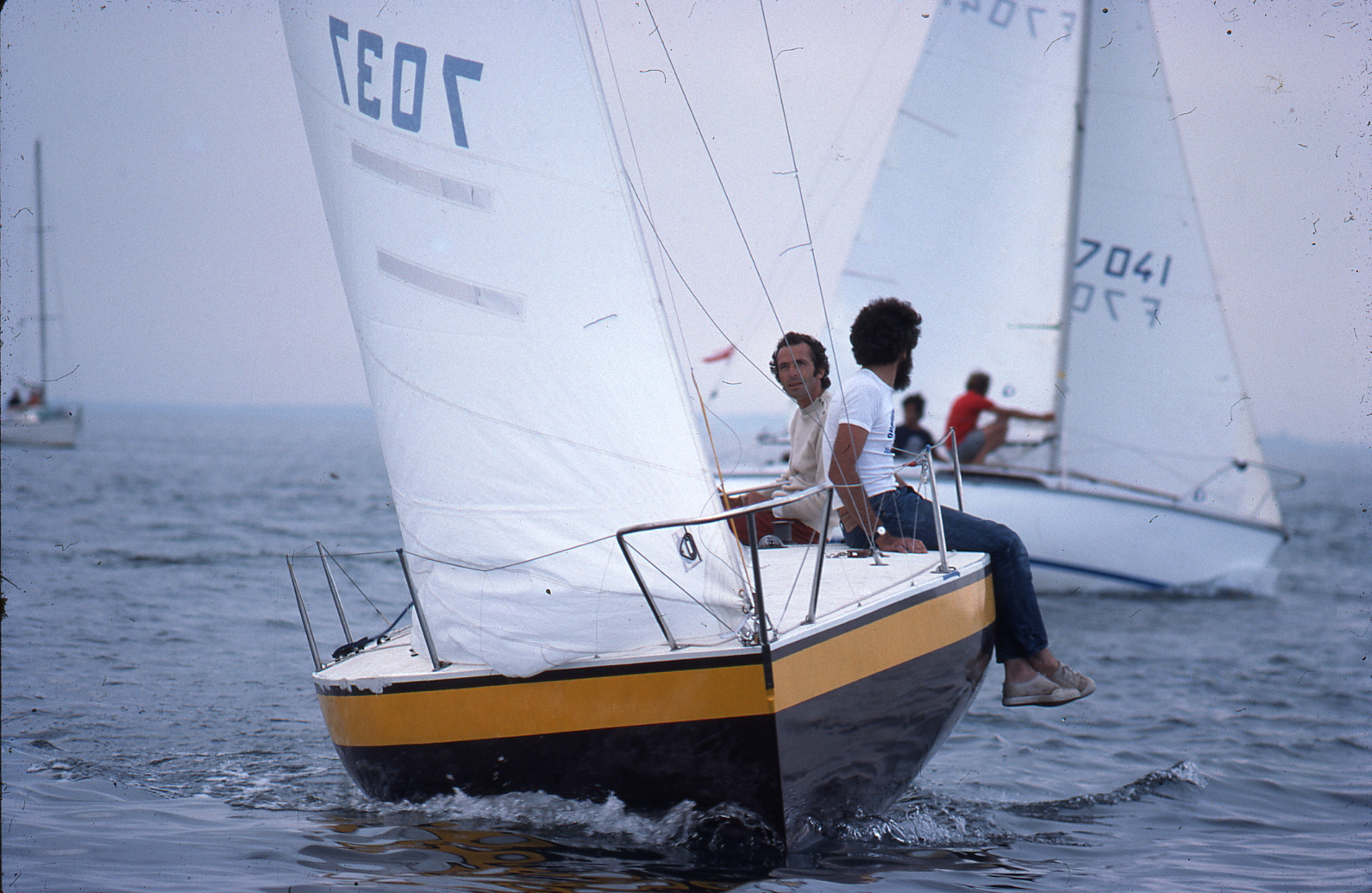
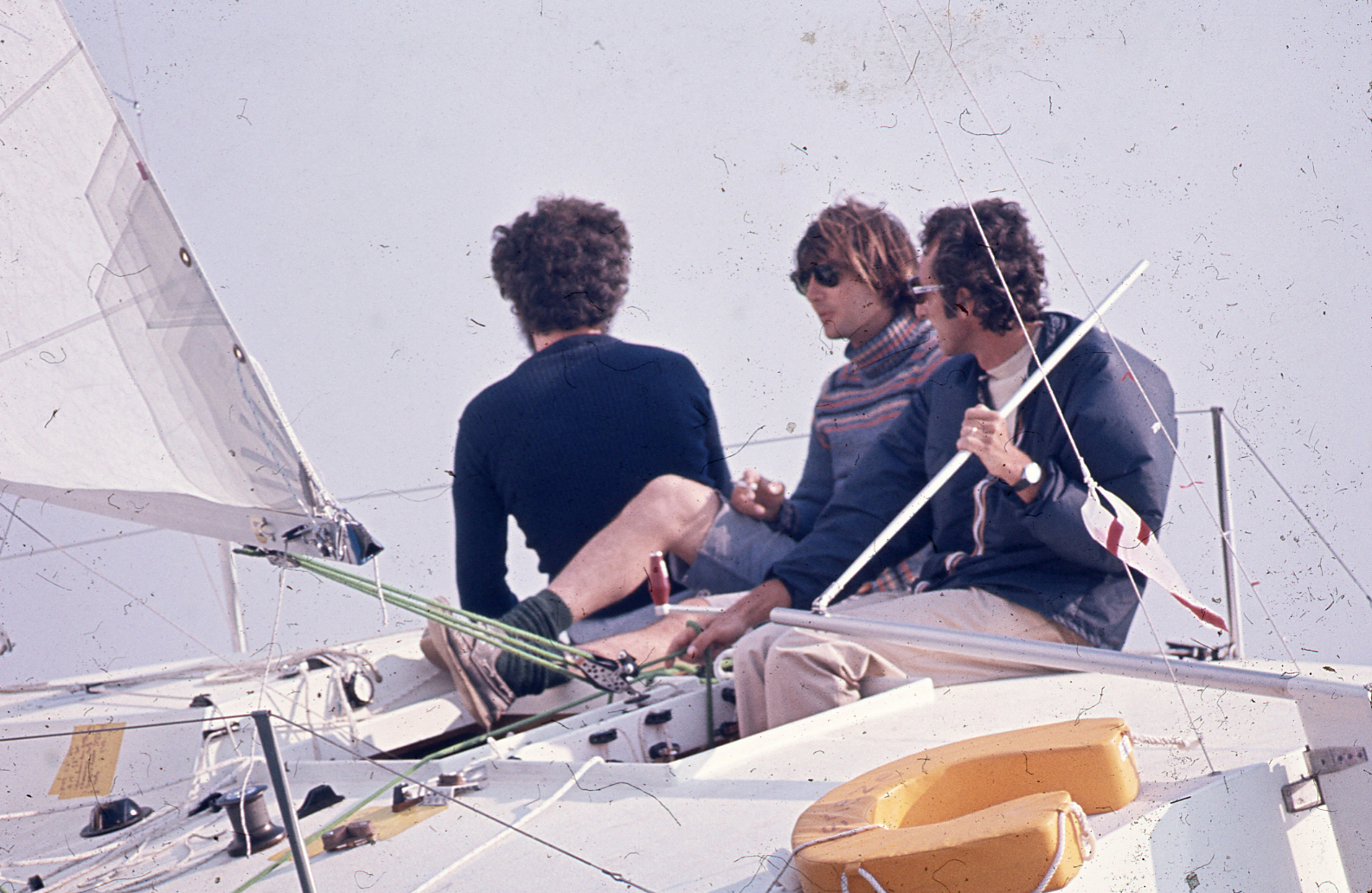
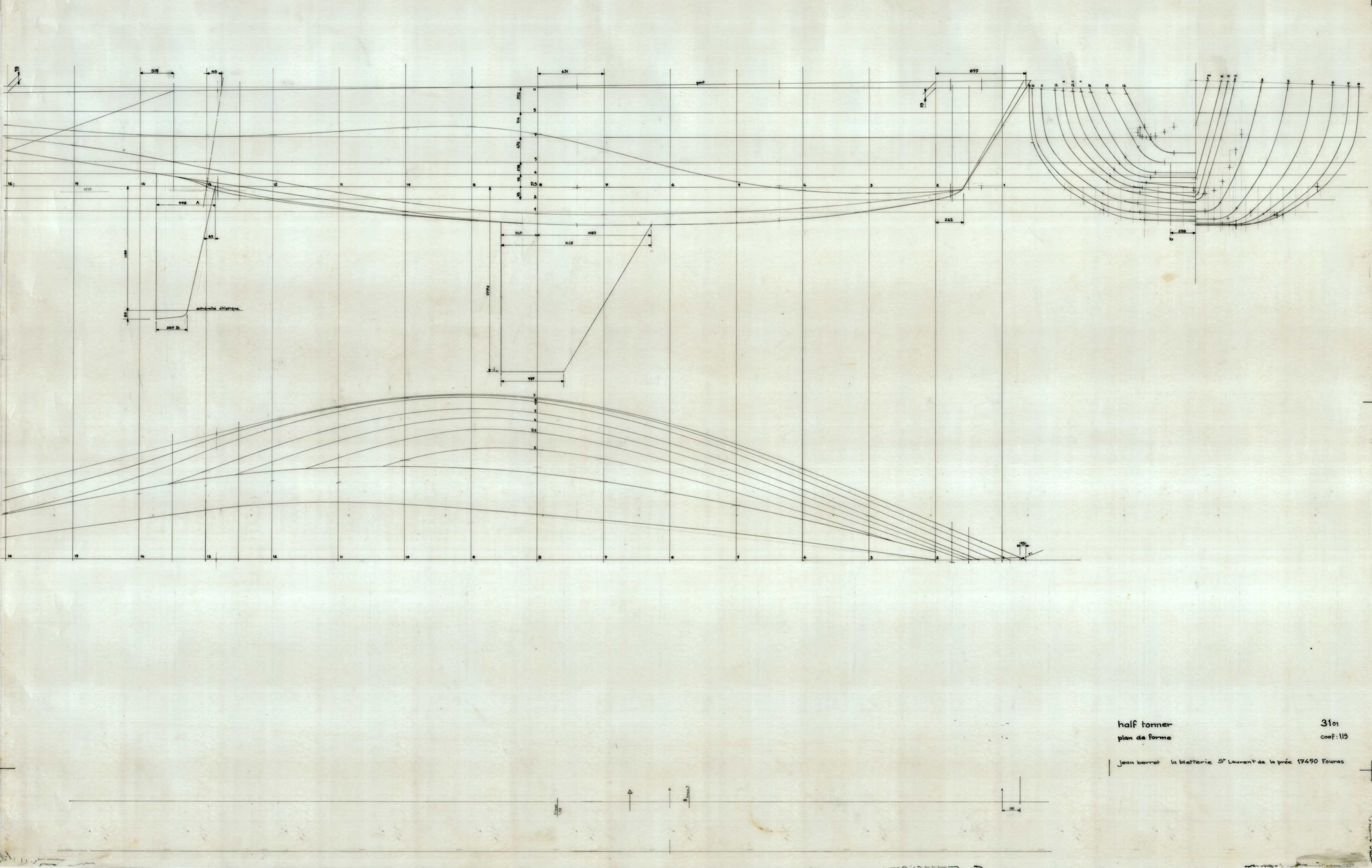
This time, things were getting serious: in 1975, France hosted the Quarter Ton Cup, the world championship for 8m live-aboard sailboats, in Deauville. Benèze, which means “comfortable” in the Charente dialect, a pure racing prototype, tailored to the IOR rating rules, which its designer had studied with relentless dedication, was ready to take on the world’s best racing cruisers. Long, relatively wide, and light, it dared to go against the prevailing trends favored by Europe’s leading architects at the time. Driven overland to the event, this little boat had never sailed before taking part in its first regatta. And while it did not win, it finished as the first-placed French boat and made a lasting impression. “It was in Deauville that I sold my first plan with the Berret signature”, recalls the artist.
A new horizon was opening up. And from then on, everything followed quickly. Within the La Rochelle racing scene, Berret’s designs turned heads. When the 3/4 Ton Cup was held off the towers of La Rochelle, a design from the young prodigy, humorously named Œsophage Boogie, crushed the competition, winning three races in a row. Unfortunately! At the time, there was no GPS, and a navigational error in the main race cost him the overall victory.
But not his reputation. This was the second turning point in the career of the young naval architect, who was now an established name.
François Chalain, head of products at Bénéteau, which was rapidly moving into the sailing cruiser market, commissioned him to develop an evolution of the exceptional Œsophage Boogie. This led to the launch of the First 35, which went on to sell hundreds of units and was the first in a line of magnificent production yachts designed by Berret. With the income from these successful industrially built designs, Berret continued to create outstanding prototypes. Later, he hired Olivier Racoupeau, a young sailor with an aeronautical background, who helped guide the firm’s transition to embrace IT capabilities. In 1994, he partnered with the young engineer within a structure that became one of France’s leading naval architecture firms.
Still as passionate about wood as ever, illustrated by his workshop in the basement of his house in La Rochelle, Jean Berret keeps a close eye on the evolution of sailing, hulls and foils. He may not have designed the Corsaire, but he carried its legacy forward with remarkable skill.
Olivier Péretié