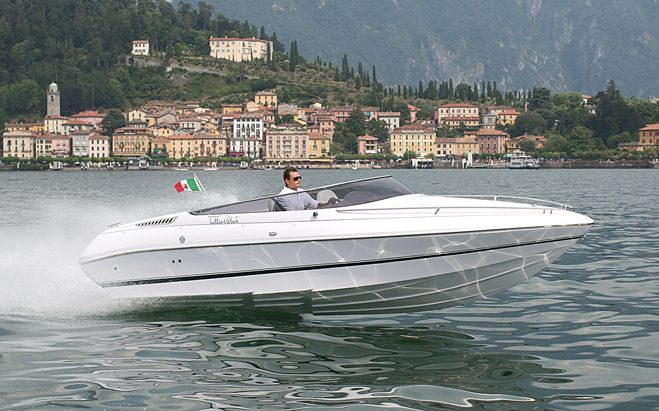
From racing to recreational boating, the Abbate dynasty
Their first names alone might call to mind the cast of some small show-business troupe, rather like the Marx Brothers. But Guido, Tullio, Carlo “Chicco” and Bruno, though jovial, lively and full of humor, were never less than serious when it came to their individual talents, and even their genius for boat design.
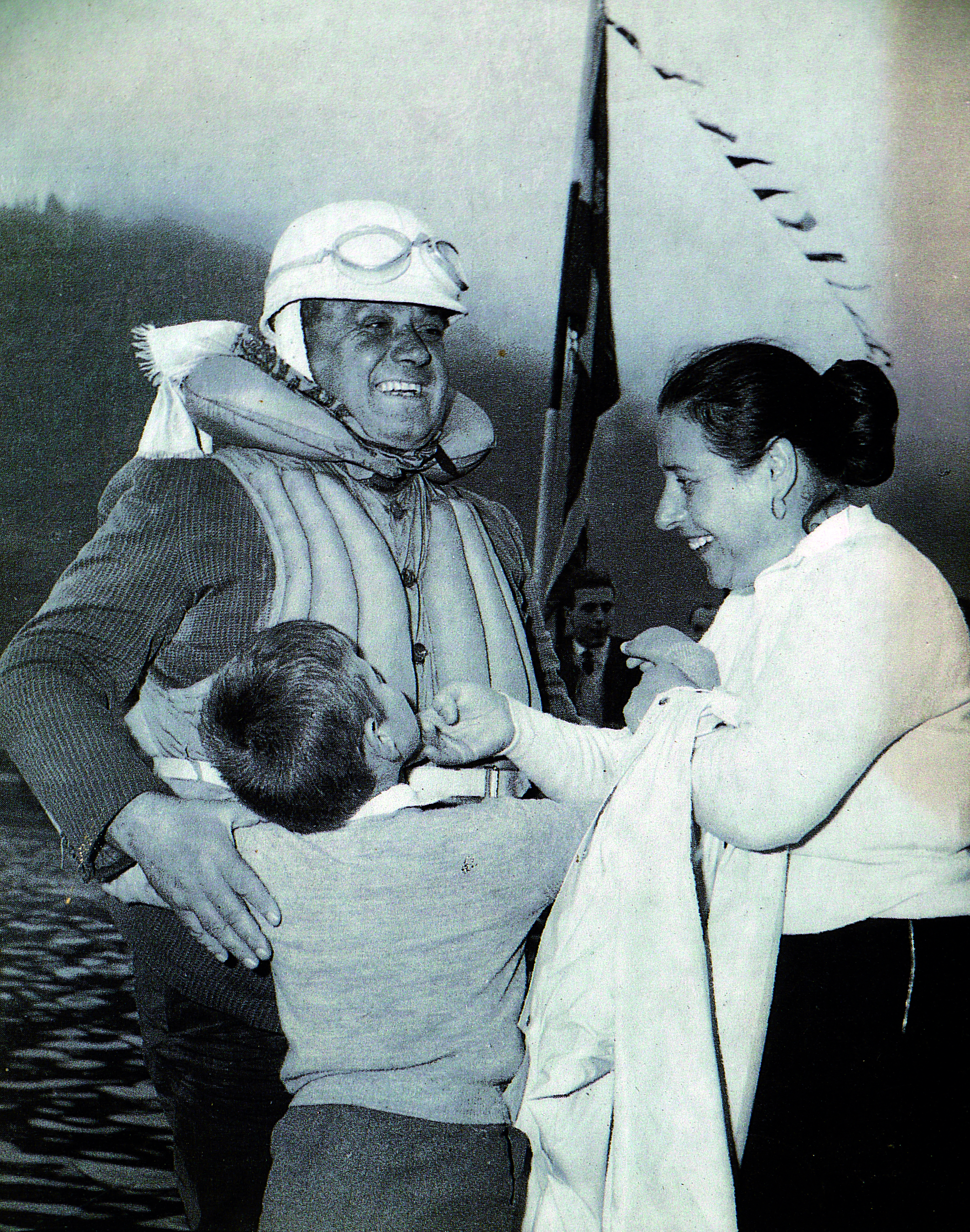
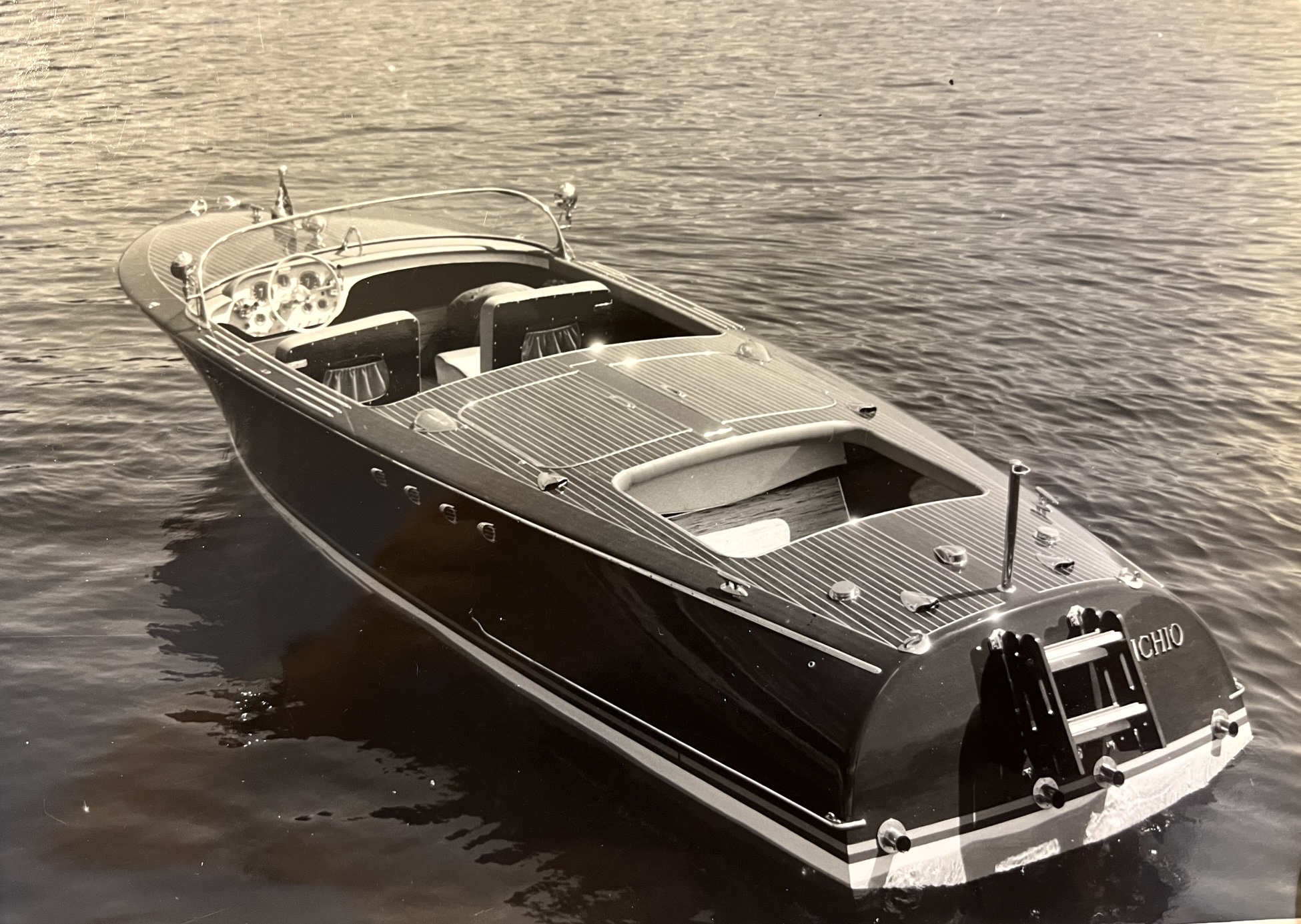
Originally from Lake Como, like the Molinari family (see March 2026 Spotlight), Giuseppe Abbate began building working boats in 1873, later assisted by his three sons. From their romantic shoreline, graced by some of the region’s most elegant historic villas, residents of the lake’s western shore were accustomed to seeing all kinds of craft pass by, built in local yards. But these sightings became much more frequent from 1946 onward, when Guido, one of Giuseppe Abbate’s sons, established his own yard to build innovative racing craft, beginning with a pioneering prototype fitted with a surface-piercing propeller, developed with the engineer Giulio Alfieri, the future charismatic head of Maserati. Always ahead of his time, Guido Abbate will also go on to design the first Italian three-point racers from 1949, including two for champions Ezio Selva and Oscar Scarpa, and another for the French driver Louis Delacour. Their success quickly establishes the small yard at the very highest level. In February 1953, the racer Laura, driven by Mario Verga, sets a world speed record at more than 226 km/h. And it is powered, no less, by the same Alfa Romeo factory engine as Juan Manuel Fangio’s Formula 1 single-seater, in which he became world champion in 1951. An excellent driver himself, Guido Abbate also has an unerring instinct for determining, through empirical testing, the most effective hull forms, building boats for the leading champions of his day. Guido also sets records of his own at the helm of the powerful touring runabouts he builds for wealthy clients, many from Milan, who vacation in the magnificent properties around the lake. In 1958, at the controls of a production Abbate powered by two prestigious Cadillac V8s, he sets a world record in its category at over 115 km/h, a truly exceptional performance for the time. This achievement firmly establishes the Abbate name among the most highly prized in Italy and several other European countries, including France, where the company’s exclusive importer during the 1960s is based in Golfe-Juan. Its catalogue expands to include a regular range of four to six models, offered in different lengths and with a variety of made-to-order finishes that can comfortably hold their own against the celebrated Rivas.
Production of the classic varnished-wood Abbates peaks toward the end of the 1960s, just as most of the traditional small yards in Europe and the United States are confronted by the unstoppable rise of fiberglass construction. Guido’s three sons, with youth on their side, have no doubt whatsoever about the urgent need to move away from mahogany, but the patriarch flatly refuses to consider it, leaving no room for discussion. It is therefore not until Guido retires in the early 1970s that his successors are able, each in his own way, to make the Abbate name shine once again. Yet the three brothers will always retain a boundless admiration for their father’s achievements. The eldest, Tullio, born in 1944, seemed naturally destined to take over the original family yard. Recalling his childhood, he later described how he never missed an opportunity to slip into Guido’s workshops and watch his hero at work amid the mingled scents of wood, glue and gasoline: “My father created Stradivarius masterpieces in mahogany, with around 15 a year at the very most. He was the genius in the family”, he will later say. Carlo “Chicco”, born in 1945, a year after Tullio, was naturally more reserved and remained closely involved in the boatbuilding ventures that his brothers went on to develop, always mindful of the legacy of the previous generation. “With Papa Guido, we were used to working from Monday through Sunday, and as for holidays, we were allowed Christmas Day, when everything was going well. Among other things, he passed on to us this energy and this passion for a job well done”. Bruno, the youngest, born in 1951, founded his own boat brand in 1978 and, in turn, was never short of praise: “My father was one of the great pioneers of modern powerboating”.
Making way for the younger generation
Once Guido retired, the Abbate brothers threw themselves into the world of powerboating, with Tullio, the eldest, gaining an early lead by taking over his father’s original yard in Tremezzo, on the shores of Lake Como, in 1975. We will come back to him a little later.
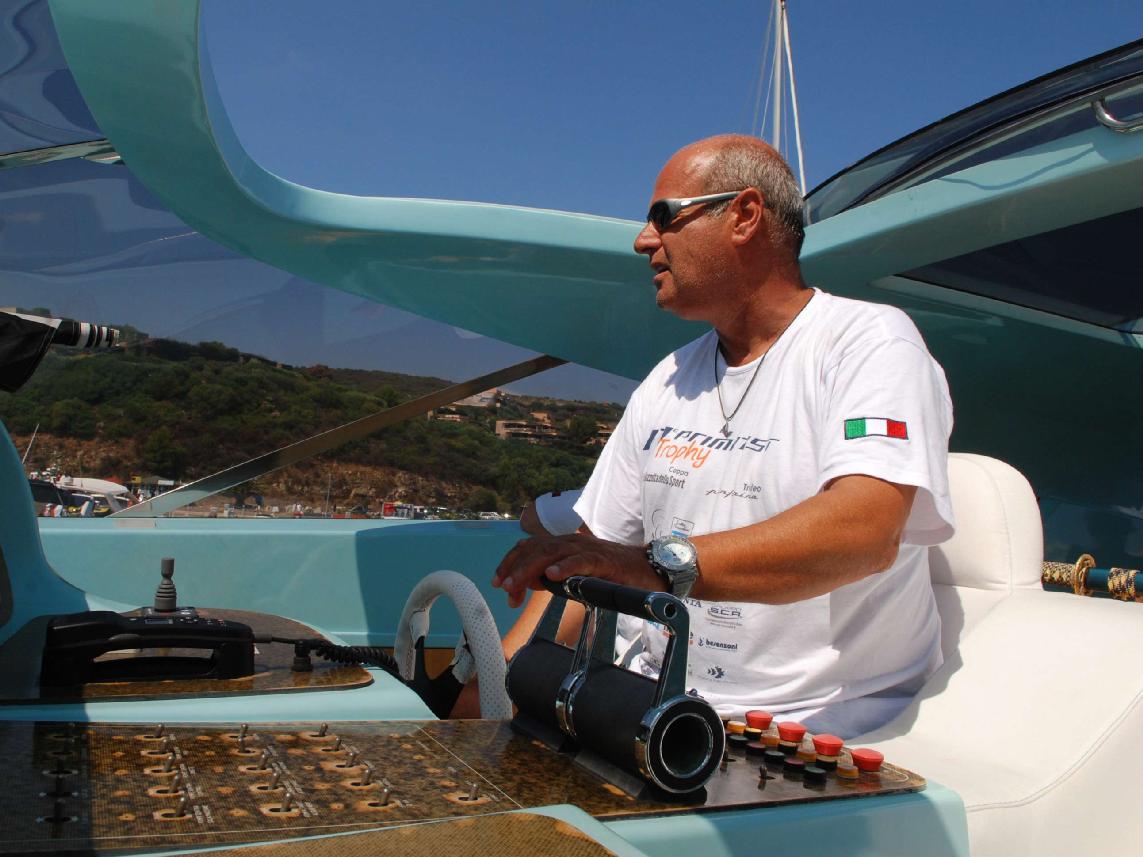
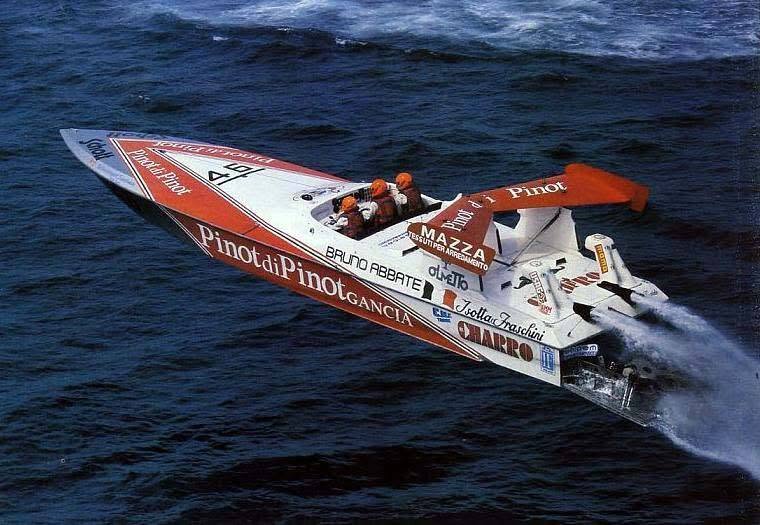
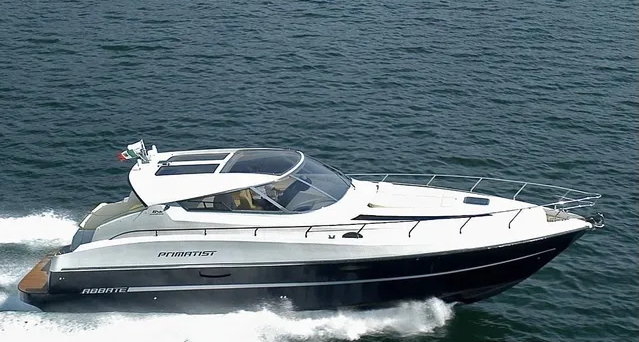
A few years later, Bruno, the youngest, established himself some 10km away, at a higher elevation on the plateau leading from Italy to Switzerland, towards Porlezza and Lake Lugano. There, he developed a modern yard under his own name, as well as under the “Primatist” brand, producing fast luxury liveaboards alongside racing hulls. At the height of the company’s activity in the 1980s and 1990s, hundreds of boats featuring the “Bruno Abbate” name made their way down from the mountains to lakes and seas in many different countries around the world. The Primatist 23′ model alone sold more than 750 units, while racing gave the company an enviable media and advertising presence, particularly after a Primatist offshore won the Class 1 European Championship in 1987. Bruno Abbate’s list of achievements continued to grow, year after year, culminating in 1996 with a flying-kilometer world record of over 216 km/h, powered by a Maserati engine. A year earlier, the yard had launched a range known simply as G., with 25, 29 and 33 foot models. This G. stood for “Guidino”, one of Bruno’s sons and a grandson of the founder, named after his grandfather in keeping with the family tradition. Later, together with his other son Marco, an architect and designer, Bruno forged a relationship with Sergio Pininfarina, leading to a collaboration with the renowned Turin design firm on a number of larger yacht projects. It was also within his factory complex that Bruno Abbate began developing the Guido Abbate Museum in 1991, bringing together an important collection of historic racing boats.
The eldest takes the lead
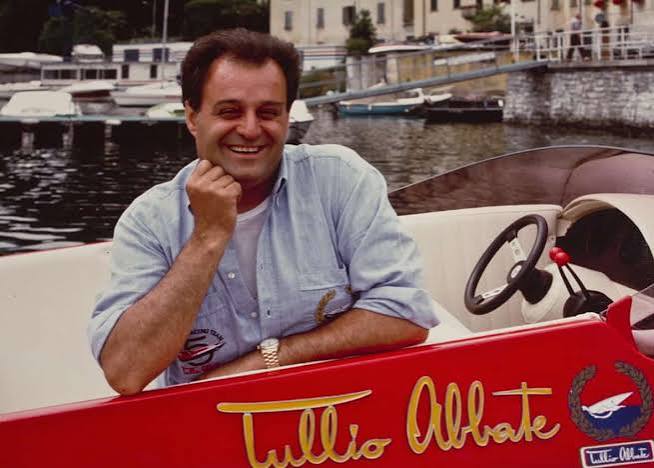
Following Guido’s retirement in 1975, Tullio succeeded him at the head of the original family firm and went on to expand it considerably. What followed is well documented in the history of international powerboating, with a series of victories – more than 250 in total – and records, the last of them set in 1997 at Campione d’Italia, with an average speed of over 223 km/h. And when Tullio himself was not at the controls, his signature, now a celebrated brand in its own right, appeared on the flanks of a vast range of thoroughbred performance boats, including one that would be revealed to millions of moviegoers on the big screen in 1983. The scene takes place somewhere in the Mediterranean, off the French coast. An offshore powerboat races across a calm sea in fine weather, closely followed by a helicopter flying in its wake. A powerfully built man stands outside the helicopter on its right skid as it sweeps in just above the water. On the boat, the “Tullio Abbate” signature can be seen within a laurel wreath, with the name “Mister Nicolas” emblazoned in large letters along the hull sides. The man leaps onto the sun deck and boards the boat, gun in hand. Jean-Paul Belmondo has just performed one of his trademark stunts in Le Marginal. The boat featured in this memorable scene is called Mister Nicolas. This Abbate Offshore 36′ had been loaned to the production team by none other than Formula 1 World Champion Alain Prost, who had commissioned it specially to celebrate the birth of his son Nicolas. If one were to attempt a portrait of Tullio, almost everything is there in those few minutes of striking footage: speed, racing, risk, razor-sharp performance boats, jet-set celebrities, a clientele of loyal friends and discerning connoisseurs, and, not least, the constant presence of Formula 1’s elite, united in their admiration for his talent. The list of champions who signed the Tremezzo guest book after hurtling across the lake at full throttle seems endless: Niki Lauda, Jacky Ickx, Gilles Villeneuve, Didier Pironi, Nelson Piquet and Keke Rosberg, among many others. Ayrton Senna even gave his name to a special version of the Mito 42′. With his irrepressible charm and customary humor, Tullio liked to joke about his own powers of seduction, and those of his “Ferraris of the sea”: “With the sound of my boats, I cast a spell on Herbert von Karajan, Madonna and Diego Maradona alike!”
For pleasure
Despite his strong character and natural authority, Tullio genuinely enjoyed the company of others, and not only celebrities. Never jaded or aloof, and with a fondness for all things French, Tullio would readily travel to Monaco or the Côte d’Azur to attend to a customer’s boat himself. He knew he could count on his trusted local representative, Maurice Marth, based in Grimaud in the Var, one of those invaluable experts working behind the scenes without whom speed enthusiasts would find themselves badly stranded when mechanical problems arose, especially at the weekend: “Tullio was incredibly available, always ready to solve a problem and find the right solution. An Abbate is a boat built for pure pleasure, and above all, Tullio loved bringing pleasure to others”.
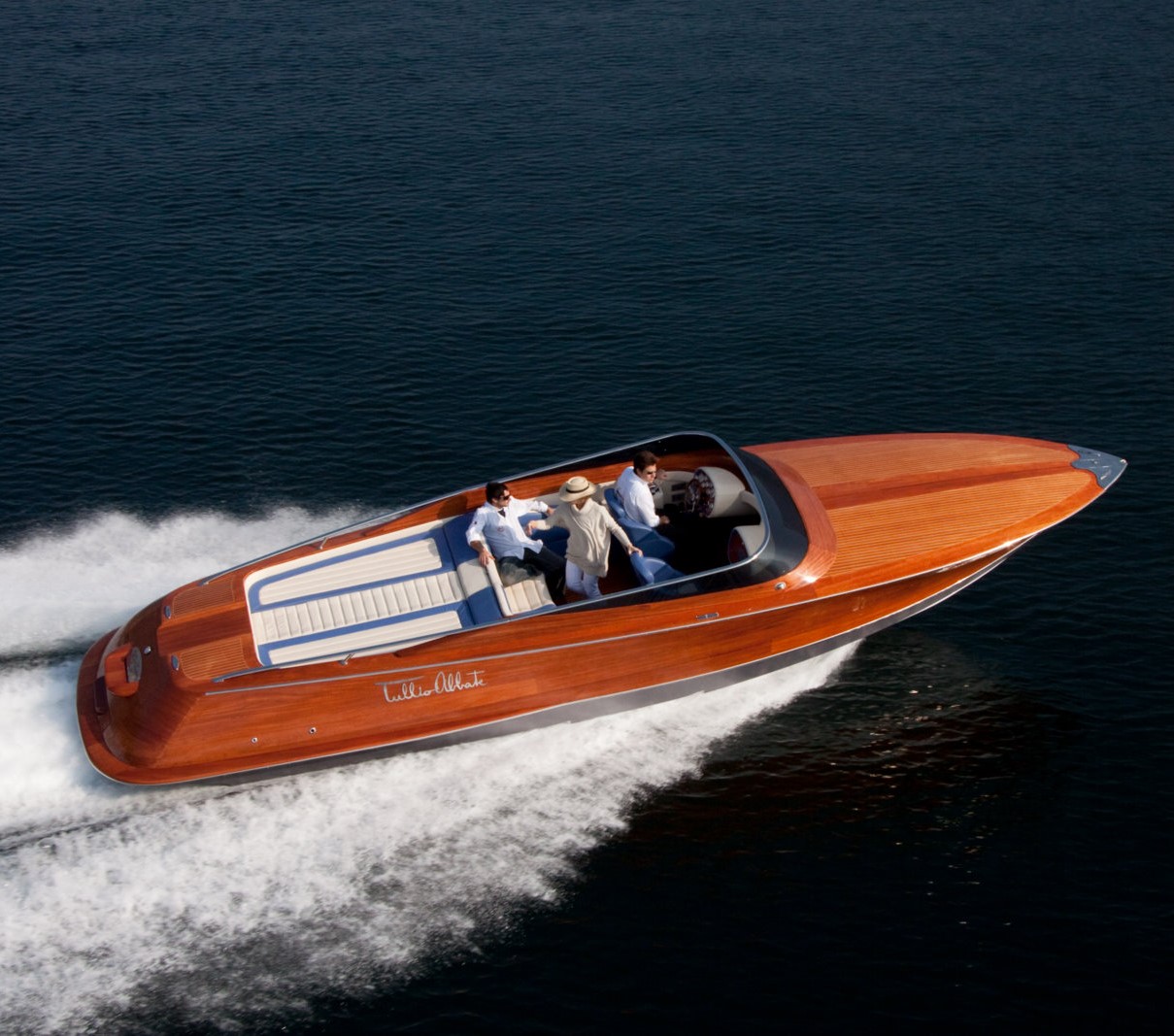
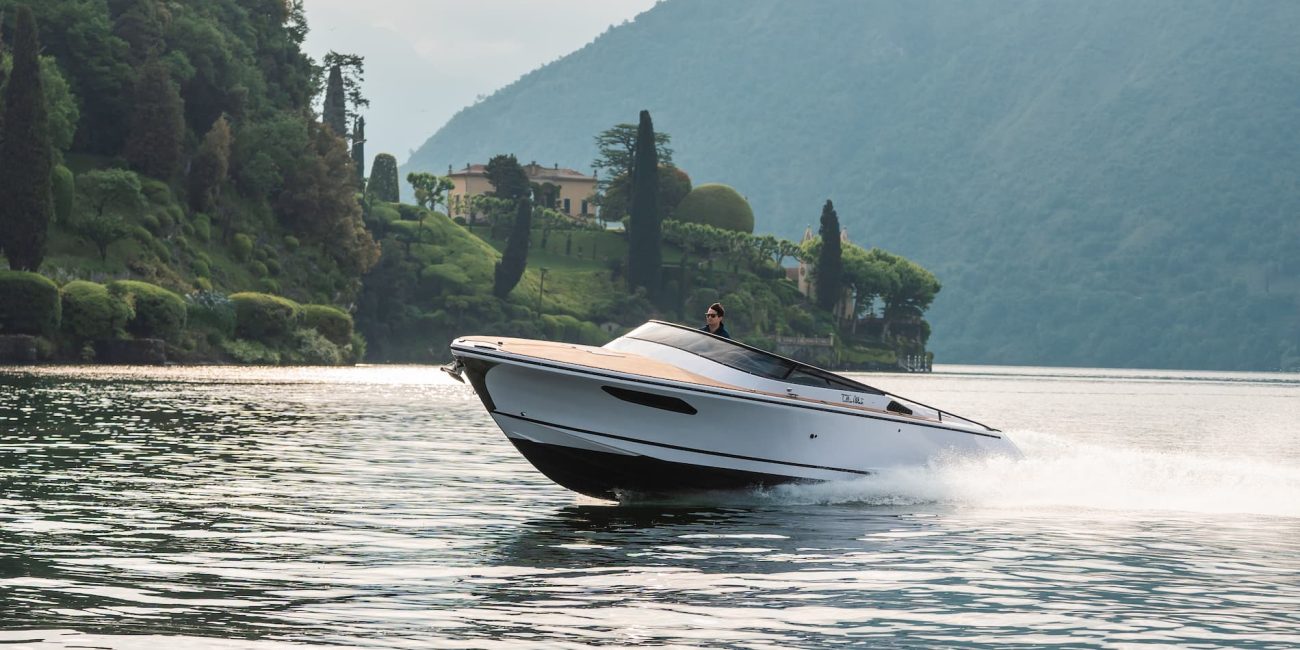
And pleasure was something the eldest of the Abbate brothers brought to countless enthusiasts through his “Sea Star” series, produced in several thousand examples and numerous versions over some 30 years, like a kind of timeless Porsche 911 of the boating world. His yard also collaborated with the great automotive designer Giugiaro, created a series of grand-touring offshore boats, and later launched the Mito range of the 1990s and 2000s, from 33 to 45 feet. As a tribute to his father Guido, Tullio also set out to create a new Villa d’Este – the 32 foot Special – before his death in 2020. This luxury model evoked the golden age of mahogany runabouts, with its jewel-like shell of varnished wood concealing the latest technical solutions.
The final word belongs to today’s younger generation, eight decades after Guido established the first Abbate recreational boatyard in 1946. His grandson Tullio Jr., who took up the mantle following his father’s death, has also paid tribute to the memory of his uncle Carlo, known as Chicco, Guido’s second son, who played his own part in building the Abbate family enterprise without ever seeking the media spotlight. “He truly was the wise man of the dynasty, unlike my father and my uncle Bruno, who were forever drawn to the lure of competition. With his calm nature and genial manner, he perfectly embodied, in our eyes, the image of the family man”, Tullio Jr. said at the 2025 funeral of this beloved, if less widely known, member of the family. Indeed, after also trying his hand at racing in the 1960s, Chicco quickly realized that his place lay somewhere other than at the controls of a racing boat, unlike his brothers, and unlike the generation that followed, represented by Tullio Junior, endurance world champion and winner of one of the final Rouen 24 Hours events. Dividing his time between racing podiums and running the yard, he embodies the distinctly Italian continuity of this family saga, as illustrated by the launch of his new Miss Villa d’Este, a reimagined classic whose story began with Guido in the 1950s and continued with his father, Tullio.
Key dates for the members of this boatbuilding dynasty:
– Guido Abbate: 1913-1988
– Tullio Abbate: 1944-2020
– Carlo “Chicco” Abbate: 1945-2025
– Bruno Abbate: 1951-2008