40 years of Oceanis, Daring to innovate
Oceanis is 40 years old. Its creation had nothing to do with the brainstorming sessions of a marketing agency. The launch of this new range within the Bénéteau Group owed as much to intuition as to logical analysis. Oceanis reflects an understanding of changing expectations among those drawn to the open sea, the wind, and sailing. In doing so, Oceanis marks a genuine paradigm shift. The brand embodies a radically new approach to designing and building cruising sailboats, while the products themselves, in turn, influence perceptions, approaches and practices.
From the 1960s to the early 1980s, the French sailing revolution follows a clearly charted course: every new model must outperform its predecessor of the same length. And there is only one true test of this increase in speed: racing. In the 1970s, liveaboard sailing cruisers compete against one another, are compared, and are ultimately judged on the racecourse. Those best able to harness the forces of wind and sea and convert them into propulsion dominate the market. The Arpège, Super-Arlequin, Armagnac and other First models certainly make it possible to spend a weekend among the Ponant Islands, or even cross the English Channel. But only competition brings true recognition.
The 1980s, the era of Margaret Thatcher and Ronald Reagan, celebrate a culture in which success is measured by performance. Yet, like the weather, the prevailing mood is far from stable. Major currents often change direction. Three successive swells are about to disrupt the orderly waters of the global recreational boating market.
Groundswells
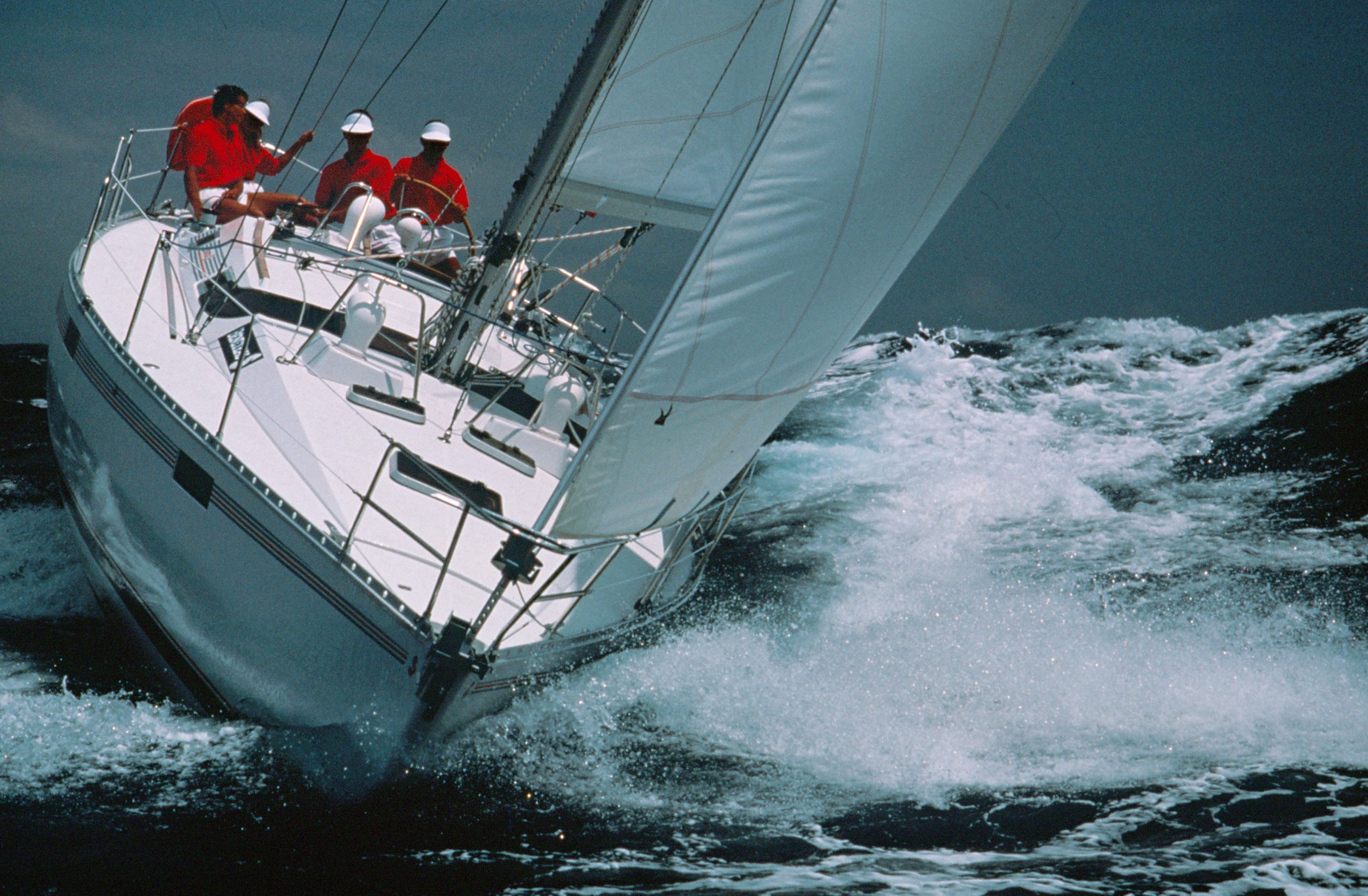
Within the Bénéteau Group, the success of the First range perfectly reflects this ability to keep pace with the times. Its flagship models are, quite logically, derived from racing hulls. They all enjoy considerable success.
But then the first major wave of disruption comes out of nowhere. A technological crisis sends shock waves through the industry and forces management to make some painful reassessments.
The first warning comes from the network: the First models, like many other boats produced by major yards at the time, are falling victim to a strange affliction. The gelcoat, the outer skin of their fiberglass hulls, is becoming permeable far too quickly. Unsightly blisters appear below the waterline. It will take months to put a name to the problem (osmosis), understand its cause and identify the culprit: a component supplied by a major industrial manufacturer proves to be defective. But faced with the recall of dozens of affected boats and serious damage to the brand’s reputation, Bénéteau must do more than simply respond: it must reinvent itself. Otherwise, the Vendée company’s rise toward the top ranks of the global boating industry could end in a shipwreck. The stakes are that high.
At almost the same time, a second wave – fortunately less dramatic – begins to gain momentum. A future global giant of the charter industry, itself expanding rapidly, expresses needs that are very different from those of hard-core racing sailors. It wants boats designed for customers whose main priority is not performance at any cost, but comfort and wellbeing. With close ties to the founders of this major charter company, The Moorings, Bénéteau’s management team respond to this emerging demand with remarkable foresight: the Idylle 13.50. Designed by the great Argentine yacht designer Germán Frers, it is deliberately less lively but more reassuring for “weekend sailors” and their families than the cruiser-racers from the First range.
Yet, at the same time, and somewhat paradoxically, a third swell reaches a company already being buffeted by change. The first signs of a profound transformation in the market are emerging. Recreational sailors have matured, or grown older, some observers even dare to say. With advancing years, both the competitive instinct and dreams of distant voyages begin to fade, giving way to a greater appreciation of life’s pleasures. The appeal of family cruising gradually overtakes the passion for racing with friends, while the desire for leisurely sailing increasingly outweighs the urge to abandon everything and live the life of a seagoing hippie.
To keep riding these rougher seas, change is essential. At the helm of Bénéteau, Annette Roux senses this shift and understands what it means. The roadmap is daunting: established thinking must be overturned and the design process reversed. From now on, ease of use and comfort on board must become the starting points for defining the boat’s overall philosophy — and therefore its form and volumes. It must even dare to create an entirely new brand. This new brand will need to take over from the First range, whose reputation has been tarnished by the hull problems. And build a comparable reputation as quickly as possible. Quite a challenge!
Squaring the circle
The chairwoman shares her thoughts with one of her closest and most trusted advisors. He has already transformed the Vendée yard’s product strategy. He was the one who dared to imagine the first First. Derived from the molds of a purpose-built racing boat, this model gave a bold, dynamic new image to a company previously known as the market leader in the more sedate fishing-cruiser segment. Better still, it positioned Bénéteau as one of the industry’s leading names.
François Chalain loves nothing more than performance. Yet his remarkable mental agility allows him to grasp this new challenge very quickly. And to bring together all the ingredients needed to launch an entirely new range of cruising sailboats.
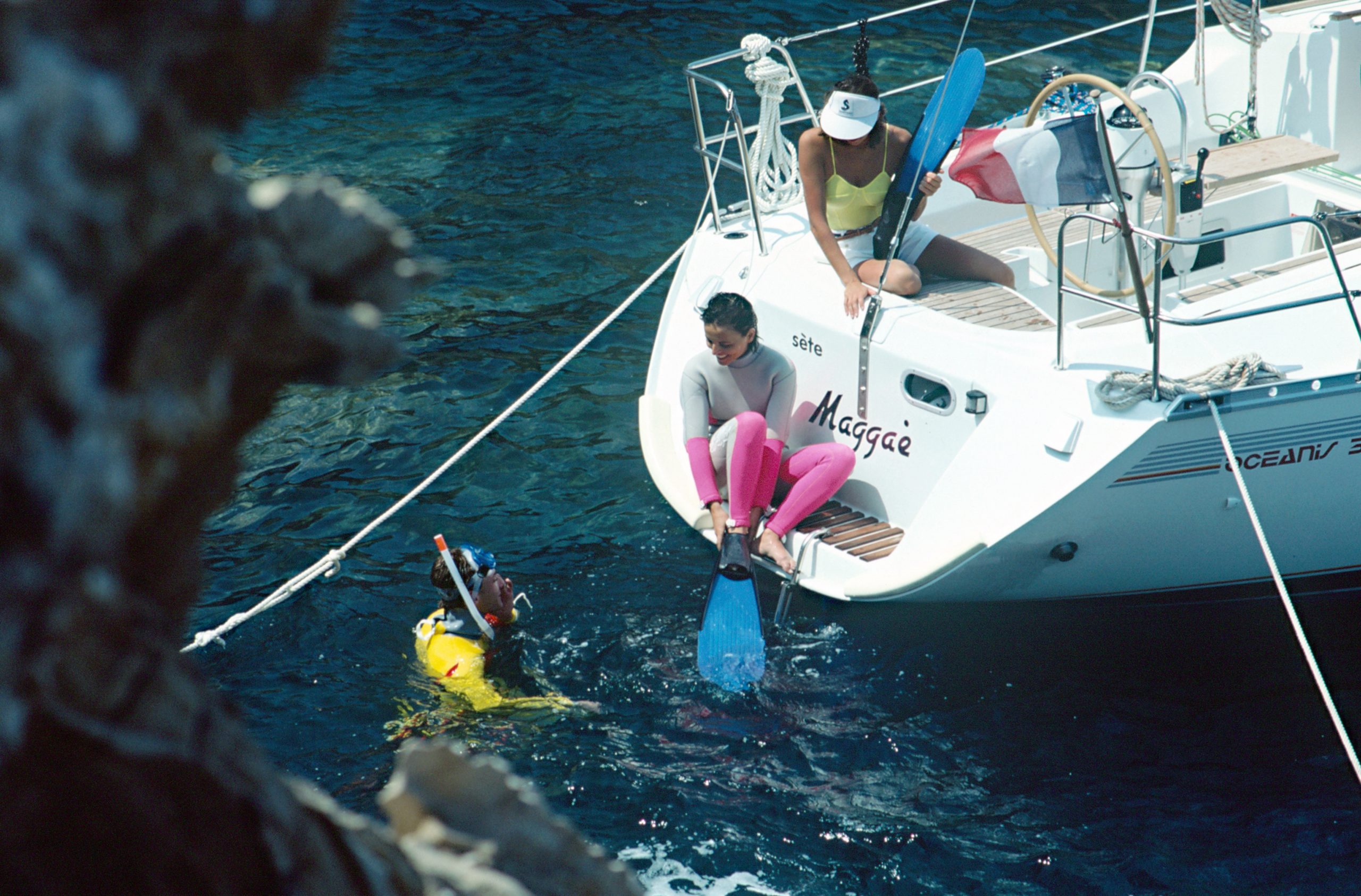
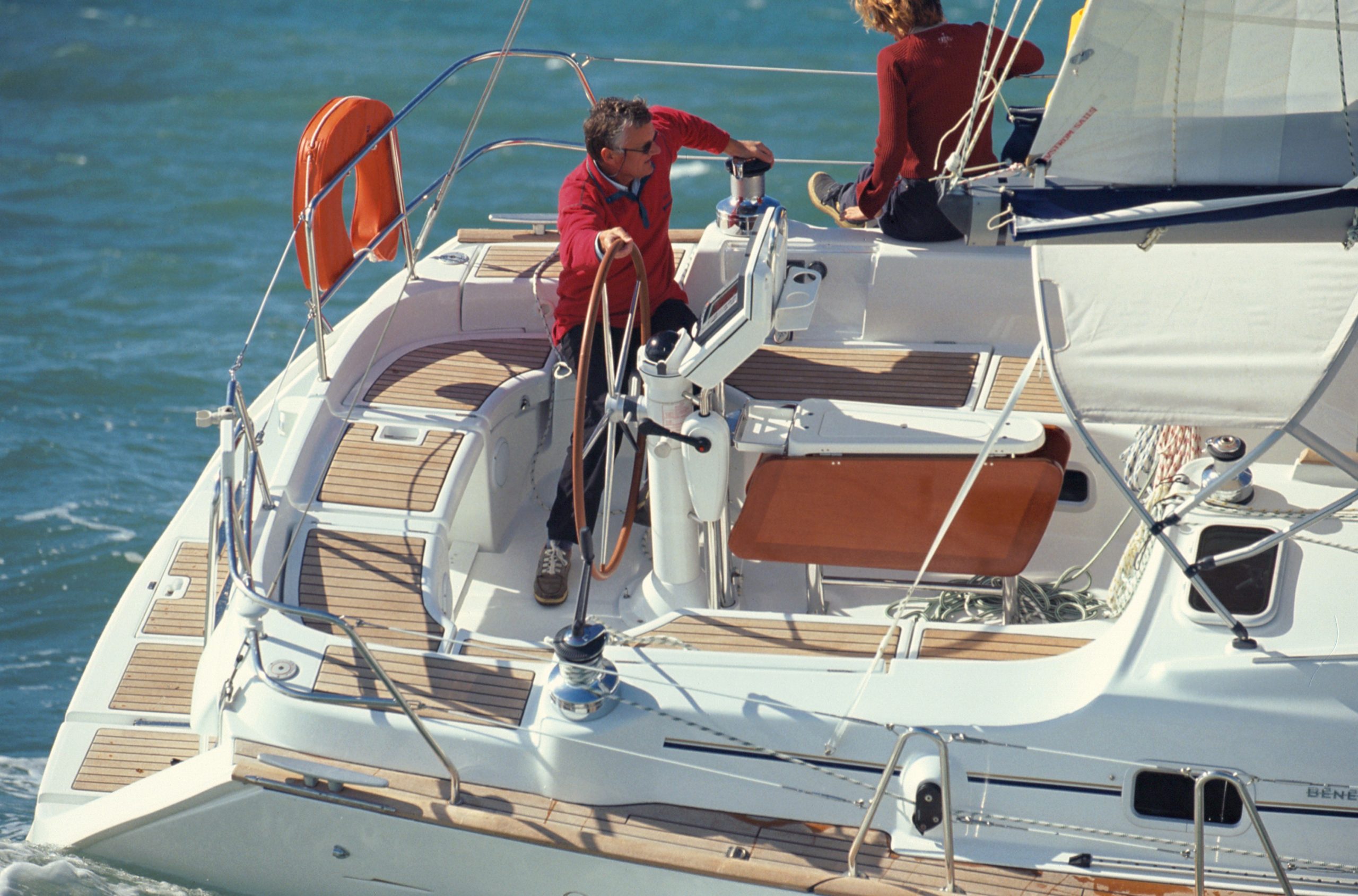
The formula might seem like an attempt to square the circle. Start by defining what makes life on board enjoyable: comfort at sea, well-being at anchor or in port… Meet a few essential requirements: large, inviting cockpits; a deck layout and deck hardware that make the boat genuinely easy to handle; and bright, airy interiors with double cabins, large galleys, multiple heads and shower compartments, generous water and fuel tanks, and a suitably powerful engine… Now incorporate all of this into hulls that are well designed, stable, beautiful, and… responsive. And please avoid copying those conventional cruisers that are too rounded, too heavy, and too under-canvassed, which some foreign yards have made their specialty, supposedly in the interests of building boats that are strong and seaworthy. Lastly, keep costs firmly under control to achieve fiercely competitive prices. And, of course, come up with a new name capable of embodying all these qualities…
This will be Oceanis.
Armed with this formidable design brief, Chalain approaches Philippe Briand. This rising star of naval architecture has been immersed in the world of sailing since childhood. His father is a champion racing sailor and a manufacturer of masts and sails. A precociously talented designer, he is one of the most sought-after young naval architects of the 1980s. Briand has already made a name for himself, with numerous designs to his credit, many of them boasting impressive racing records. There is no doubt that he knows how to design outstanding racing boats. But it takes considerable nerve to ask him to draw hulls that are the complete opposite of those on which he has built his reputation.
Yet this gifted young designer also knows how to create beautiful boats. And Chalain is convinced that comfort must not come at the expense of aesthetics. Philippe Briand therefore proposes innovative designs with distinctive features that quickly become recognizable hallmarks, including large overhead windows set into the roof and rectangular hull portholes, a major innovation at the time.
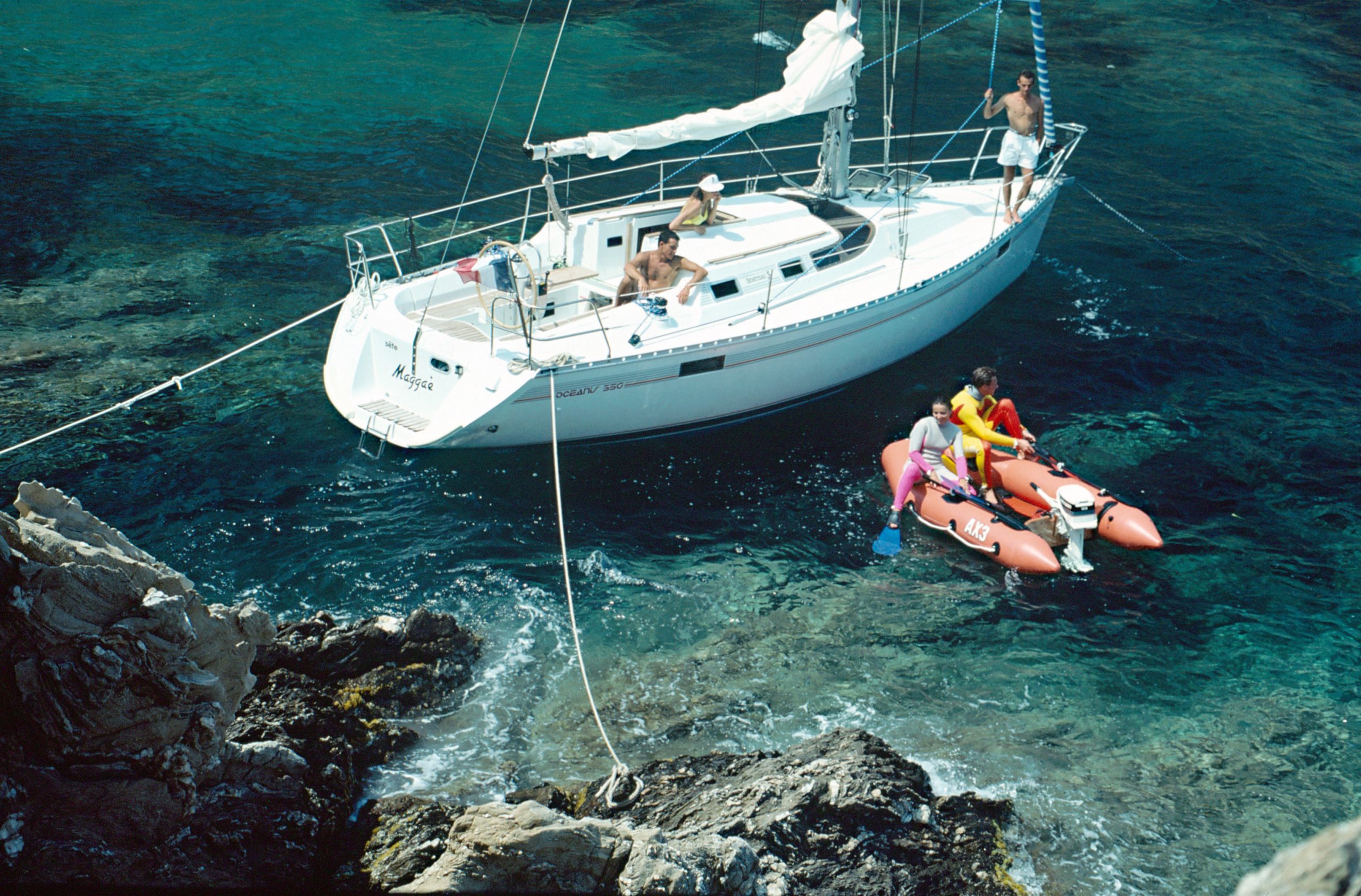
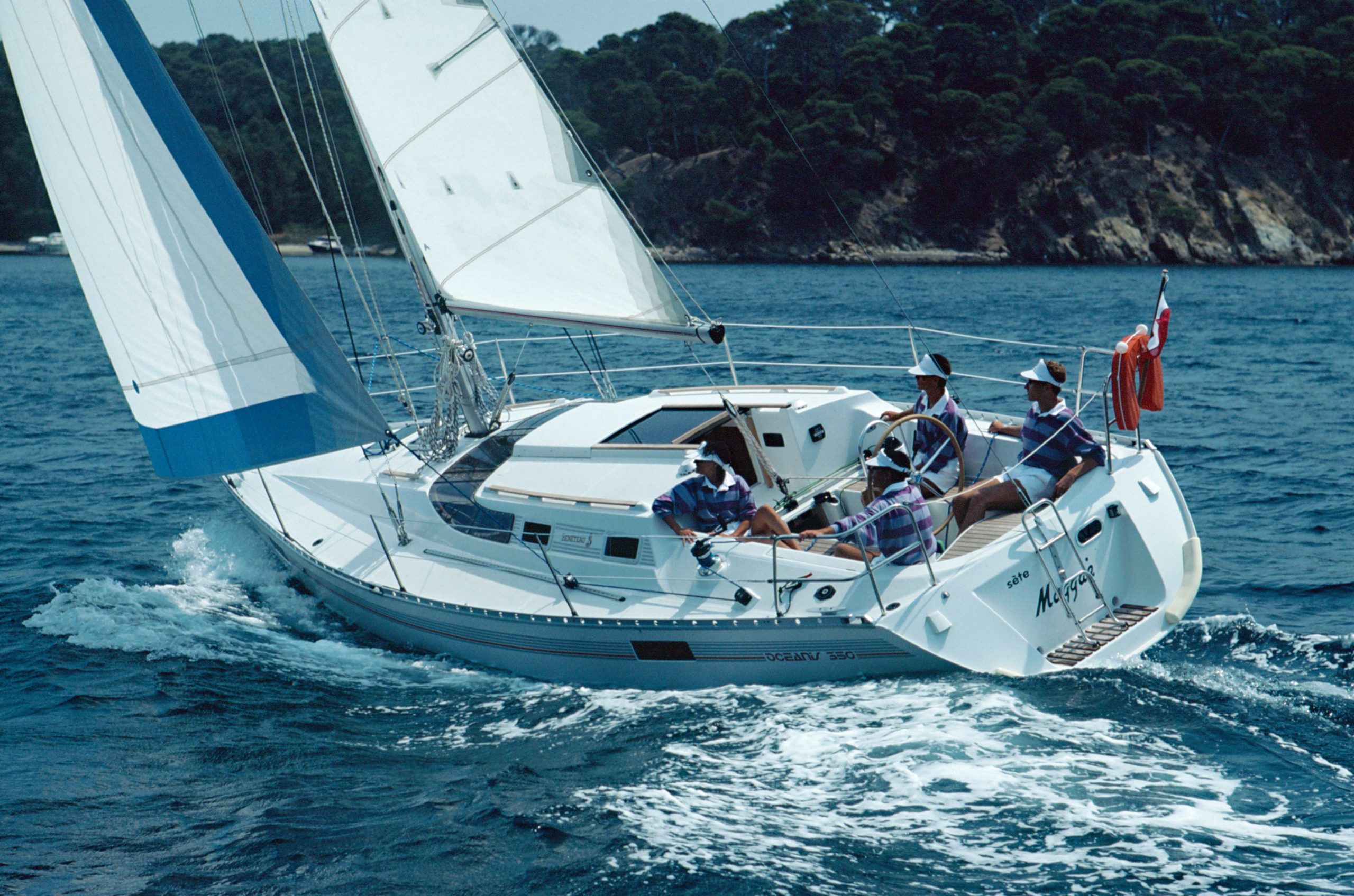
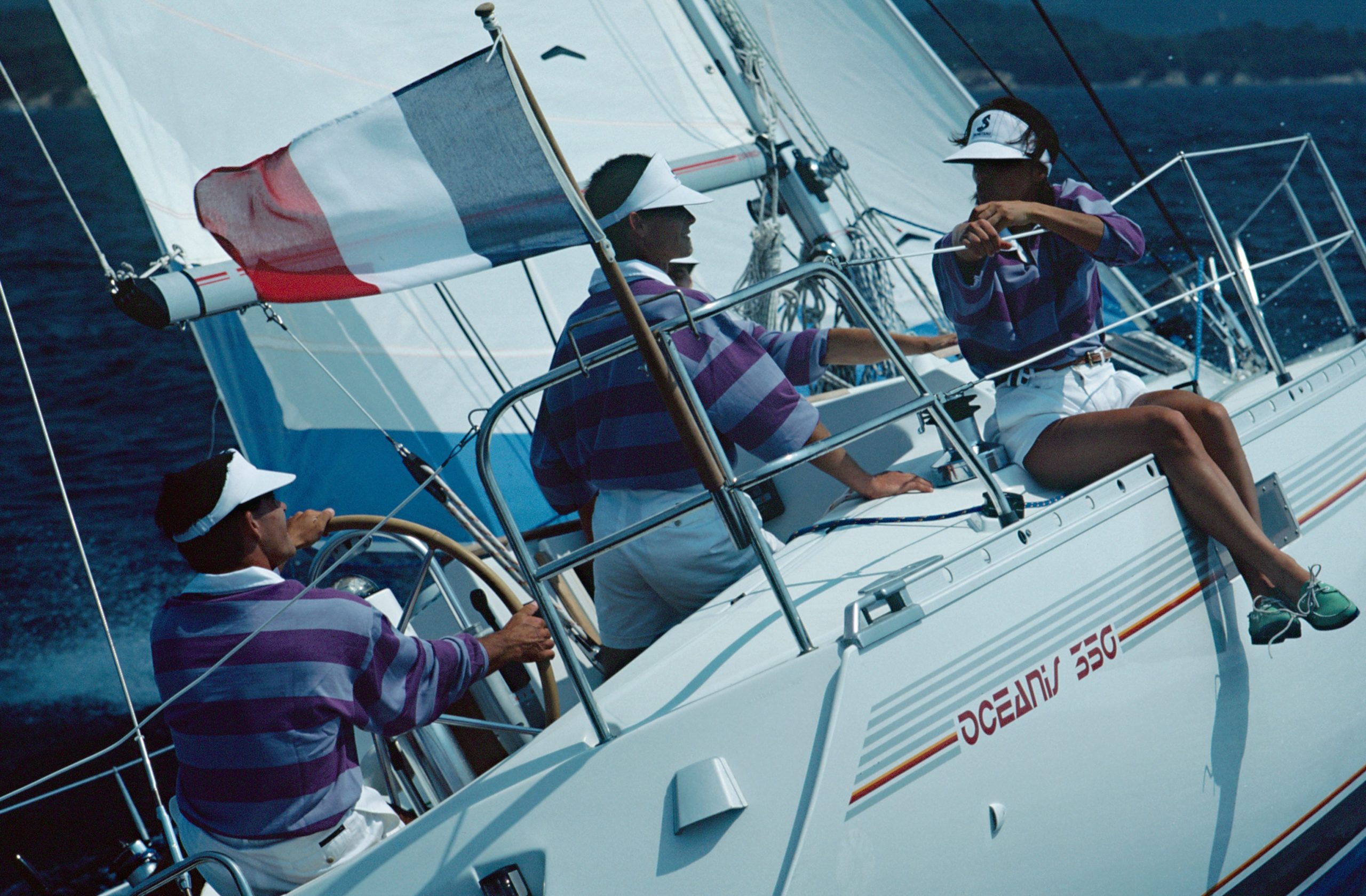
And so, in 1986, the first model in the new Oceanis range makes its debut. The 350 is an elegant 10-meter sailboat that causes a sensation and quickly fills dealers’ order books. The 430 follows later that same year, much to the delight of charter fleets.
30,000 Oceanis in 40 years
But two new models and a new brand are not enough to create an entirely new world. At the same time, Bénéteau establishes production facilities that are dedicated exclusively to the new range. It streamlines its manufacturing processes to a level that can now truly be described as industrial. The bulkheads, furniture and other components in wood or molded fiberglass are mass-produced as standardized modules while the hull production proceeds alongside this. They are then transported to the production lines and installed inside the hulls as complete assemblies, before the decks are fitted to close up the boats.
With Oceanis, the Bénéteau Group clearly takes a major step forward. It continues to refine both the design and production of these new models, which each sell hundreds of units. Competitors are very quick to follow Bénéteau into this new segment of recreational boating centered around enjoying life at sea. In doing so, they help expand the market worldwide.
But the company that pioneered the concept has no intention of resting on its laurels. To keep challenging itself and keep both its approach and its ideas fresh, Bénéteau does not hesitate to change naval architecture firms on a regular basis.
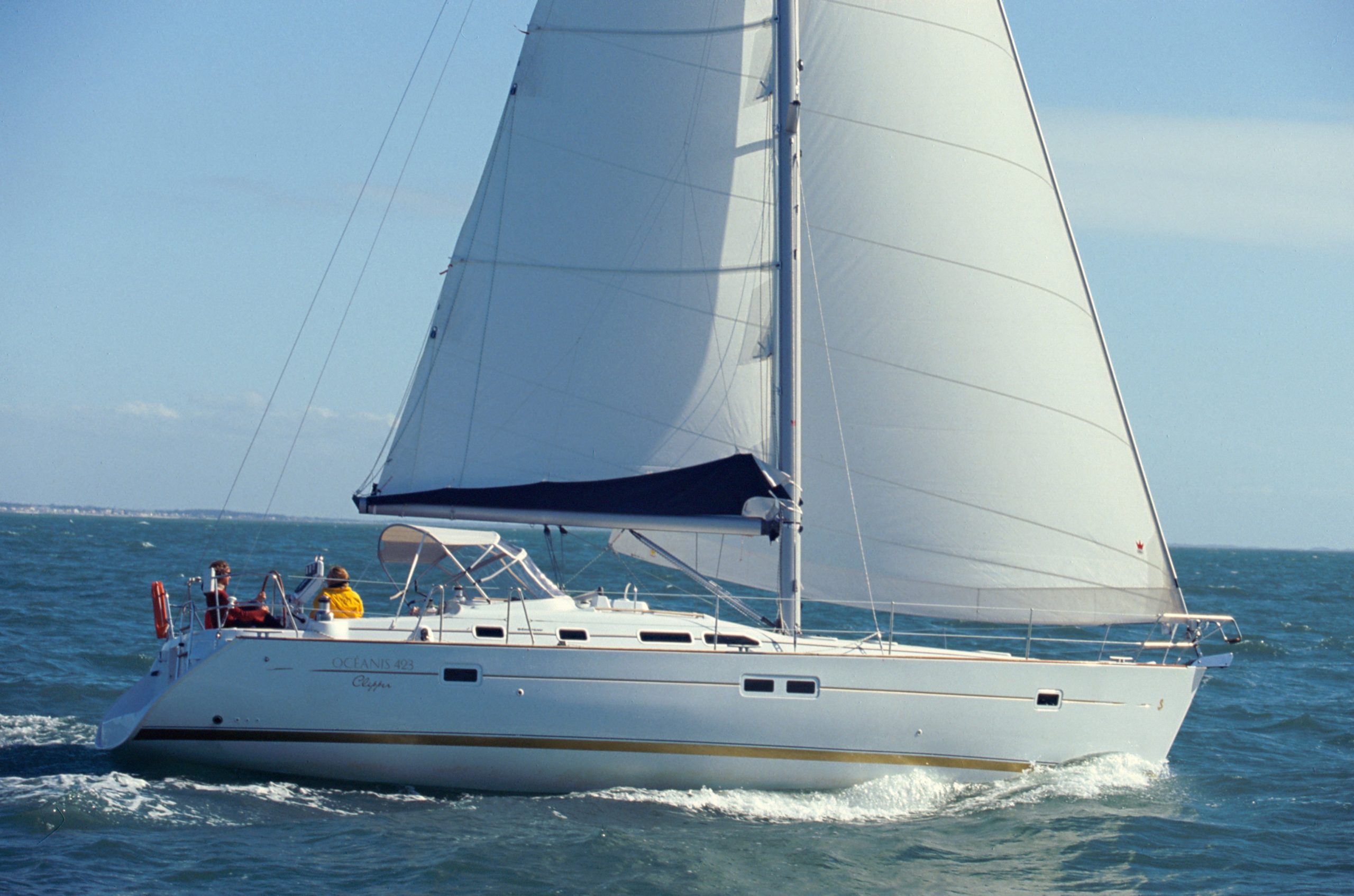
Finot-Conq is brought in next. Among its designs is a model that quickly wins widespread acclaim: the 411. A phenomenal success for a 12-meter unit, followed in the same spirit by the 423… Then comes the Berret Racoupeau era, with an even greater emphasis on comfort. Even fuller aft sections make it possible to create enormous cockpits, with room for two double cabins beneath them. The interior layouts make life on board feel “just like home”.
Finally, for almost a decade now, Italian naval architect Roberto Biscontini and interior design firm Nauta Design have combined elegant lines with outstanding livability, both on deck and below, while preserving the boats’ sailing qualities.
And the successes keep coming. Over four decades, more than 30,000 Oceanis yachts, spanning eight successive generations, leave Bénéteau’s yards.
The philosophy has remained unchanged: to offer boats that are easy to live with, enjoyable both at sea and in port, offering ever higher levels of comfort at consistently competitive prices. By constantly reinventing itself, Bénéteau has demonstrated that nothing is inevitable: ideas shape the world. On land as at sea.
Olivier Pérétié
Tomorrow’s Oceanis, as seen by ENSAAMA students
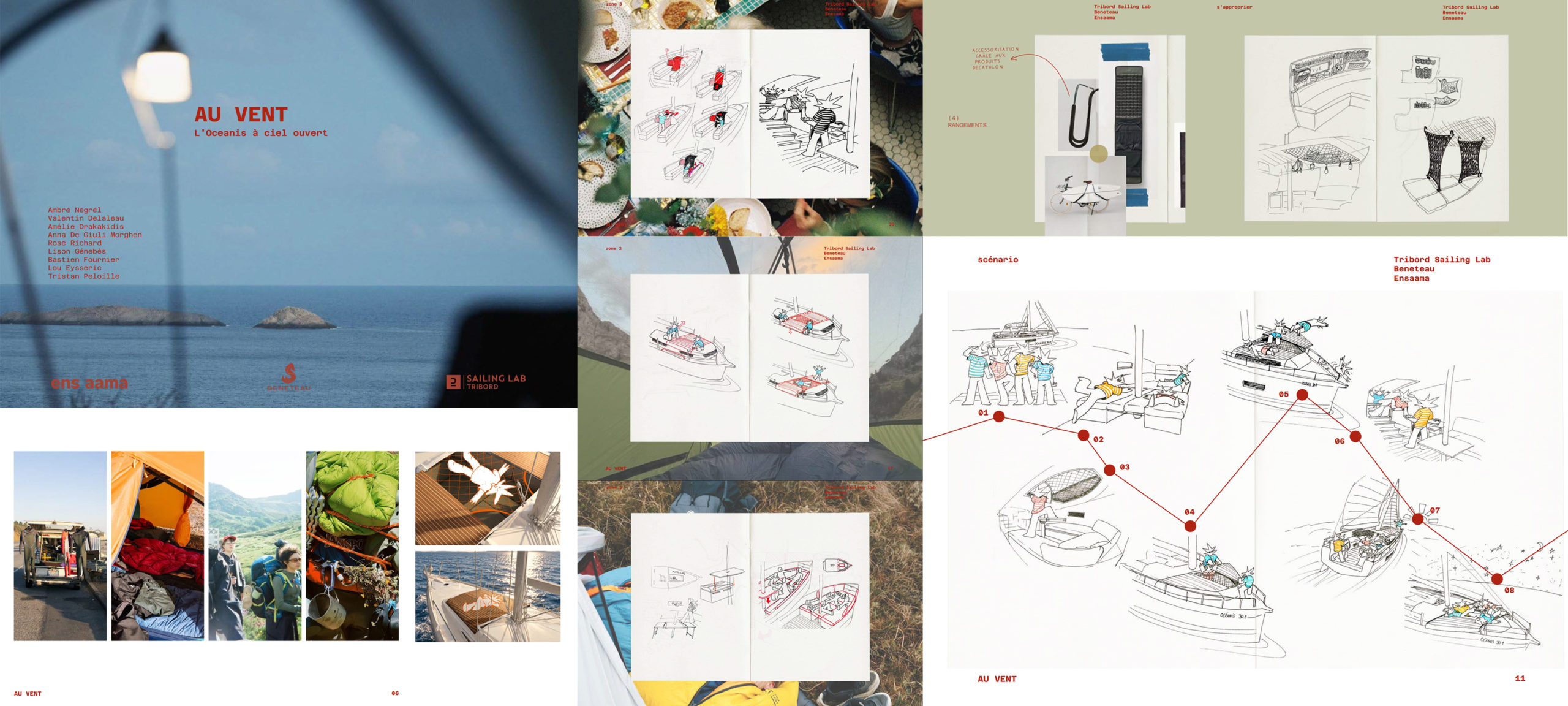
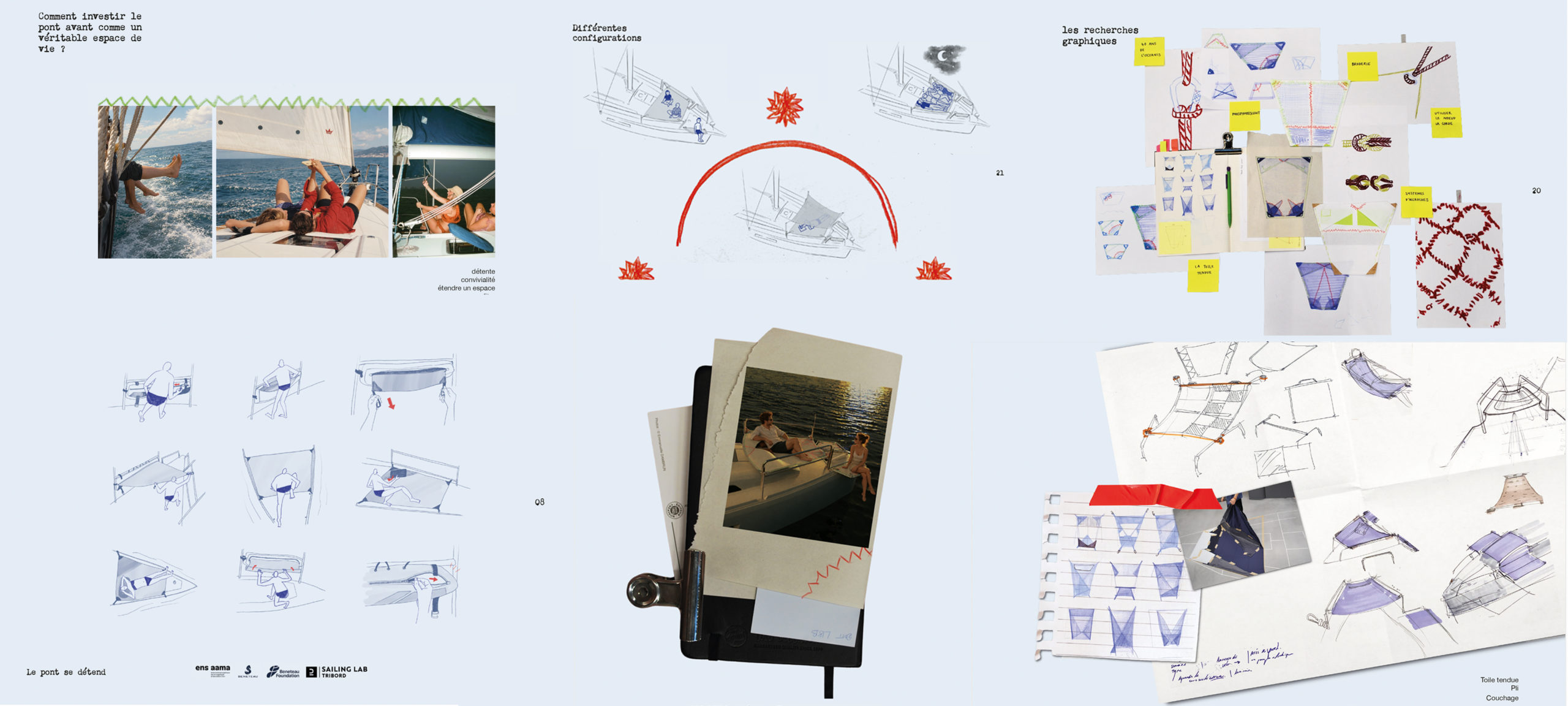
To mark the 40th anniversary of the Oceanis, the Beneteau Foundation and Decathlon’s Tribord Sailing Lab set a challenge for students at ENSAAMA, the École nationale supérieure des arts appliqués et des métiers d’art (France’s national school of applied arts and crafts). The school has been a partner of the Foundation for nine years through the “Nautisme 3.0” programme. The challenge: make sailing and the boating world more attractive and more accessible, through tools and accessories.
The brief echoed the spirit of the origins: moving beyond a technical approach to the boat and starting instead from uses and user profiles, whether family, leisure with friends or sport sailing. It is the same approach that gave birth to the Oceanis in 1986.
Launched on 4 September with 24 students from the Master’s in Product Design, the project had a first review of ideas on 18 September. Three teams then formed around three themes: learning to sail, accessories, and the notion of van life and bivouacking. For five days, at the Tribord Sailing Lab during the Grand Pavois, they imagined, prototyped and developed their answers before presenting them to the jury on Friday 25 September.
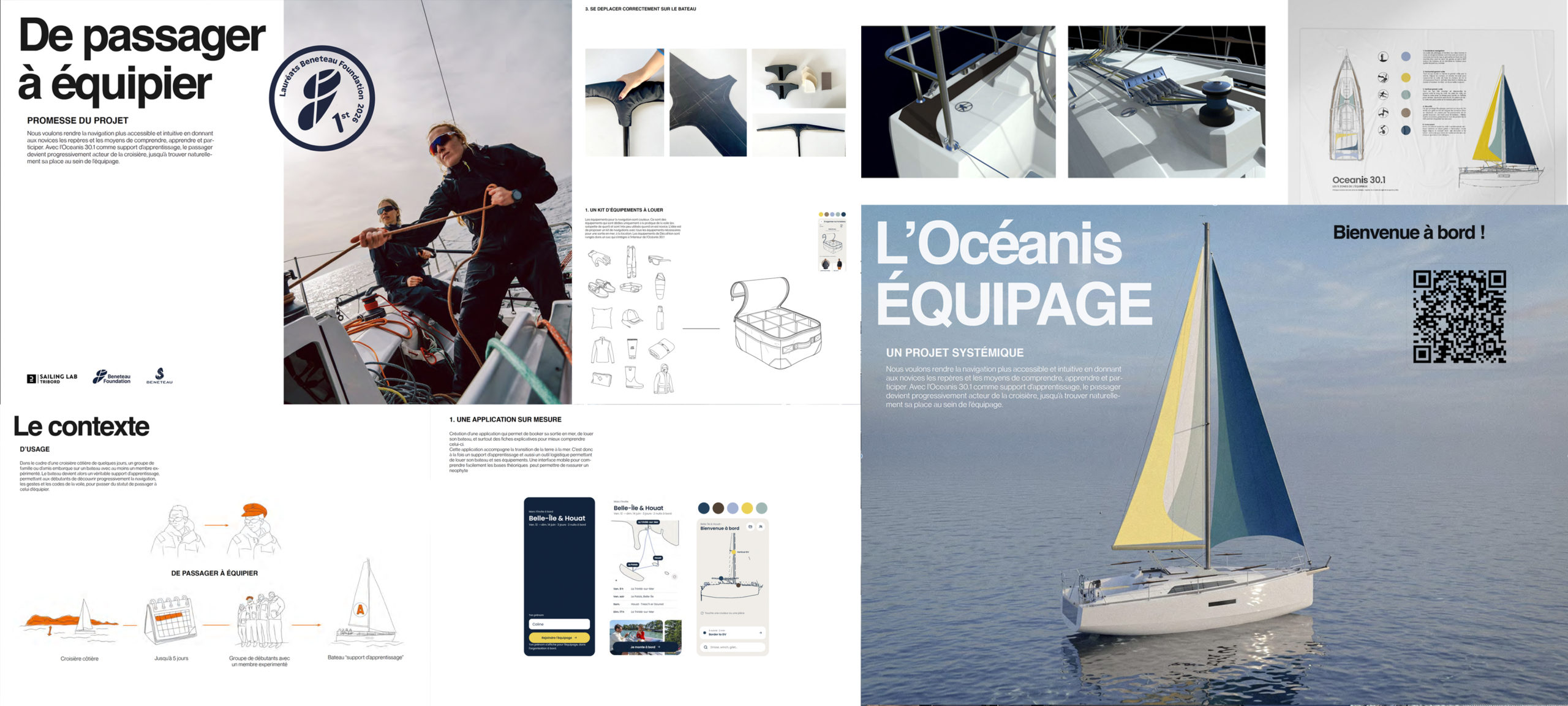
The Beneteau Foundation Prize went to the project “De passager à équipier” (“From passenger to crew member”). Its question: how can we make younger generations want to go sailing, even without great nautical skills? The students rethought the experience aboard an Oceanis 30.1 around three moments. Before departure, a rental equipment kit and an app to prepare the route. At first handling, a boat organised by colour zones and pictograms, and an app that guides manoeuvres. On board, ergonomics designed for smoother, safer movement.
Forty years after Philippe Briand and François Chalain, the question has not changed: how can life aboard be made simpler, more pleasant, more accessible?
Beneteau Foundation