Frantz Liuzzi : “Between Dior and Gordini”
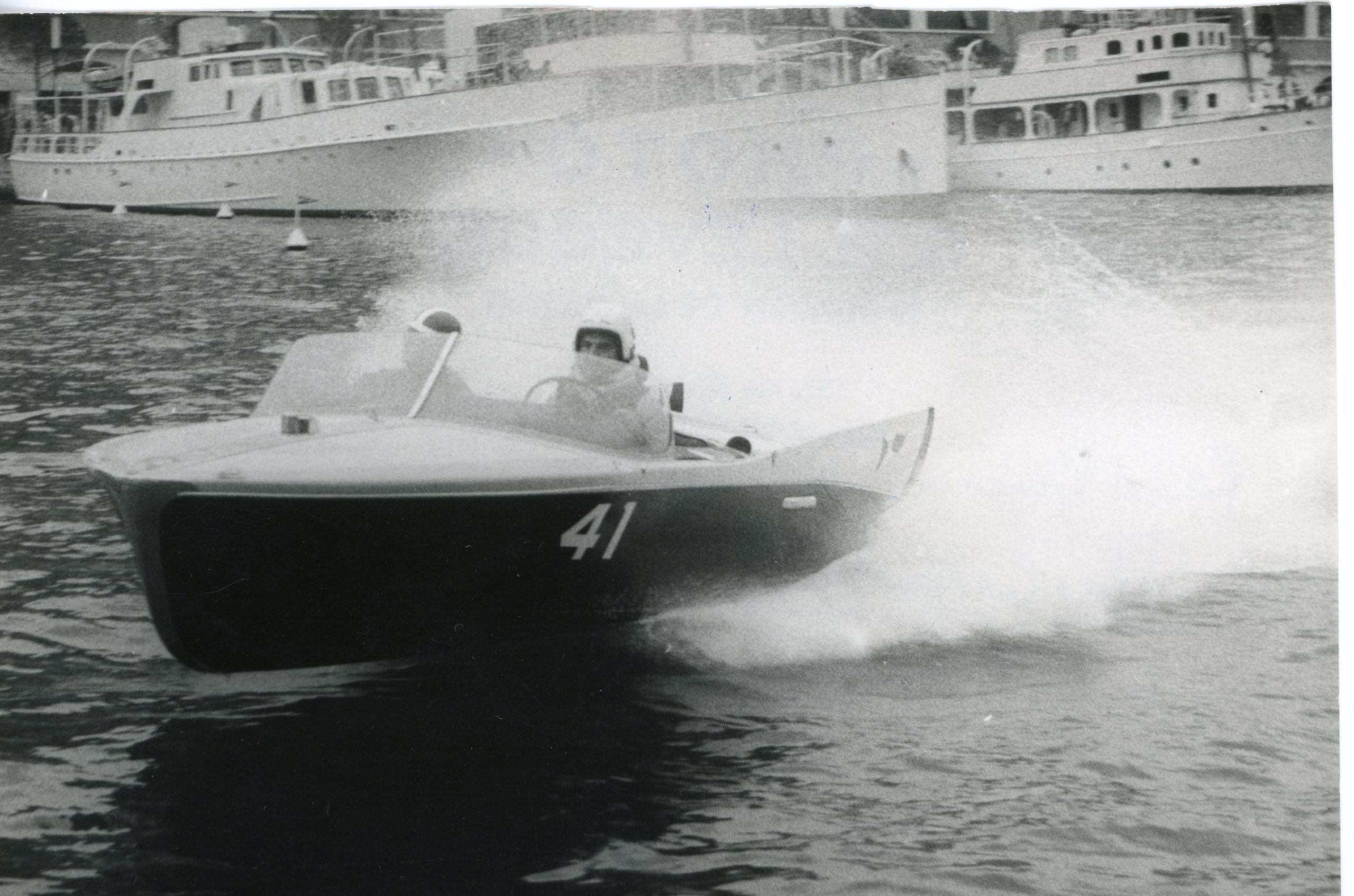
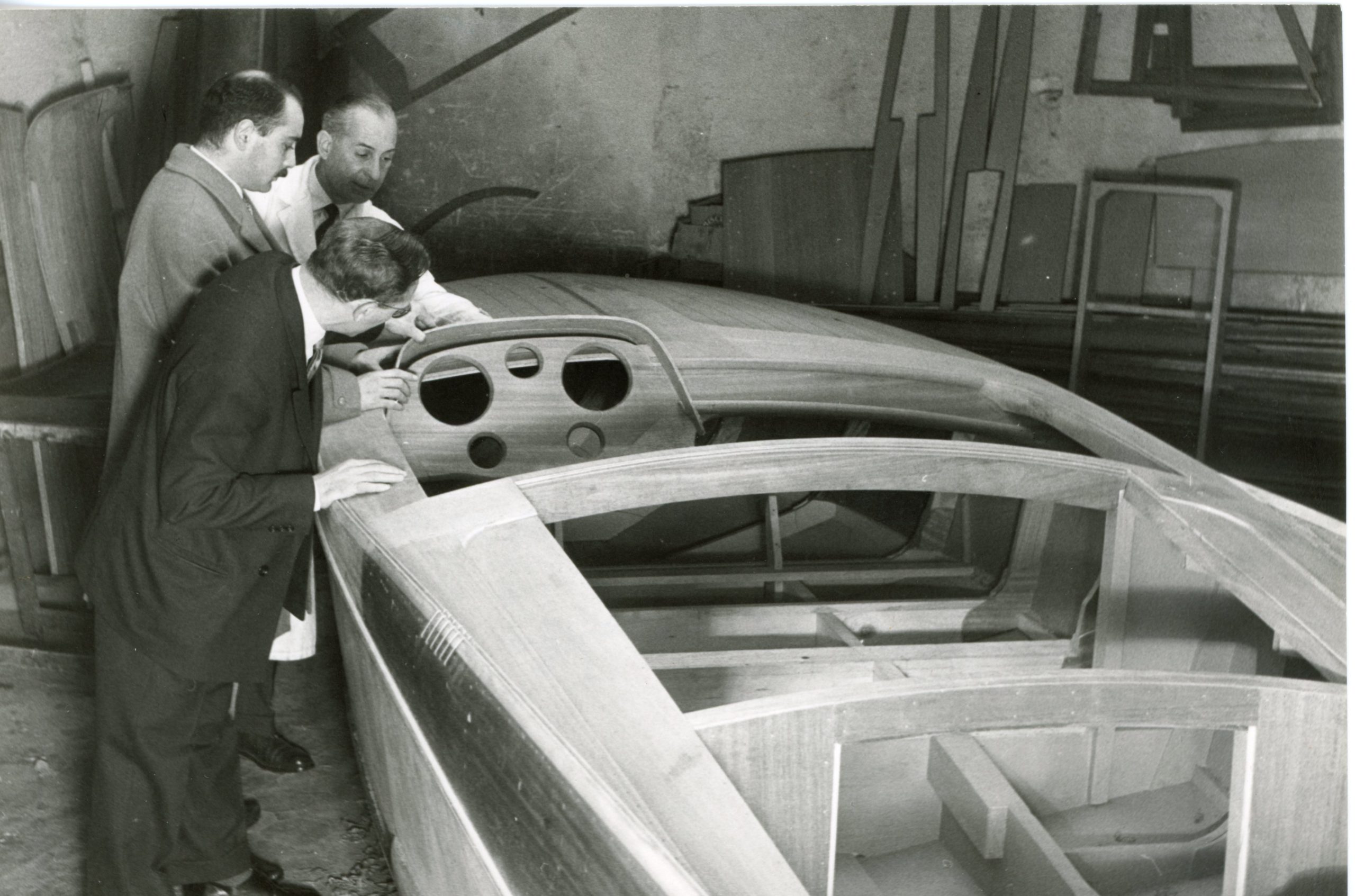
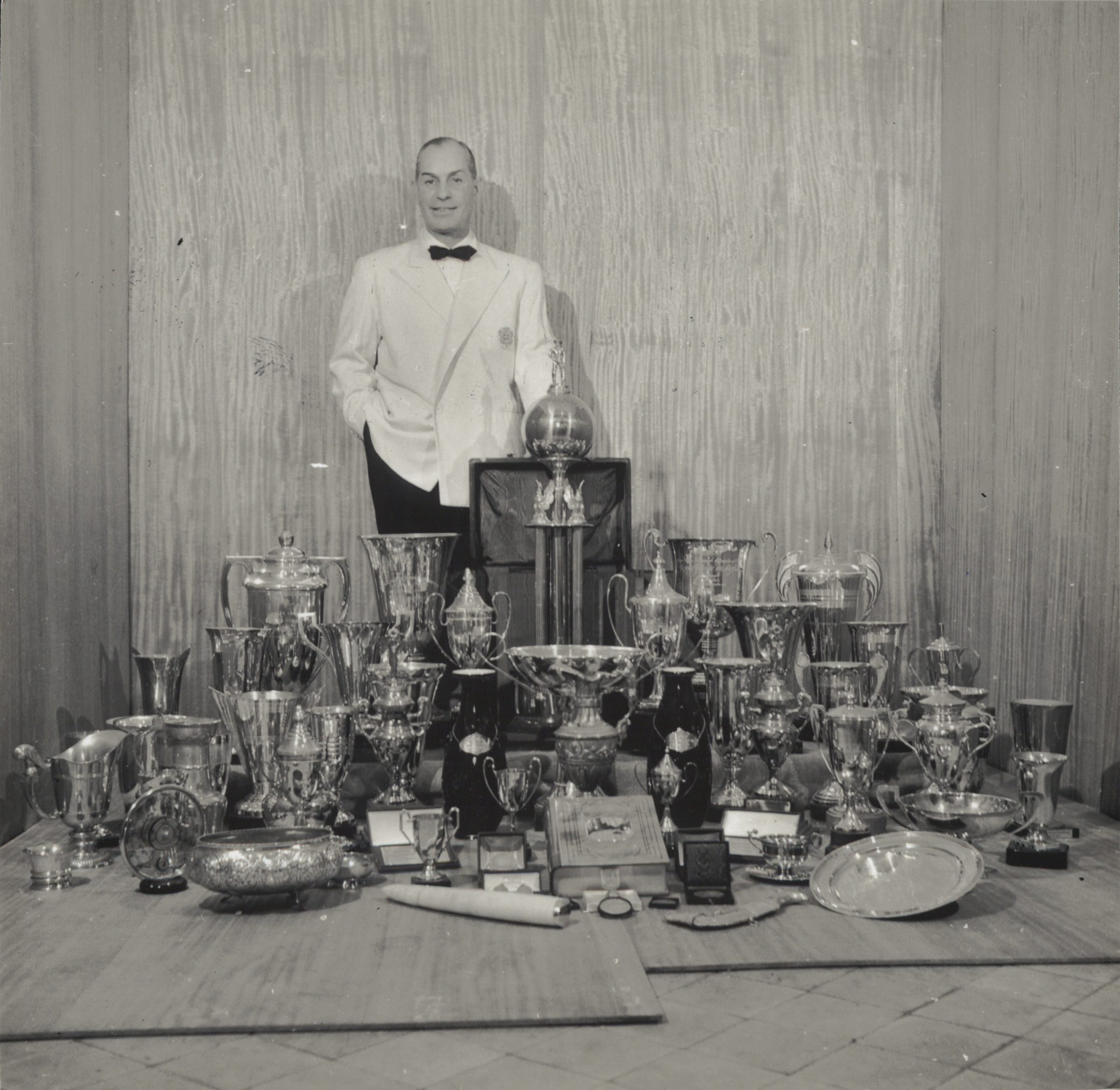
This is the story of a time when small artisan businesses could still thrive in an affluent residential environment, just outside Paris. When, in 1937, Frantz Liuzzi starts building finely crafted canoes in his small workshop at 9 rue Soyer in Neuilly-sur-Seine, he can hardly have imagined the radical transformation that will one day emerge on the horizon at the end of his street. On the other bank of the Seine, “La Défense” is still nothing more than an obscure commemorative statue erected in 1883 on a suburban roundabout. Nor could he foresee that, 20 years later at the same site, he will be producing runabouts that are as fast as they are luxurious for Hollywood stars, such as Errol Flynn, the hero of The Sea Hawk and Captain Blood. Until the late 1940s, his fine boats earn an enviable reputation on lakes and rivers, winning numerous trophies, but the post-war revival of motor sports leads this gifted craftsman to turn his attention to powerboating. He begins building a few sport and racing runabouts and, from 1948, equips his first “France-Craft” models with marine engines from BPM, an Italian manufacturer in the great tradition of transalpine automotive engineering excellence. As for the word “Craft”, it is deliberately chosen to evoke, in customers’ minds, the famous American yard Chris-Craft, the world’s leading builder at the time and an industry benchmark. However, unlike the boats imported from Michigan, Liuzzi’s varnished mahogany hulls are built using a very different technique that is relatively rare in the world of sport powerboating: molded wood construction. For the Neuilly yard, this demanding approach follows on naturally from its canoes, while adapting the method and sampling to the dimensions and constraints involved with a racing runabout. The glued planking is assembled diagonally over an inverted mold, keel upwards, no longer in a single layer, but with double or even triple lamination. The hull is then removed from the mold and turned upright to be finished. In the mid-1950s, Frantz Liuzzi files and obtains a patent that allows him, without false modesty, to assert the originality of his work. His boats, marketed under the “Monocoque F.L.” brand, are modestly described as – nothing less than – “the most luxurious, the fastest and the most robust sport runabouts in the world”. In this freewheeling era of pioneers, no one really has either the desire or any good reason to contradict the spirited and affable Parisian driver-builder. His logbook fills with an endless list of victories and trophies, won either by himself at the helm or by a handful of loyal customers competing for podium honors. Added to these are no fewer than 45 officially recognized world speed records, ratified by the Union Internationale Motonautique, between 1950 and 1960.
At the far end of the courtyard
Around the middle of this same decade, Liuzzi’s reputation is firmly established, in both France and Italy, within the small, affluent circle of gentleman drivers and business figures who gladly commission bespoke suits and boats for the summer season. The charm of this champion, a leading figure on the Parisian powerboating scene, extends to the Riviera, and Cannes in particular, within the exclusive MYYCA Côte d’Azur Motor Yacht Club, as well as Monte Carlo, for the championship rounds held there each year. To celebrate these successes, Liuzzi even creates a sport model named “Prince of Monaco”. A relaxed Rainier III will even allow himself to be photographed, cigarette in hand, adjusting the engine of his own boat in the Principality’s harbor.
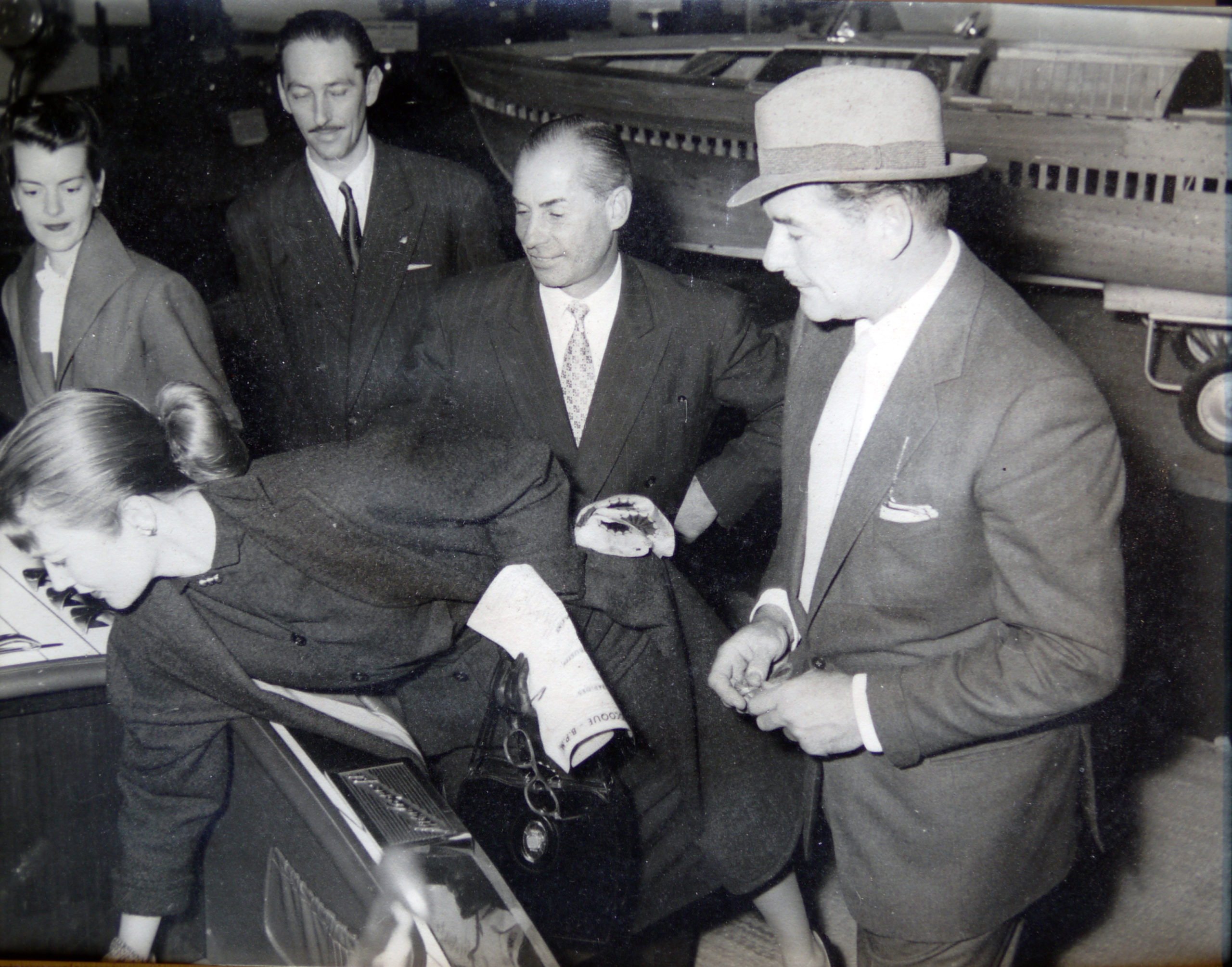
Each year, the exhibition of France-Craft and Monocoque F.L. models at the Paris Boat Show becomes an unmissable destination for celebrities and wealthy enthusiasts looking for exclusivity and performance. In 1953, “The Sea Hawk” himself, Errol Flynn, accompanied by his third wife, actress Pat Wymore, who he had married in Monte Carlo in 1950, spends a long time at the Monocoque F.L. Stand to order a 5.50m runabout, which will serve as a tender for his large schooner Zaca, often moored in Cannes. To familiarize himself with his dream boat, Flynn will be invited to take the helm of a demonstration unit on the River Seine. Later, Baron Marcel Bich, who lives nearby, will drop in as a neighbor to cast an expert eye over the construction of his order, a Star model with a V6 BPM engine, used for cruising with his family during their summer holidays on the Côte d’Azur. French President René Coty also never fails to visit and congratulate the affable champion, always impeccably dressed and effortlessly at ease in high society. Looking beyond the undeniable quality of his creations, his yard benefits from a prime location west of Paris, at a time when the capital’s automotive press is still very keen on powerboating. Recognizing his many successes, a number of reports and documentaries filmed on the river or in the workshop inevitably end in the neighborhood’s favorite restaurants.
Four times the price of a Citroën DS
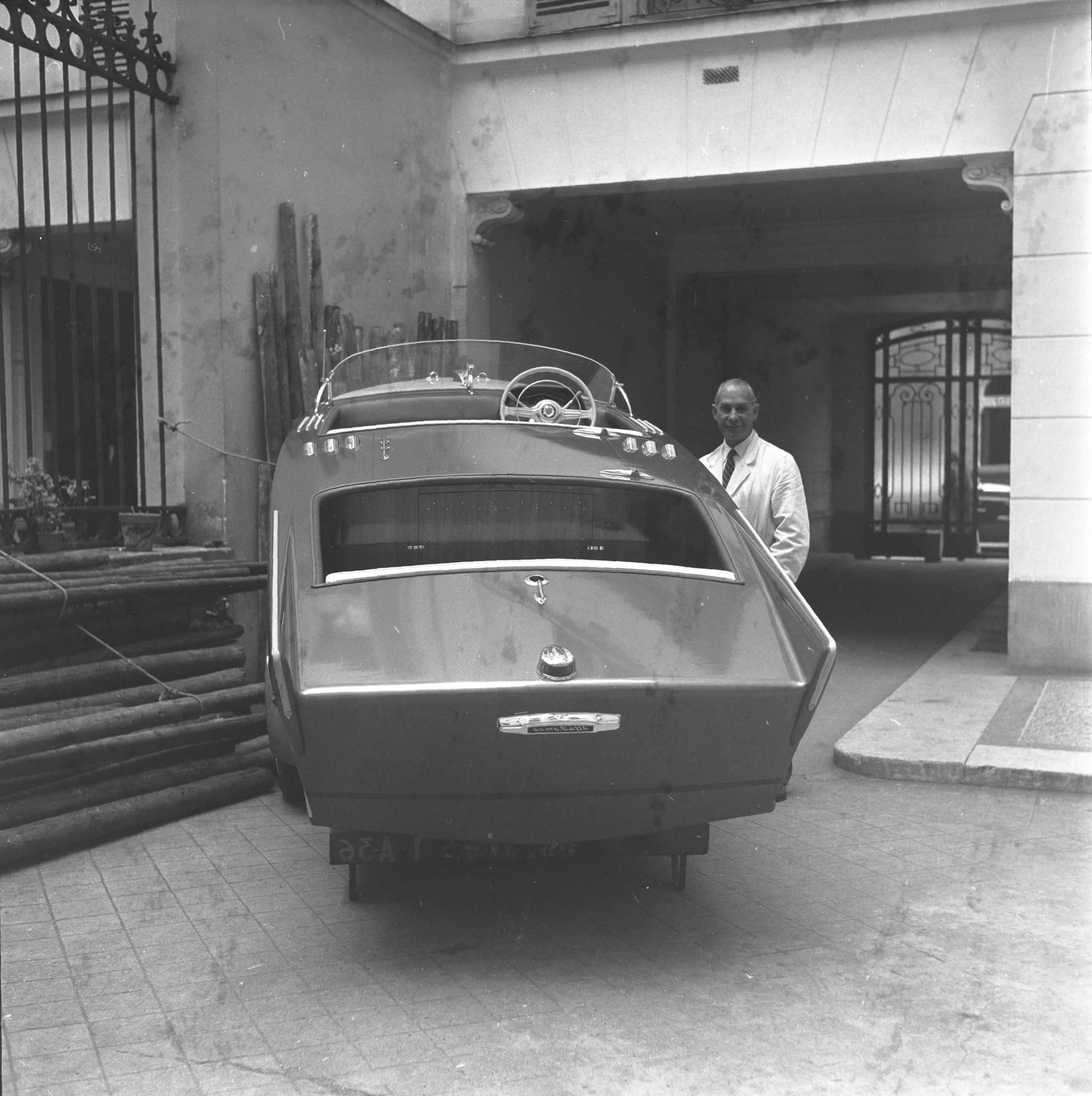
In 1959, less than 20% of French households have a car. So, what about buying a motorboat, a real luxury. Just minutes from the Champs-Élysées, light traffic still blends pre-war heritage, social progress and modernity: from a wealthy gentleman’s imposing Delahaye to a nimble Renault 4CV or a gleaming Buick. Parking is still easy at 9 rue Soyer, home to this unexpected activity in such a refined and luxurious environment. In the courtyard at the foot of the building, Frantz Liuzzi’s premises are a hive of activity. The master of the house keeps a watchful eye over everything, overseeing the work of four to six craftsmen, who produce just a handful of boats each year. Nearby, the clatter of the secretary’s typewriter fills the courtyard. Her telephone, Maillot 33-93, can, with great patience, reach Cannes or even Milan, though with advance notice and hours of waiting. VAT, introduced in 1954, does not yet apply to products such as a Monocoque F.L. In 1960, a high-end model such as the Star 6 sells for 3,900,000 “old” francs, with the “new” French franc only coming into circulation three years later. For comparison, a brand-new Citroën DS car costs 930,000 francs.
In this context, the prestigious automotive magazine Moteur describes the man as the combination, within a single talent, of Amédée Gordini, with his countless sporting victories, and Christian Dior, the visionary of French haute couture. As one observer wrote at the time: “A Liuzzi runabout can be recognized from 200 fathoms. Its line, its power and its comfort form a complete program, which the smiling champion sums up as follows: building a good boat with a beautiful line. It is he, practically, who sets the tone for fashions each year. He is the only French builder to regularly produce a motorboat that is capable of defeating all foreign competitors”. We could not have put this any better. His boats are beautiful, fast, expensive and rare.
Giulietta style or Cadillac flair, with everything handmade
The yard is believed to have produced less than one hundred units between 1948 and 1967, the year when its founder passed away, at the age of 62. At its peak, the range never had more than six or seven models, from the small 4.80m Giulietta with an Alfa Romeo engine through to the 6.20m and 255hp Star 6.
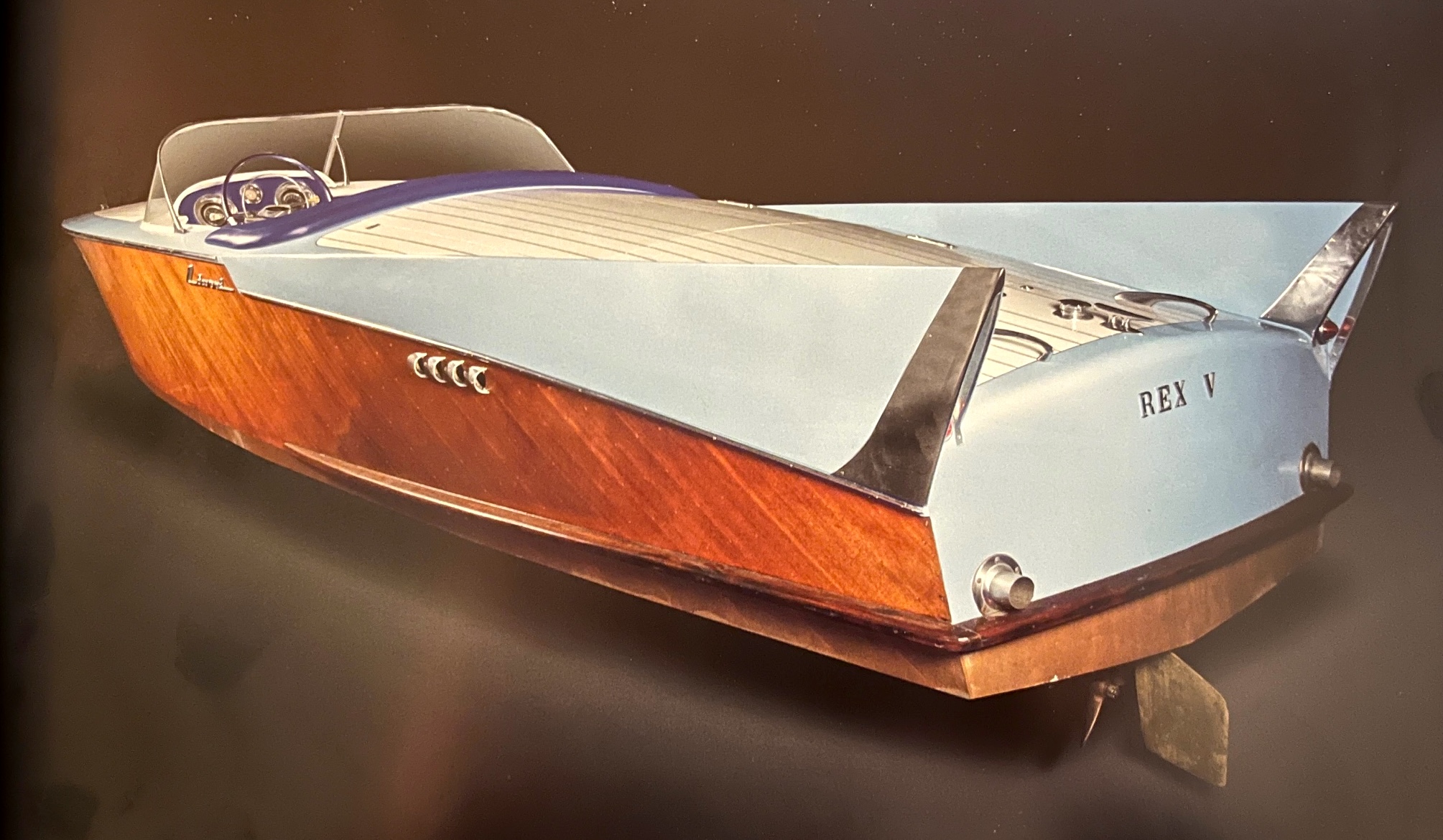
From his first model in 1948 with its classic transom to the Star 6 with Cadillac-style rear fins in 1958, Frantz Liuzzi personally designs all his creations, evolving them in line with technical requirements or the latest trends in the auto industry. After the France-Craft models with their characteristic canoe-point stern, which sustained the yard’s success in the early 1950s, the Star’s overall lines mark a major leap forward, under the influence of American automotive designers, whose work equally inspires the architects of the giant Chris-Craft. The “fin war” raging between General Motors and Chrysler across the Atlantic inevitably has repercussions in Europe among advocates of finely crafted motorboats, from richly equipped dashboards to plush comfort and generous use of chrome, just like on board one of those great American cars. For around 20 years, each Liuzzi is built individually, entirely by hand, by a small team, with some subtle variations almost inevitably seen from one unit to another. Without ever claiming it, such a hull becomes, by its very nature, a unique piece. Only a few remain seaworthy or well preserved in France, maybe around 20, in the hands of a small group of enthusiasts devoted to this exceptional heritage. Some fine examples have entered private collections, such as that housed in the “Petit musée du canot automobile” in La Teste-de-Buch, near Arcachon, open to the public during the season.
60 years after the death of its creator, this little-known and carefully preserved body of work still inspires great admiration.
Gérald Guétat