The Molinaris’ extraordinary record
In Italian, the name Molinari means “miller”, referring more broadly to someone who operates a mill, for grain or oil, powered by wind or water, driven by rotating blades. As an aside, the name itself seems almost predestined for a career in powerboat racing. Although Molinaris can be found across many regions, the four figures featured here all came from Lake Como, north of Milan. Geological circumstance made this Alpine region, bordering Lombardy’s fertile plains, the outlet of vast glacial valleys to the north and east, linking the lake to the Engadine in Switzerland and to Austria. The Romans maintained a naval presence in the port of Como to guard against invasions or launch new campaigns. This strategic position later encouraged passing trade, including salt from Salzburg. Much later, and up until the 1960s, smuggling – particularly of lightly taxed Swiss cigarettes, provided some with a modest but lucrative activity requiring fast boats… Alongside this marginal demand, Lake Como had become, from the late nineteenth century, a favored playground of the Milanese elite for boating and yachting, so it is easy to understand why its rugged shores gave rise to so many yards building fishing, transport and recreational boats. With skilled and hard-working populations, accustomed to a demanding natural environment, it is hardly surprising that a handful of craftsmen proved particularly bold in the field of racing boats.
Angelo Molinari
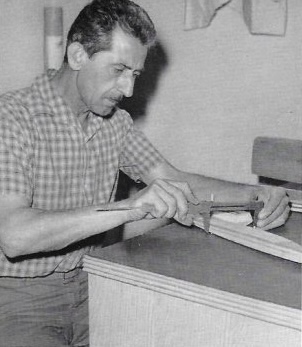
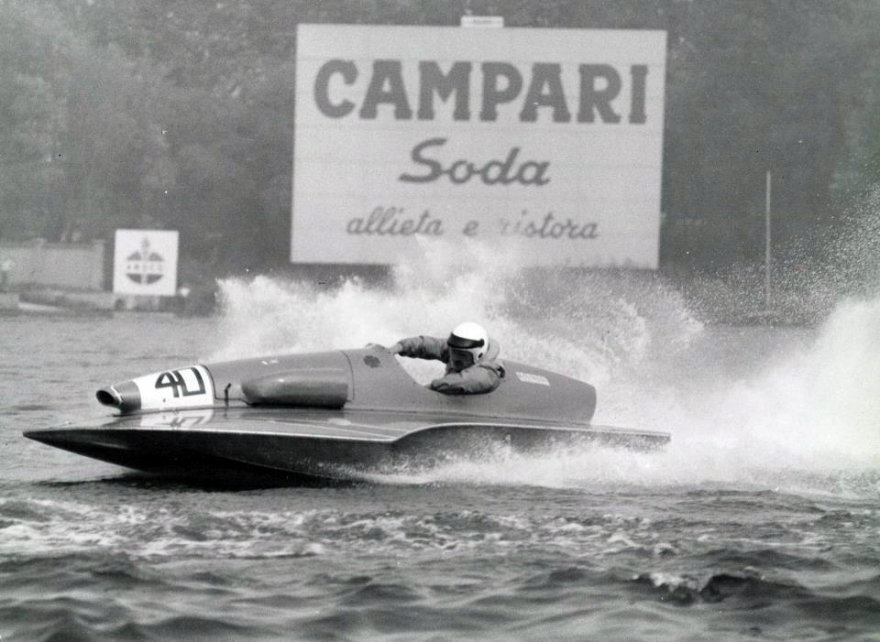
The story begins with Angelo, the son of a furniture maker. Woodworking is second nature to him when, in the late 1940s, he sets up a small yard in Tavernola, near Como. His attention to detail, skill and discretion quickly attract commissions from leading drivers, looking for light, rigid hulls for outboard engines. For the enterprising Milanese business elite rebuilding the Italian economy after the war, costly motor sports – on land or water – are very much in vogue. For these risk-taking gentleman drivers from Milan, the journey to Como in a Ferrari, Lancia or Maserati to follow the construction of their commission and test their boat on the lake is an opportunity not to be missed. From 1953, a boat designed by A. Molinari sets its first world record with the champion Massimo Leto di Priolo, who shatters the world’s previous best performance in the 1000 cc “X” category, the flagship outboard racing class. Angelo created a slender, exceptionally fast hull inspired by an American three-point Swift design, achieving an average speed of over 134 km/h in the two official runs. From then on, virtually every year sees new exploits or championship titles secured in boats built by the first of the Molinaris. In 1954, the same Leto di Priolo reaches over 161 km/h in his small outboard, a new record, followed by a further five in the same year in hulls from the Tavernola yard. His racers are often fitted with König engines and later, more generally, with powerful Mercury outboards in the higher-capacity classes. To dominate international championships across several categories, Angelo Molinari will go on to produce dozens of hulls, outboard hydroplanes, outboard and inboard three-pointers, and later pioneering outboard catamarans, which his son Renato will take to the pinnacle of powerboat racing. Before reaching these summits, between 1958 and 1975, the A. Molinari brand will establish itself as one of the top 3 in the inboard three-point series, powered in most cases by 1300 to 2500 cc Alfa Romeo engines. As is often the case, major innovations are already in the air before being fully developed and formalized. In the early 1960s, while intrepid British and American pioneers also seem to be exploring the potential of twin-hull “tunnel” designs – two hulls connected by a horizontal plane – a Molinari catamaran driven by the Rasini brothers enters the 1964 Duchess of York Trophy in England. This presence surprises the organizers, because there are no regulations yet in place for this type of hull. The boat, which attracts considerable curiosity, is admitted into an “experimental” category, with no hope of entering the overall classification. Two years later, another Molinari catamaran wins the 1966 Paris Six Hours event, driven by the builder’s young son Renato alongside Cesare Scotti. This major victory will relaunch Angelo Molinari’s innovative activity in the world of racing catamarans, at a time when three-point inboard racers, first with front-mounted, then rear-mounted engines, begin their decline in the 1970s. Today, his boats are highly sought-after by collectors.
Livio Molinari
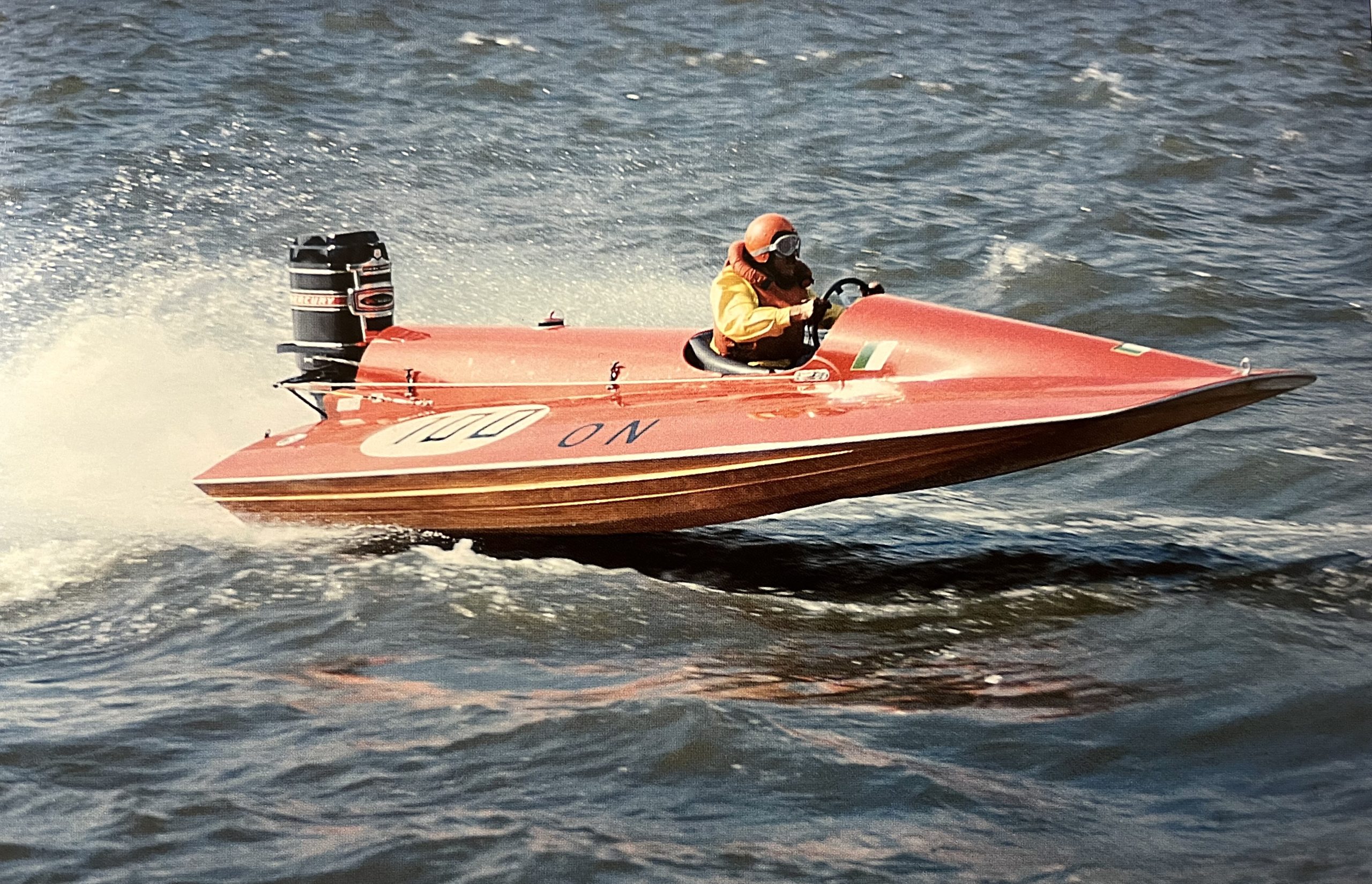
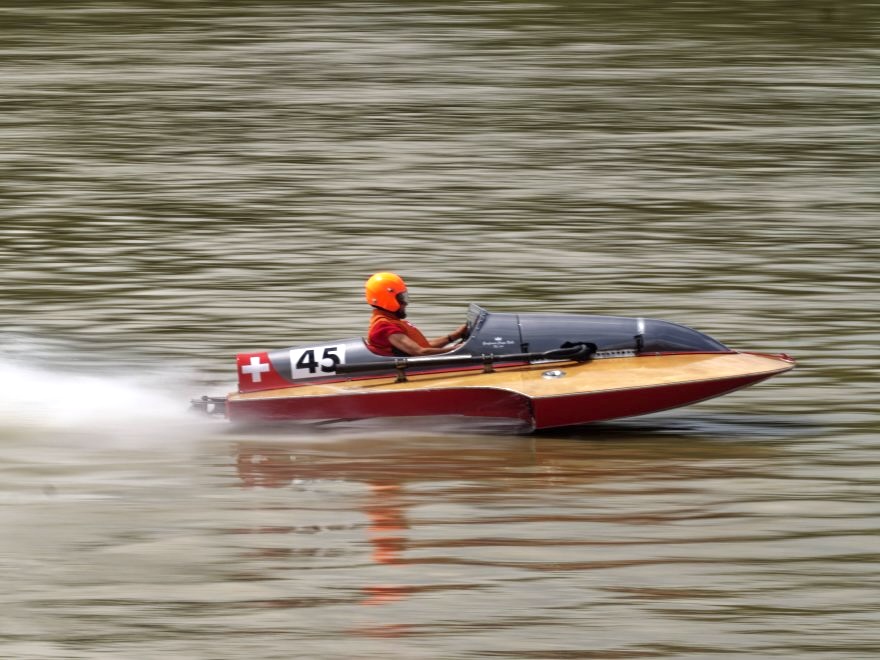
In the Molinari family, there is also Livio. He is far less well known than his elder brother Angelo. As though mastery of woodworking applied to racing boats is part of an inescapable calling, Livio, around 10 years after Angelo, opens a small yard at 5 Via Puecher in Como. This location is no coincidence, just a short walk from the highly influential Como Yacht Club on the lakeside, home to its renowned M.I.La. powerboating section, a true breeding ground for champions. From 1960, and for around 20 years, Livio Molinari will mainly produce traditional three-point racing hulls, closely resembling those of his brother, who is increasingly drawn towards experimentation and catamarans. These single-seater three-pointers, fitted in most cases with Alfa Romeo engines, are built to strict class regulations that allow only minimal variations between boats. As a result, competitions are largely decided by driving skill and, to a lesser extent, mechanical performance. With the two brothers working in the same field just a few kilometers apart, the Livio Molinari name gradually gives way to “Molivio”, under which collectors can still find rare examples on a very small vintage performance market.
Renato Molinari
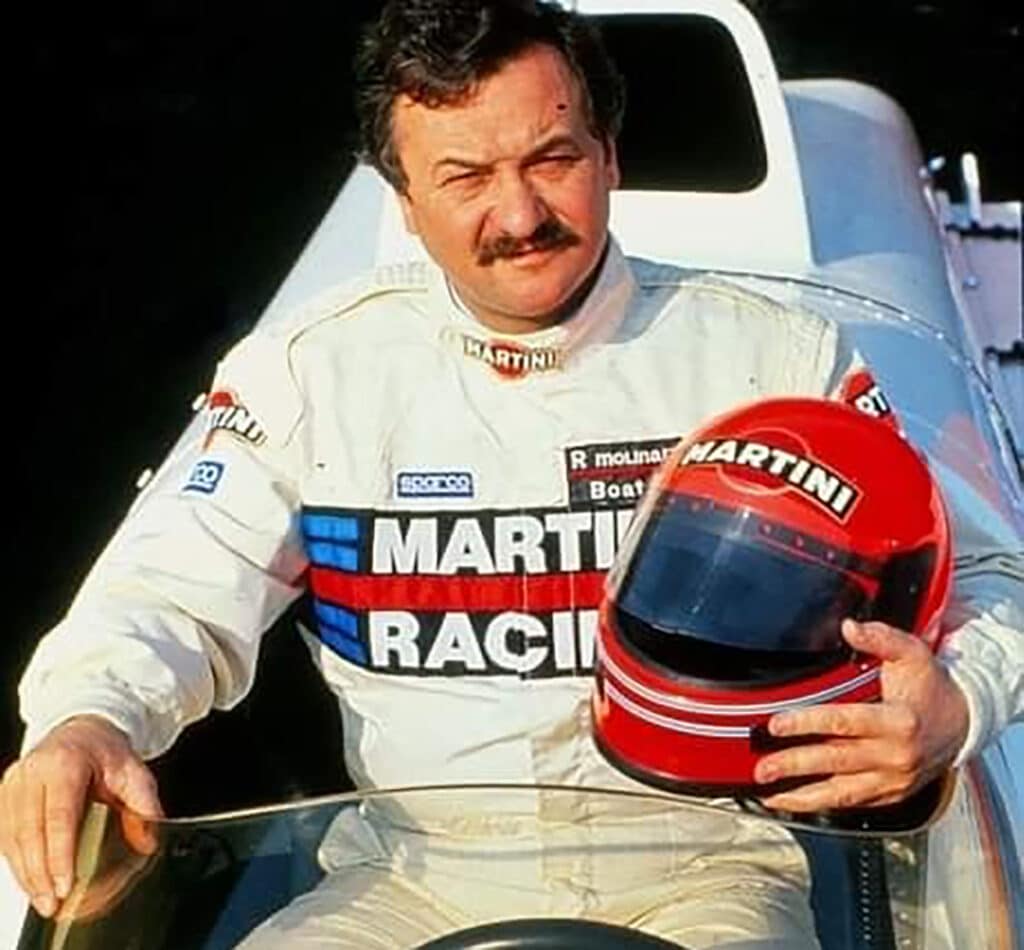
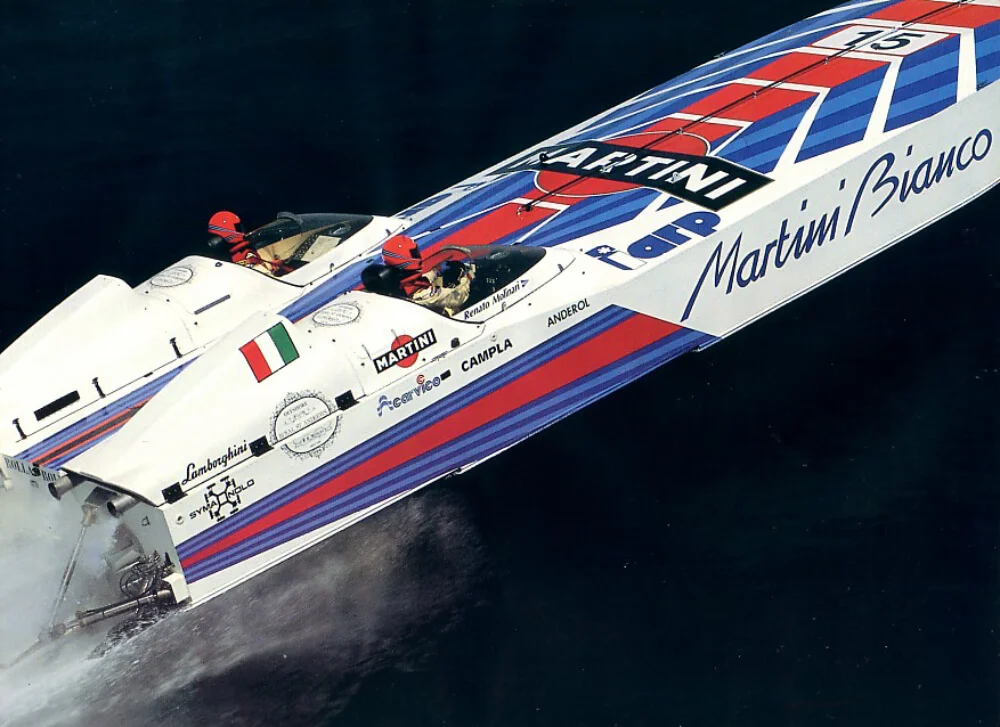
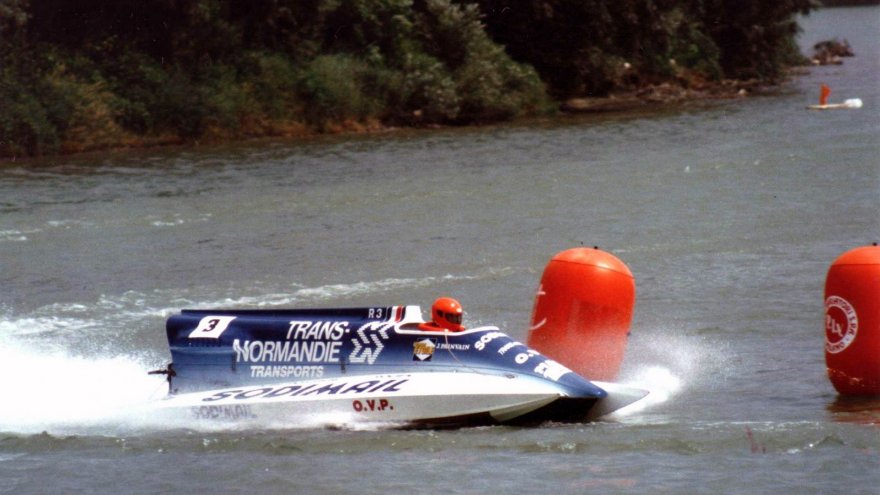
Angelo Molinari’s son makes his competitive debut in 1964. He is 18 – the legal age required – but has already spent years learning at the helm of boats built just below his home. Exceptionally gifted and at the forefront of his father’s innovations, Renato Molinari is propelled into the heart of the revolution that reshapes top-level powerboat racing from the mid-1960s with the catamaran. Over more than 20 years as a driver, he builds an extraordinary record that makes him one of the most decorated sportsmen in this discipline. The figures speak for themselves: 18 world titles and 15 European championships, along with four victories in the Rouen 24 Hours and Paris Six Hours. In addition to 11 world speed records and three first-place finishes in the formidable Pavia-Venice race. Referring to this latter event, run along the obstacle-strewn Po River, Renato Molinari remarked: “Of all my victories, those achieved on this long and demanding course, which I tackled around a dozen times, brought me the greatest satisfaction”. With so many titles, and assuming at least a dozen Grand Prix events each season, this amounts to hundreds of victories worldwide, and as many magnums of champagne sprayed across podiums. And since Formula 1 offers a natural point of comparison, the likes of Fangio, Schumacher and Lewis Hamilton really would have something to measure themselves against. Renato Molinari wisely stepped away from the wheel in 1984 after the Rouen 24 Hours event. Already a catamaran builder, he will go on to manage leading racing teams. And yet this truly exceptional driver has always been modest and even humble. Calm by nature and a man of few words, this exceptional champion remained somewhat removed from the media frenzy of the circuits. According to the American journalist Danny Casey: “Observers noted at the time that before the starts, Molinari used to always take a moment for deep introspection, his gaze fixed in the distance. He was also seen kneeling on pontoons, in a state of intense concentration, drawing on his inner reserves to get into ‘the zone’, another level of awareness”. In his search for heightened states of focus, Renato recalls the late Formula 1 driver Ayrton Senna, who spoke, on rare occasions, of entering altered states of consciousness, like during a remarkable day in Monaco when “certain forces seemed to be driving for him”. Renato Molinari was cut from the same mold. He passed away on September 6, 2024, still living quietly in Como. His death prompted a wave of tributes worldwide, recognizing his exceptional career.
Eugenio Molinari
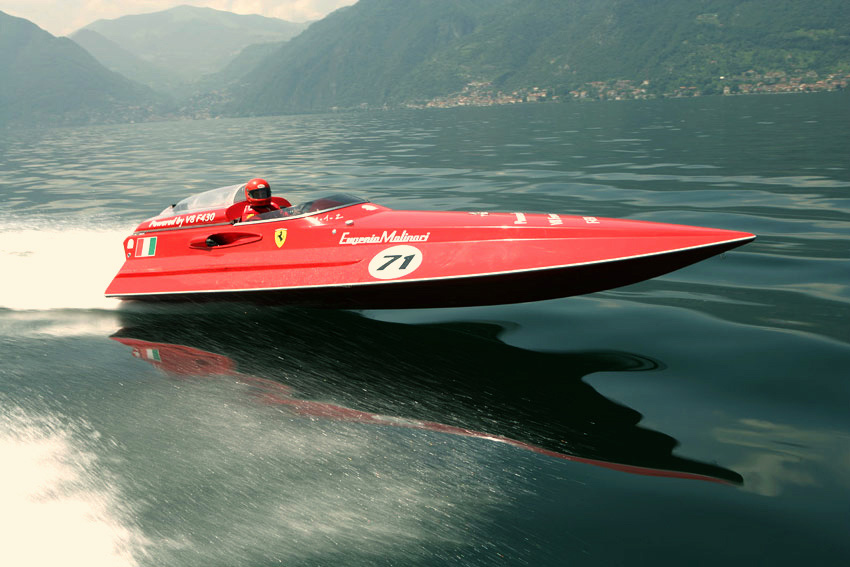
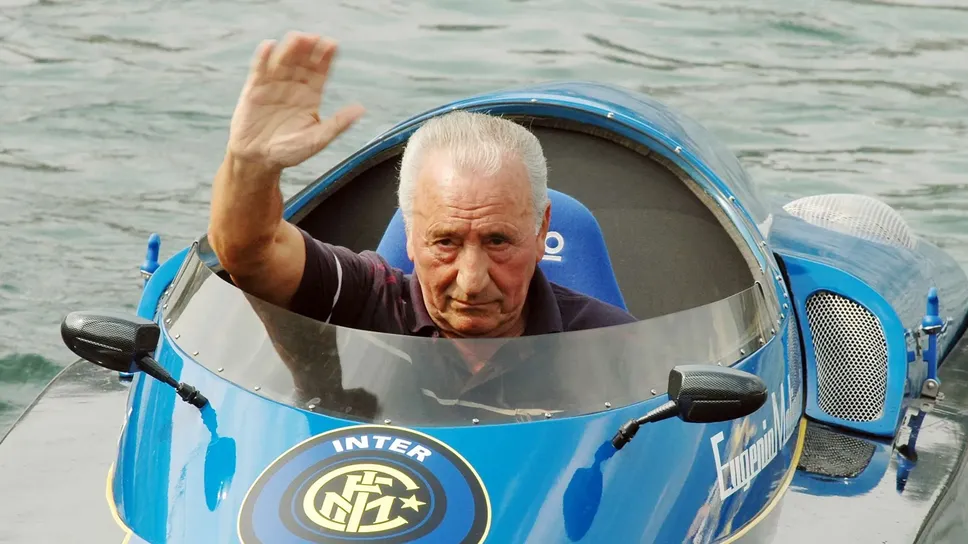
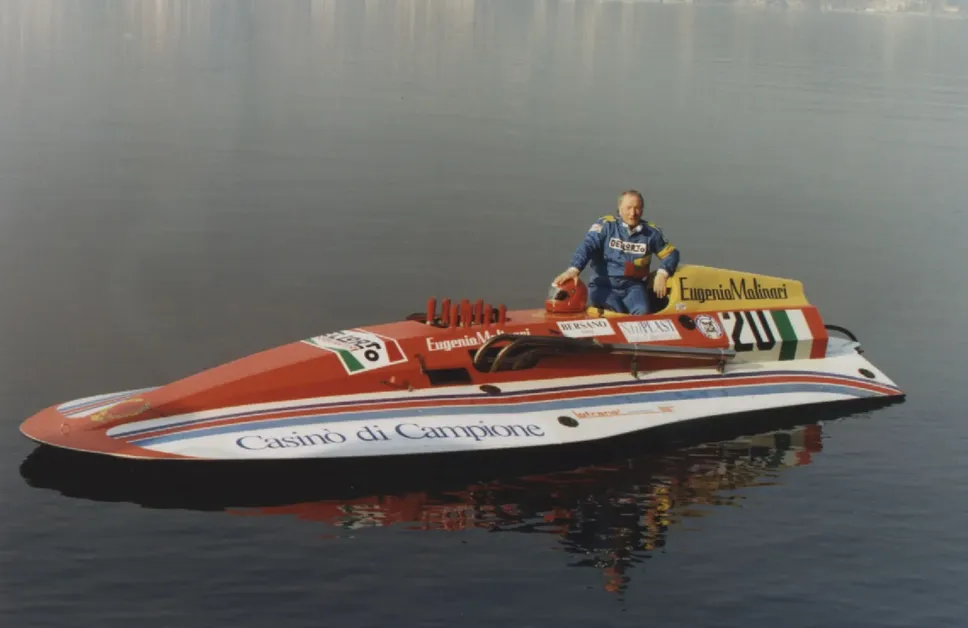
This Molinari, both builder and driver, is not directly related to his predecessors, yet his active presence in the same sector and on the same waters makes him a key figure in this golden age of Italian powerboating. Like Angelo, Livio and Renato, Eugenio Molinari is born on the shores of the lake, around 20 kilometers from Como. From an early age, he plays around building wooden model boats in the workshop of his carpenter grandfather. Keen to learn how to build racing models from the very best, he works for a time at Guido Abbate, the leading yard in the 1950s for more powerful craft than those of Angelo Molinari, before opening his own business in Lezzeno, his home village, in 1956. At just 19, he sets up in a disused mill and begins building luxury Riva-style runabouts, alongside racing boats which he pilots himself with great determination. He makes world records his specialty, using them to both test his designs and establish his reputation. Unlike the Molinaris of Como, Eugenio is anything but reserved. With a very strong personality, Eugenio never hesitates to put himself forward. In this small world of powerboating, a playful slogan emerges: “Eugenio è un genio” (Eugenio is a genius). As is often the case, such jokes contain an element of truth, and he does little to discourage the flattering words that surround him. Whether a genius or not, the driver-builder from Lezzeno enjoys a truly extraordinary level of success over the years, including no fewer than 72 world records, one world title and four European championships in high-speed, high-capacity and particularly demanding categories. To achieve these feats, he develops large “four-point” racers that to some extent resembled – but were not – catamarans. The legendary Pavia-Venice race, so dear to Renato, is won by Eugenio eight times, a testament to his courage and endurance. He is equally adept at public relations as well. When Luciano Pavarotti buys some cabin boats from him, Eugenio ensures that this news is widely covered in the press. Before gradually retiring from driving, if not entirely from building, he decides, at the age of 72, to add one final record to the walls of his office, already covered with so many certificates and awards. This time, he associates his name with Ferrari, capturing worldwide attention. To mark, in his own way, the 60th anniversary of the Maranello firm, he builds and pilots his single-seat Freccia Rossa, powered by a Ferrari F430 V8, to a record average speed of 123.3 km/h in the little-contested 1100 kg category. He passed away in April 2024 at the age of 89, leaving behind a vast collection of boats in his personal museum and the memory of a deeply engaging figure, beyond his exceptional record.
Gérald Guétat