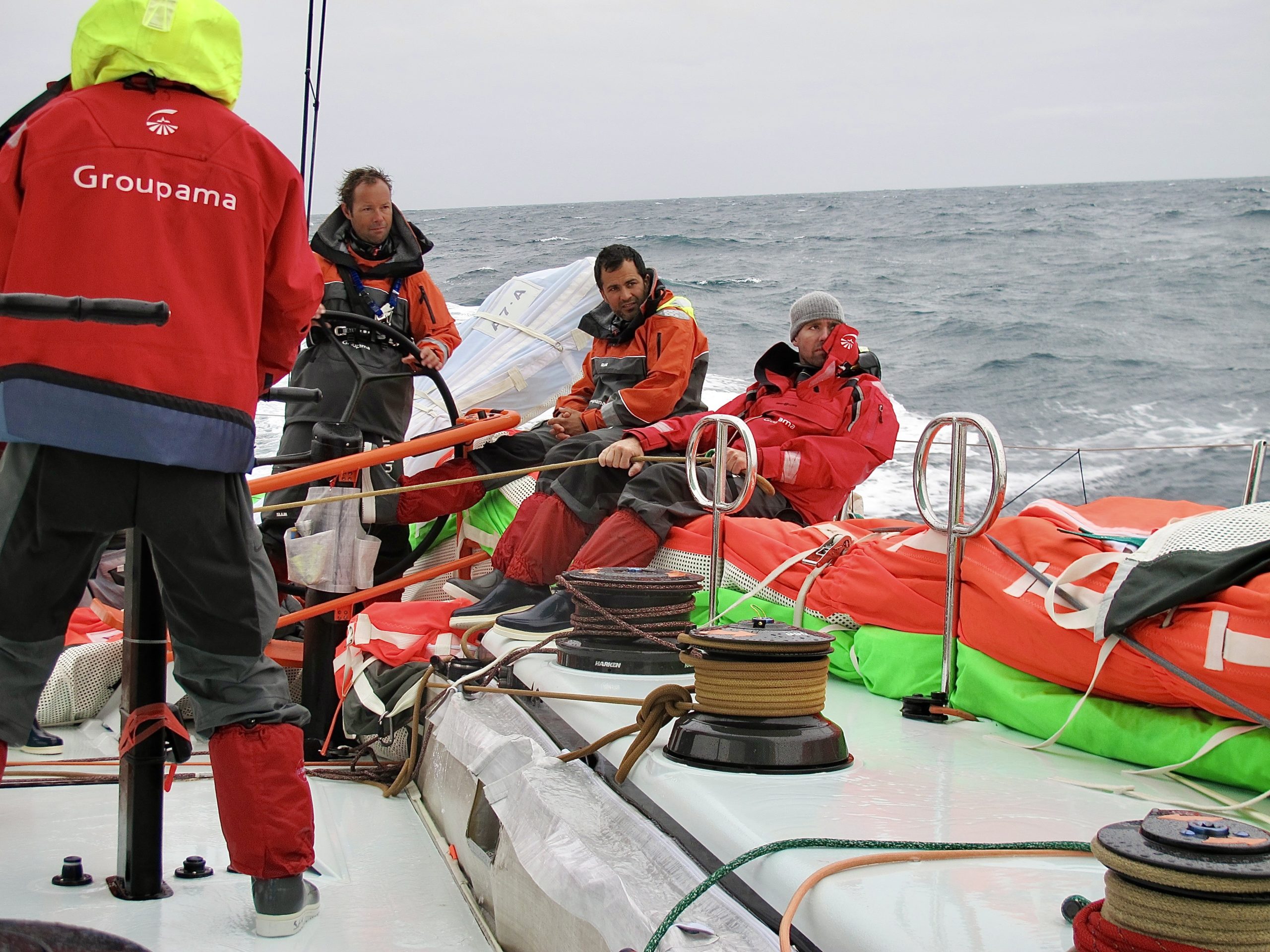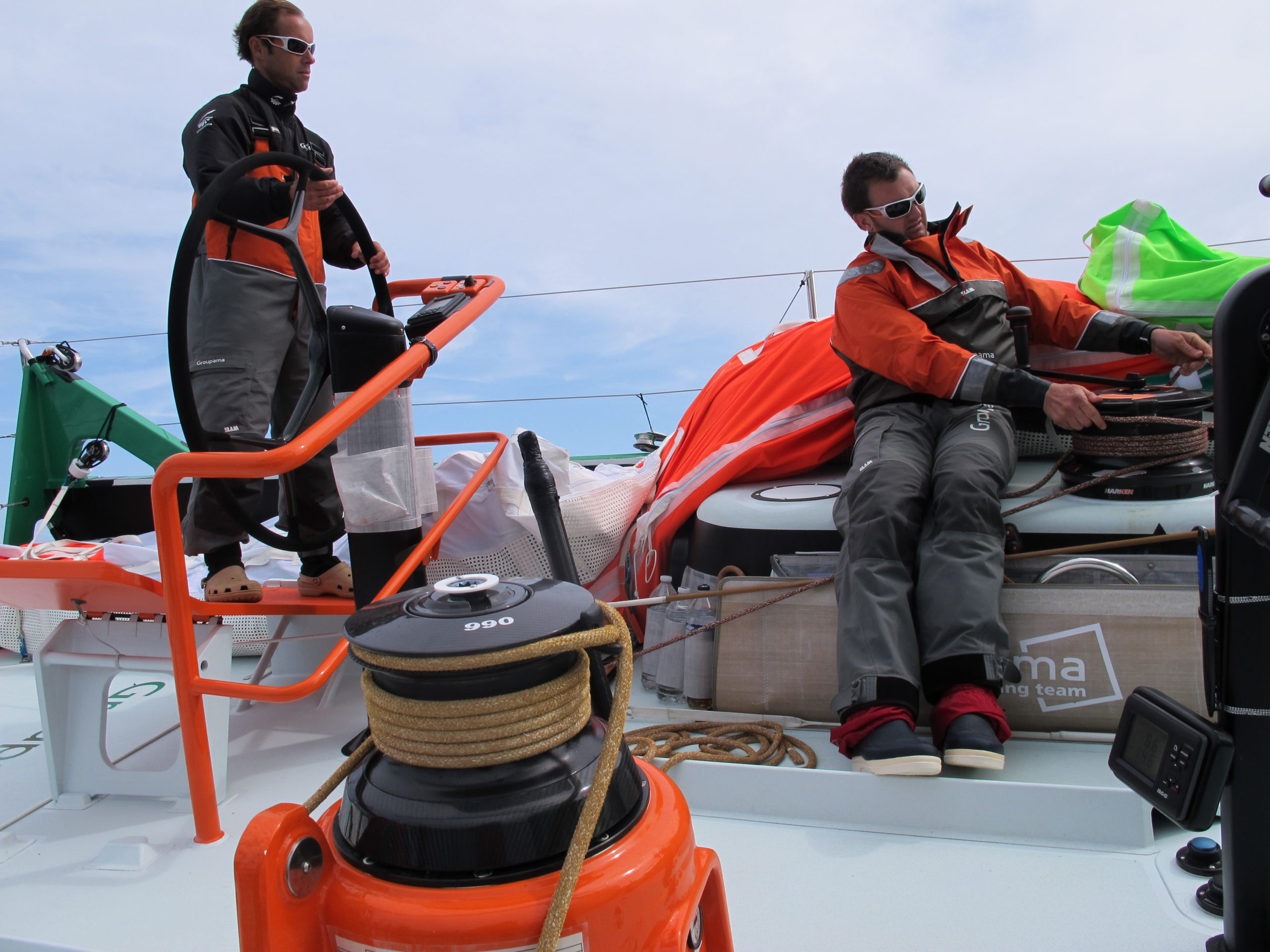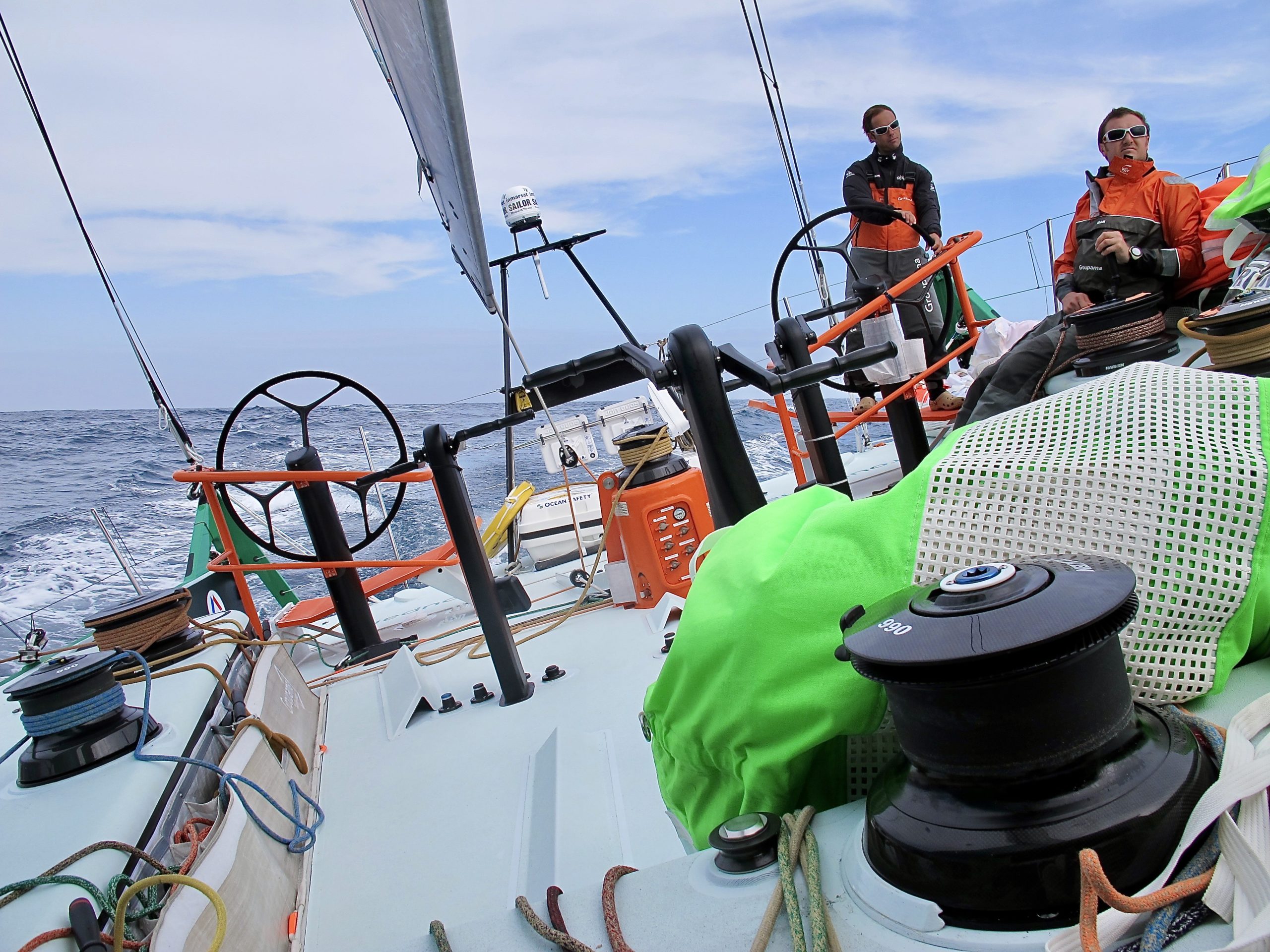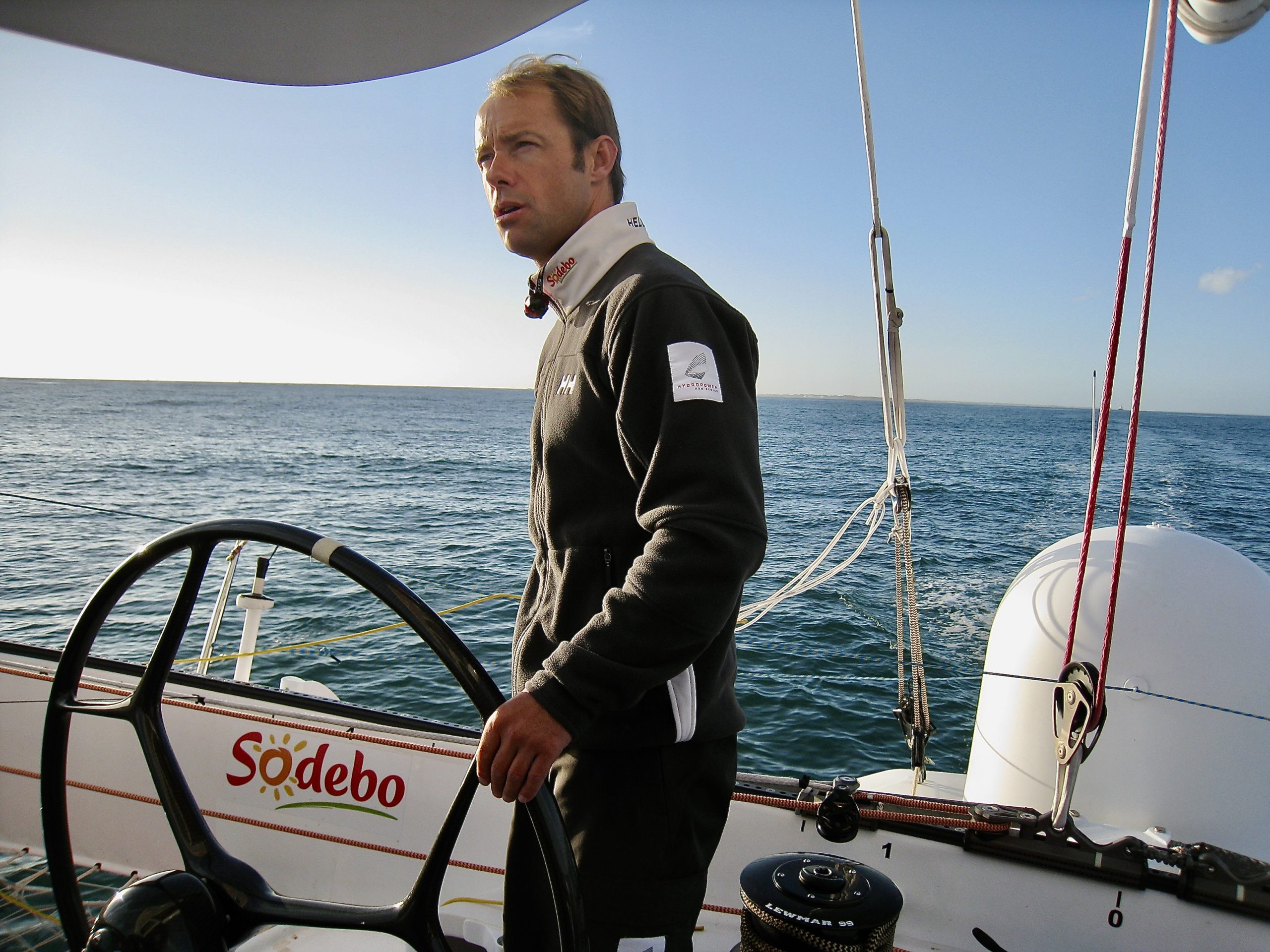
Thomas Coville Podcast, The aesthetics of speed
French sailing entered the realm of very high speeds. To win the Jules Verne, in the absence of ideal weather conditions, Thomas Coville had no choice but to extend his route by more than 5,000 miles (9,000 km). This was the only way to avoid calms, headwinds and the most dangerous seas. He completed his circumnavigation at a stratospheric pace: averaging nearly 60 km/h throughout his route, across more than 50,000 kilometers, powered solely by the wind.
Seen from land, this average speed might seem quite modest. But to understand just how demanding a speed like this can feel at sea, you would have to multiply this performance by four! So, imagine maintaining a speed of 240 km/h, day and night, on an unpaved track… for one month and 10 days.
A 12-time Cape Horner, former solo round-the-world record holder (since beaten by François Gabart), and now record holder with a crew, with an exceptional track record in ocean racing, Thomas Coville is one of the sailors best placed to decipher this extraordinary revolution: sailing boats are now two to four times faster than before. Yet for this champion, speed remains, above all, a matter of aesthetics.