From crossing the Channel to sailing around the world
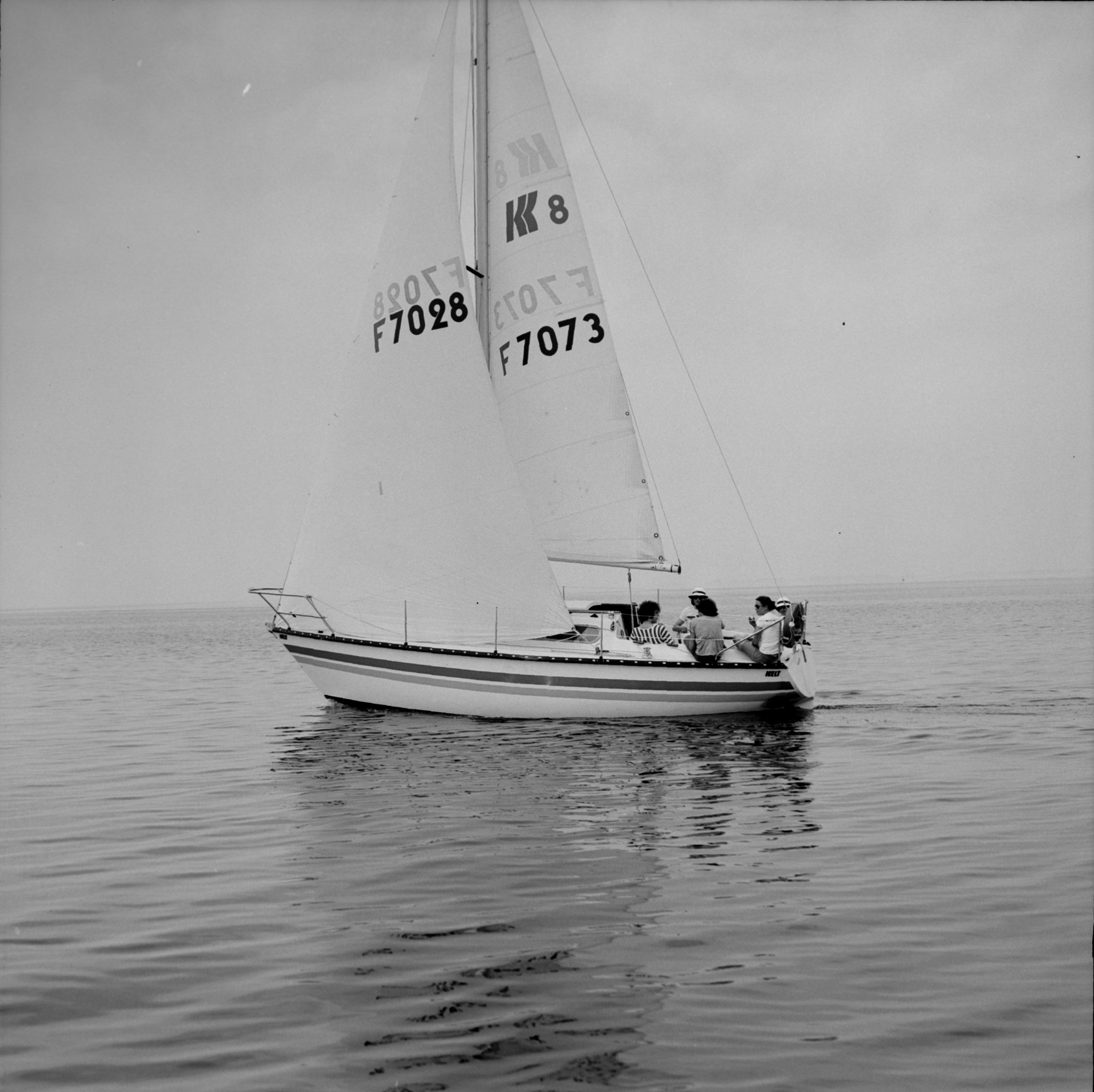
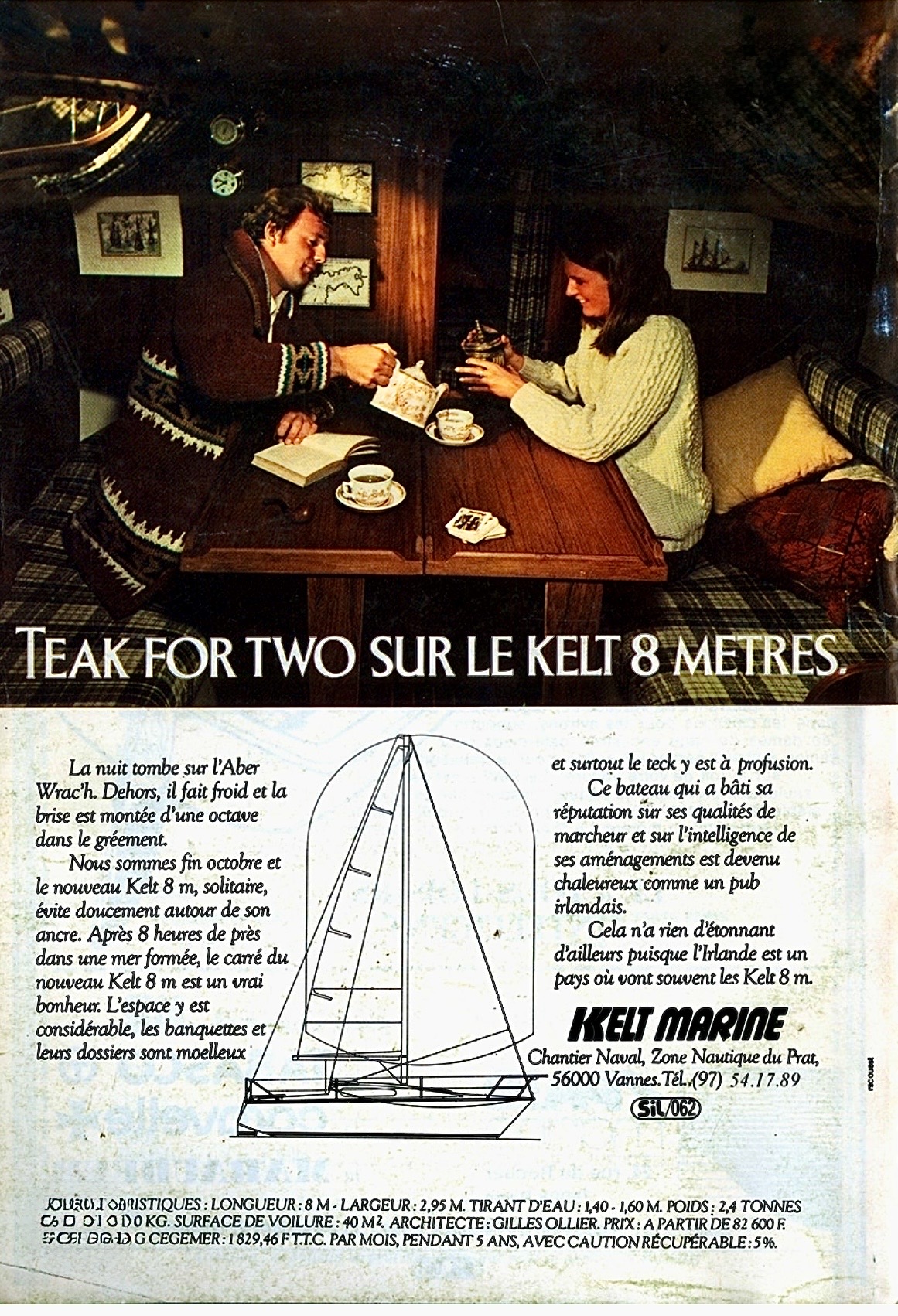
“A long tack toward the Scillies”. In 1977, to mark the launch of its Huit Mètres, the young boatyard Kelt Marine took out pages of adverts in boating magazines, emblazoned with this bold slogan. The aim was to sell the dream with a mythical destination, while offering the right offshore sailing yacht for an adventure like this. For the ordinary recreational sailor, crossing the Channel was a small personal achievement, a bold undertaking, and a badge of true seamanship. The amateur coastal cruiser was suddenly transformed into a daring captain, a skipper capable of sailing out of sight of land.
Of course, Moitessier, Janichon-Poncet, and the pioneers of the Whitbread, the first true round-the-world race, all of whom had achieved superhuman feats, had stirred passions, fired imaginations, and perhaps shown the way to a handful of daredevils. But Sunday sailors saw themselves as light-years away from following in their wake.
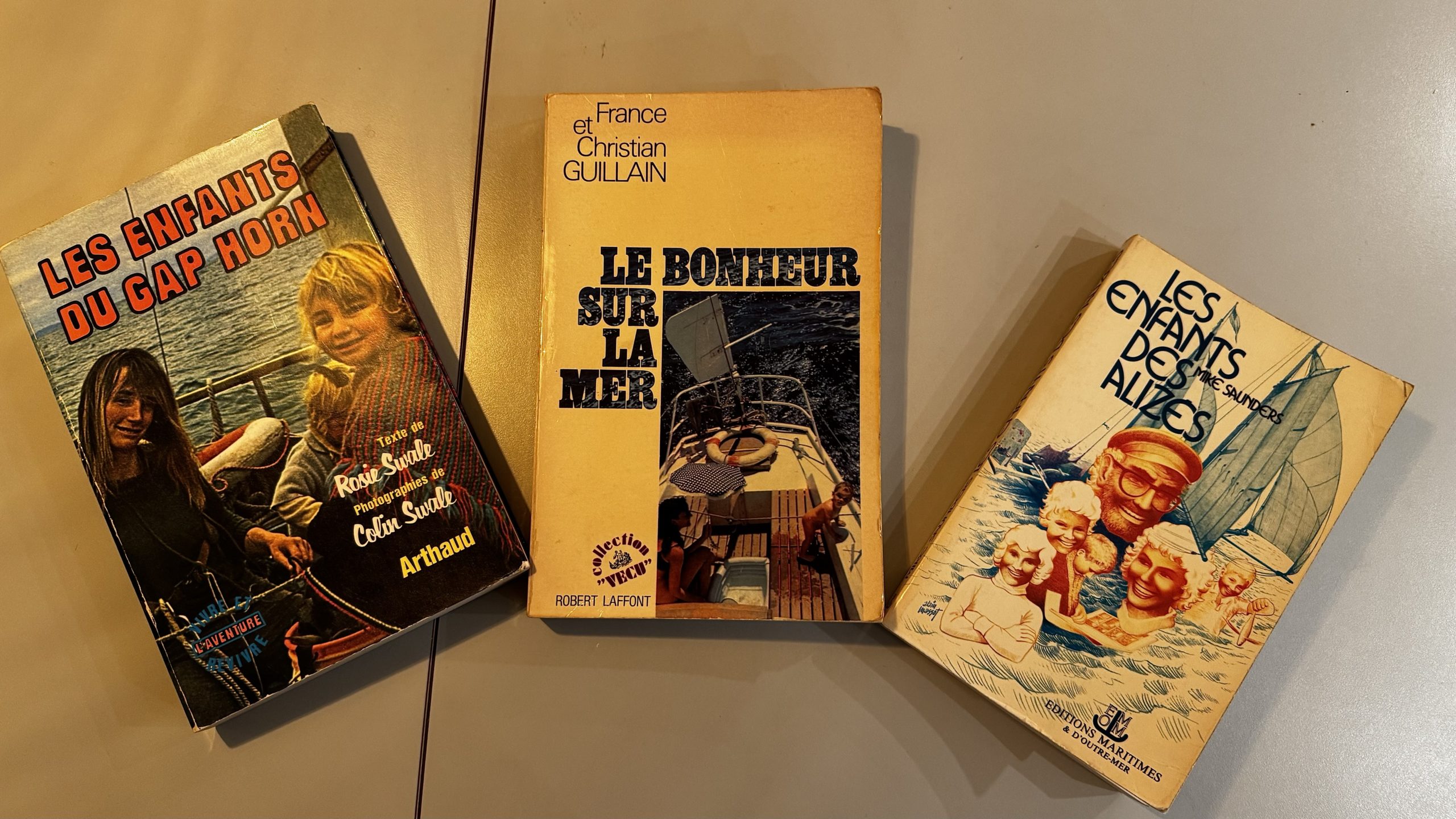
Of course, families with young children had completed astonishing voyages and shown that the old dockside saying – “When a child appears, the horizon disappears” – need not come true. In the 1970s, the Swales rounded Cape Horn on a 9-meter catamaran with two children aboard. France Guillain published a bestseller with the understated title “Happiness on the Sea”, in which she recounted family life across countless miles and far-flung stopovers. The Saunders family returned from Rhodesia, today’s Zimbabwe, to England with their four children on board a 10m sailboat. These stories may well have inflamed the imaginations of fair-weather helmsmen. But they did not necessarily make them want to follow suit, so wide was the gulf between these pioneers and themselves: sailors who liked to venture out to sea while keeping their feet firmly on the ground.
For them, the Isles of Scilly, which the French never quite manage to call by their proper name, the Sorlingues, already represented a distant goal, and something like a certificate of good seamanship. This string of granite rocks seems to reach out into the Atlantic, prolonging the shores of perfidious Albion. It is home to seals and palm trees, fogs and currents. Its approach, although marked, demands rigor and precision, at a time when a hand-bearing compass and a Cras plotter were the only tools that allowed sailors to fix their position on a paper chart.
There are those who have “done” the Scillies and then everyone else
In the French ports along the Channel and the Atlantic, there were, at the time, those who “had done the Scillies” and those who had not. Which explains Kelt Marine’s advertisement.
In the Mediterranean, likewise, there were those who had dared to sail to Corsica or the Balearics, and those who were content with Porquerolles or the Calanques.
The boldest of the dockside dreamers ventured as far as Ireland, a destination endowed with every attraction but just as many dangers, between gales stirred up by one depression after another and dangerous coasts battered by heavy swells. Once again, the Kelt Marine yard understood this and drew another of its adverts from it.
The same sailors also set off for Galicia, at the far northwestern tip of Spain, with the feared crossing of the Bay of Biscay as the price of admission. Radio direction finding helped, in principle, to determine a position offshore, out of sight of any coast. In reality, for fear of missing the northwestern tip of the Iberian Peninsula, sailors often decided to head due south until they found the high cliffs of the Asturian coast, then followed those intimidating shores until they reached the great harbor of A Coruña.
But on their return, in Vendée or elsewhere, those who had “done” Ireland or Galicia certainly had not earned the right to wear an earring or piss to windward like true Cape Horners. And yet, they belonged to a different caste than their more timid pontoon neighbors. They had dared to brave the open seas.
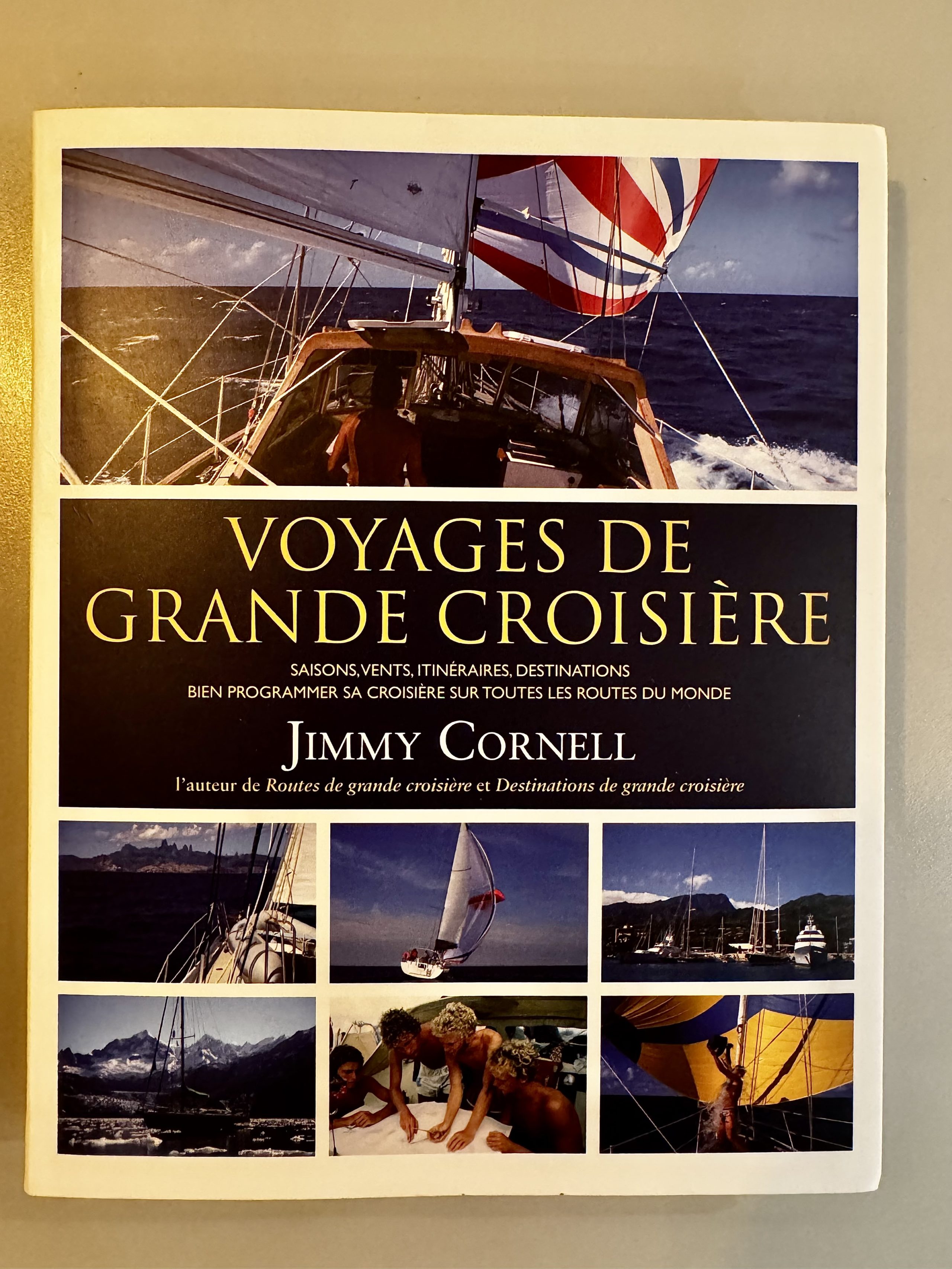
And then the 1980s arrived, boats grew bigger, and ambitions followed. In 1986, a giant of the cruising world named Jimmy Cornell sensed that recreational sailors wanted to broaden their horizons and push them further. He therefore proposed a new kind of formula: an Atlantic crossing that would be neither a professional race nor a simple cruise. With the Atlantic Rally for Cruisers, soon known as the ARC, he offered weekend sailors the reassuring framework of a fleet crossing, with each boat monitored, a very serious set of safety requirements, and all kinds of advice for preparing a true offshore passage. Success was immediate, with more than 200 entries in the very first edition.
In the 1990s, since the “transat” was now within everyone’s reach, young couples, families with children, and groups of friends came up with a new form of escape: the Atlantic circuit. A sabbatical year was enough to sail down to the Canaries and then Cape Verde, reach the Caribbean on the trade winds, and return by way of Bermuda and the Azores, skirting the anticyclone.
In marinas, there were now the “Atlanticos” and then everyone else
Several innovations greatly facilitated these projects, which, just 10 or 20 years earlier, still seemed like trials reserved for experts. In addition to the size of the boats, which now commonly exceeded 10m, the widespread use of roller-furling headsails and the arrival of satellite positioning allowed people of all ages and physical conditions, as well as parents with very young children, to imitate Christopher Columbus. In marinas, there were now the “Atlanticos” and then everyone else.
The 2000s, marked by the irresistible rise of catamarans, transformed a simple trend into a great wave. The Channel, the Bay of Biscay, or the Alboran Sea were now little more than almost routine stages on the route to the sun.
GPS, satellite phones, and electronic charts opened up new horizons for those seeking a sense of escape.
As a logical evolution, Cornell launched the World ARC in 2008: nothing less than a round-the-world voyage, organized along the same lines as his transatlantic rally. Numbers were lower, inevitably, but continued to grow over the years. And just like the Atlantic crossing a quarter of a century earlier, this round-the-world fleet voyage showed the way forward. The route is well known: Canaries, Cape Verde, Caribbean, Panama, Galápagos, Marquesas, Polynesia, New Caledonia, Australia, Mauritius, South Africa, Saint Helena, Caribbean, Azores, and the European coasts.
With the arrival of satellite constellations such as Starlink, bringing high-speed internet aboard and providing real-time radar images of weather systems; with the various forms of artificial intelligence that allow astonishingly precise routing; and with the ease of use and stability of modern catamarans, all equipped with electric winches, desalination units, and freezers, a new generation of circumnavigators is taking the mystery out of sailing around the world.
Sometimes surprisingly inexperienced at the start, sometimes of very advanced age, and often accompanied by children, these 21st-century travelers complete their great loop with complete peace of mind. They set off on voyages for fixed timeframes, with carefully developed investment plans. In this way, they avoid finding themselves in distress on their return. They plan their round-the-world voyage as a stage in life, perhaps even as a condition for a successful life.
Some yards understand this perfectly. These builders offer financing packages that include the resale of their boat at the end of their circumnavigation, as well as technical support throughout their voyage. Even better, they create communities of owners who exchange advice, experiences, and useful tips.
50 years after the “Long tack toward the Scillies”, the mantra of these yards could be: “A long tack around the world”.
Olivier Péretié