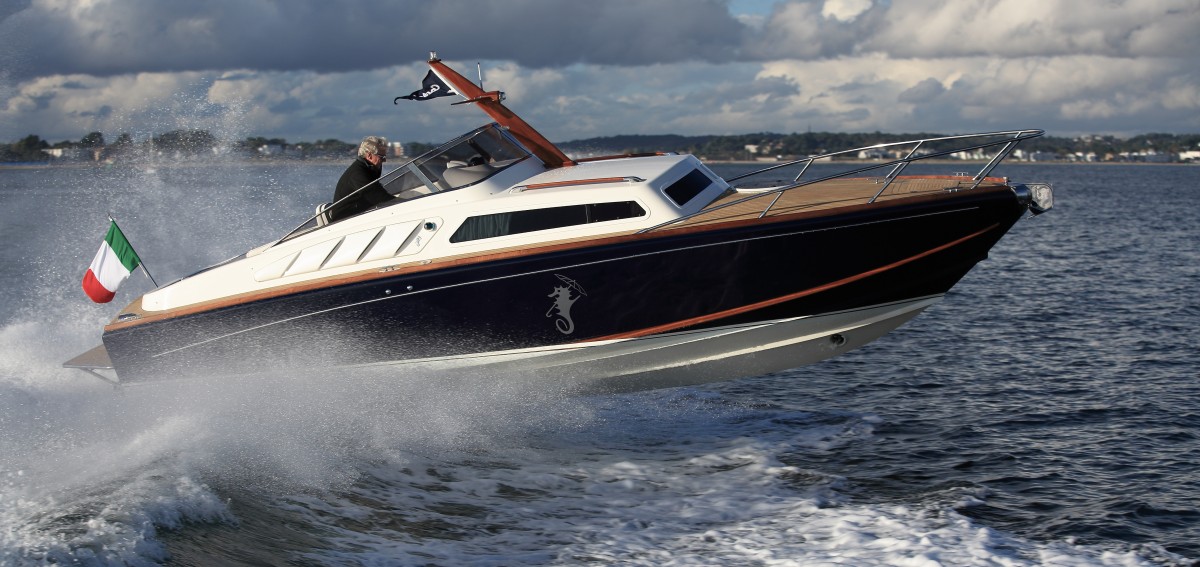
Renato “Sonny” Levi, Born to the trade
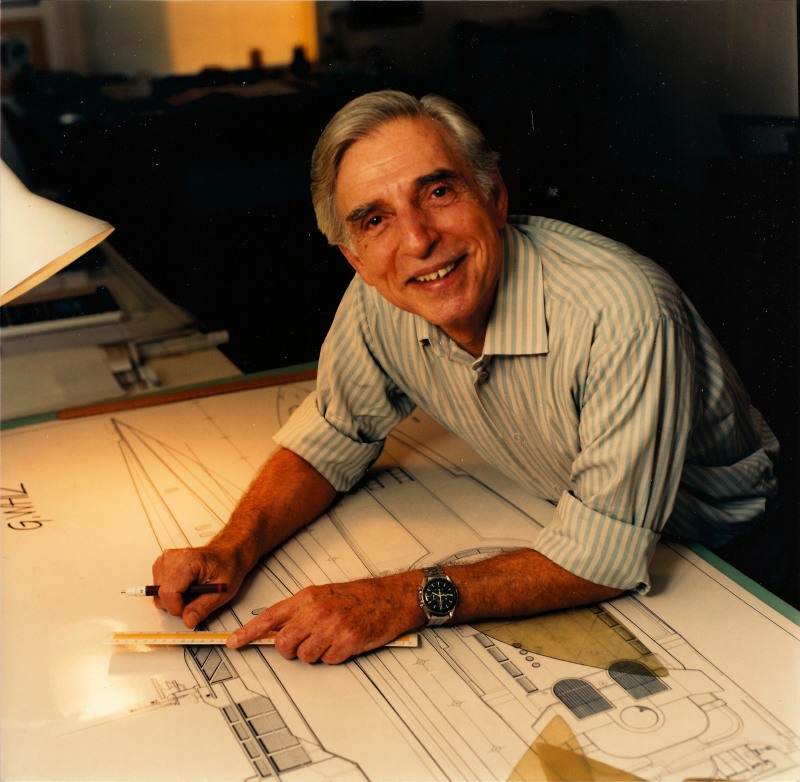
Karachi, British Indian Empire, 1926. The formidable monsoon season is entering its final weeks. On the shores of the Arabian Sea, the port of this ancient city, on the Indus River Delta, may lack the scale of Bombay, but is still a strategic hub for trade and fishing. Its aerodrome, built two years earlier, is the principal aerial gateway to India. In this highly cosmopolitan city, home to diverse communities of all faiths since the late 19th century, Mario and Lucci Levi arrived from Italy in the early 1920s, fleeing fascism and establishing their business interests. Renato is born on September 9, 1926, into a family deeply rooted in woodworking, starting off in furniture design and later expanding into shipbuilding in Bombay. The newborn is a British national, yet the Levi family maintain strong ties with the faraway continental Europe. An international outlook is part of his inheritance from birth, as shown by his secondary education in Cannes, where the young boy witnesses, alongside his mother, the invasion of France in June 1940. One can imagine the risks faced at the time by British nationals and Jews amid the tragic territorial upheavals underway. So, Mrs Levi decides to leave the country as quickly as possible with her son, traveling by train to Genoa to board the first available ship bound for Bombay. Their ordeal is far from over. They manage to board a passenger liner and settle into a cabin when, while still docked, Italian carabinieri appear with an arrest warrant in the name of one Renato Levi. Lucci quickly persuades the officers that it cannot possibly concern her 14-year-old schoolboy son. It soon becomes clear that the man in question is in fact his uncle, actively sought as a British intelligence agent. The nickname “Sonny”, likely given to the young Renato to distinguish him from this ever-present uncle, will prove a lifelong source of good fortune. Later, its dynamic sound will help blur the lines and turn his identity into a distinctive signature, much like that of a jazz or film star. He spends the next three years continuing his education in India, before starting his apprenticeship in his father’s company, the Afco shipyard in Bombay, which supplies, among other things, fast patrol boats to several navies, including the Royal Navy. In September 1944, Renato turns 18, just old enough to travel to England and enlist in the RAF, where he trains to fly Spitfires. He is stationed in Iraq and later demobilized in 1948. He then trains in aeronautical engineering in London, before returning to India in 1950 to head up the design office of the family business. In the meantime, the geopolitical landscape of the subcontinent has been completely transformed. The independence granted to India by the United Kingdom in 1947 triggers a violent religious partition, leading to the creation of two Muslim states – West Pakistan and East Pakistan, which will later become Bangladesh. Returning to Karachi, now the capital of the Western State, is no longer an option. Firmly established in Bombay, Mario Levi’s Afco shipyard enjoys the full confidence of the new Indian authorities, with its expertise in a field that is crucial to national security unaffected by independence. This is the highly favorable context for Renato’s first professional decade, with these years shaping his later career as an exceptional independent designer who will go on to leave a lasting legacy. Before designing ultra-high-performance hulls for an elite circle of offshore enthusiasts and inventing surface-piercing propellers to improve their speed, he sets about creating working boats, for fishing or the military. No one is better placed than he himself to recount the key stages of this ascent. In his book Milestones in My Designs, published in Italy in 1992 under the direction of the late journalist Antonio Soccol, Renato Levi writes: “When I took over the design office at Afco, my father’s yard, we received a number of orders, including series of patrol boats for the Indian Navy. This placed me in a privileged position to carry out experiments from one contract to the next, working on different hull lines by varying the V-shaped angle at the bow and at the stern. I soon found that hulls with a fairly pronounced V aft gave the best results, making the boats fast in all conditions and comfortable even in rough seas. Those with a sharp V forward and a nearly flat aft section were fast, but difficult to handle in following seas”.
These military projects dominate the first half of the 1950s. They are followed by a commission from the Indian government for fishing boats capable of operating along coastlines lacking infrastructure. In Bombay, Sonny Levi, working within Afco’s design office, embarks on a series of experiments to combine seaworthiness under all conditions with the ability to be beached. It has been observed that certain discoveries can emerge simultaneously in regions and contexts that are very far apart. This is the case with the deep-V hull, developed – slightly differently – during the same period of the 1950s in the Arabian Sea and in New England. This concept, which will revolutionize recreational boating, responds to practical requirements shaped by the geography of a developing country. With Raymond Hunt, in New England, yachting and Atlantic navigation lead to very similar solutions.
Learn more : The Bertram revolution
At the same time, Renato is also called on by his father to launch a liveaboard unit that will showcase the company’s know-how: “It needed to be very comfortable, elegant, refined and, of course, fast. I begin designing it after endless discussions with my father about what this ideal cabin cruiser should be. That is how I learned that ‘custom’ boats are gradually born out of exchanges with the client. However, having your father as a client is far from ideal, especially if he has a character like mine…”. For Renato, this is where he truly learns his trade. The result is the 11.75m Speranza Mia, his first true foray into recreational boating, successfully tested in Bombay in December 1956, with a V-shaped hull. Articles in the boat sector press will help drive sales of plans in a number of different countries. A new chapter begins. From this point on, “Sonny” Levi devotes his creativity exclusively to racing and high-performance boats in Europe. In 1960, leaving behind government contracts and Bombay, he sets up his independent design studio in Europe, first in Italy, then in England, bringing with him solid technical expertise and extensive experience working with high-level government clients. However, as a final example of his eclectic talent, Renato leaves behind one last “Made in India” creation with his Levi RL3 Monsoon, a small two-seat single-engine aircraft capable of speeds of over 200 km/h, produced under license in the United States and Canada.
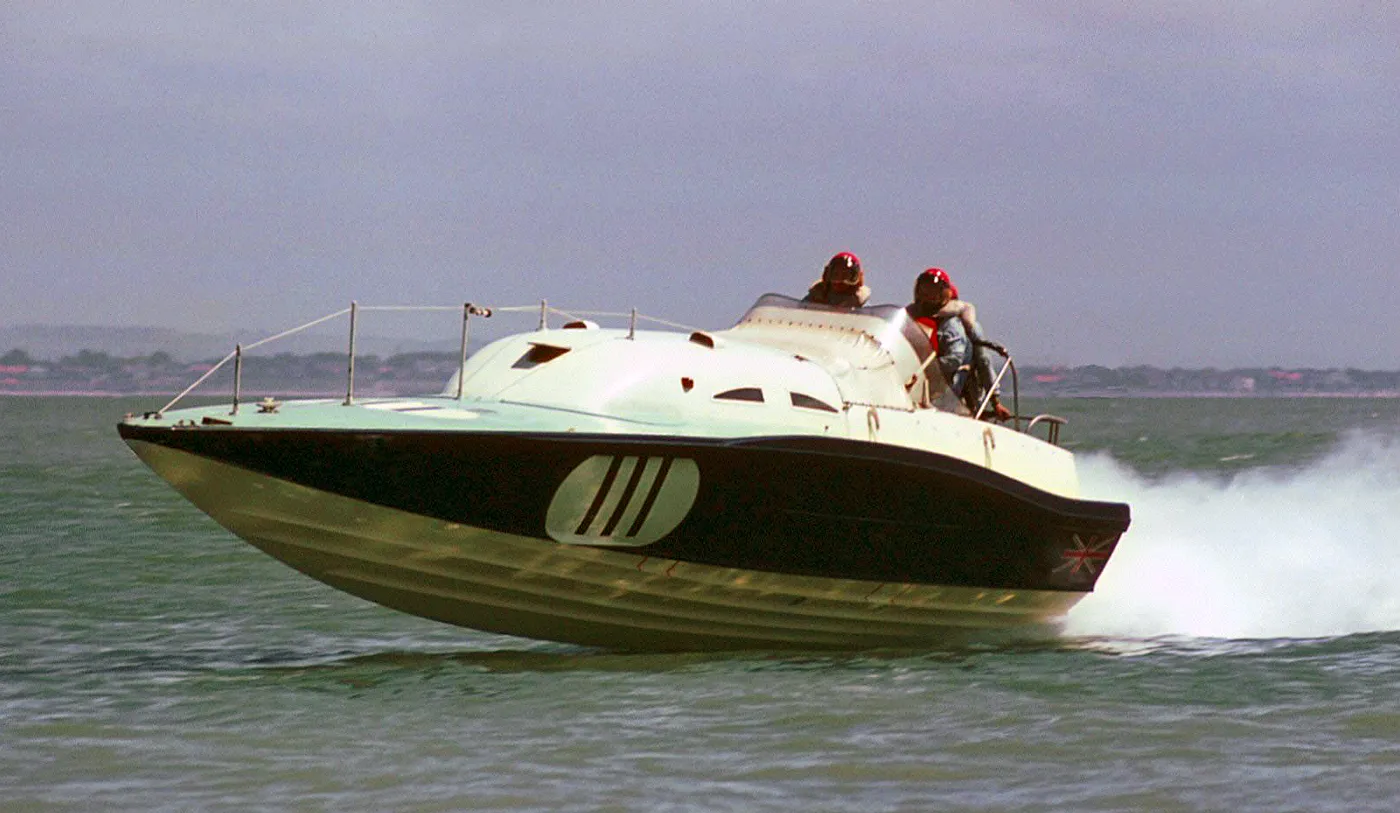
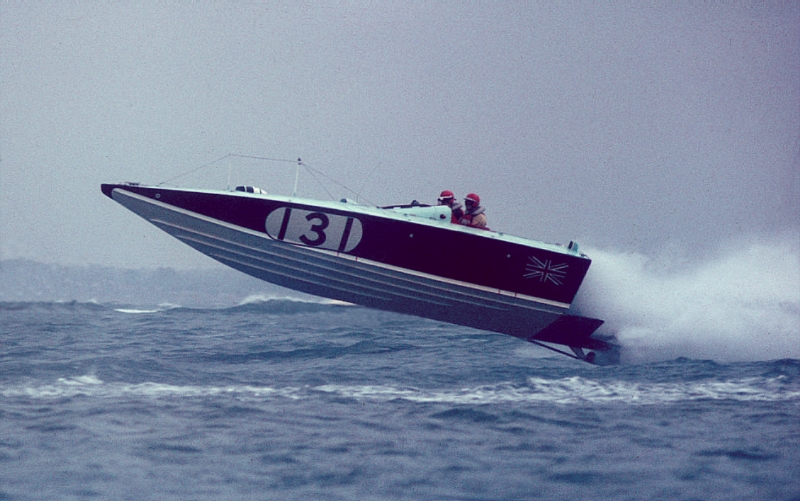
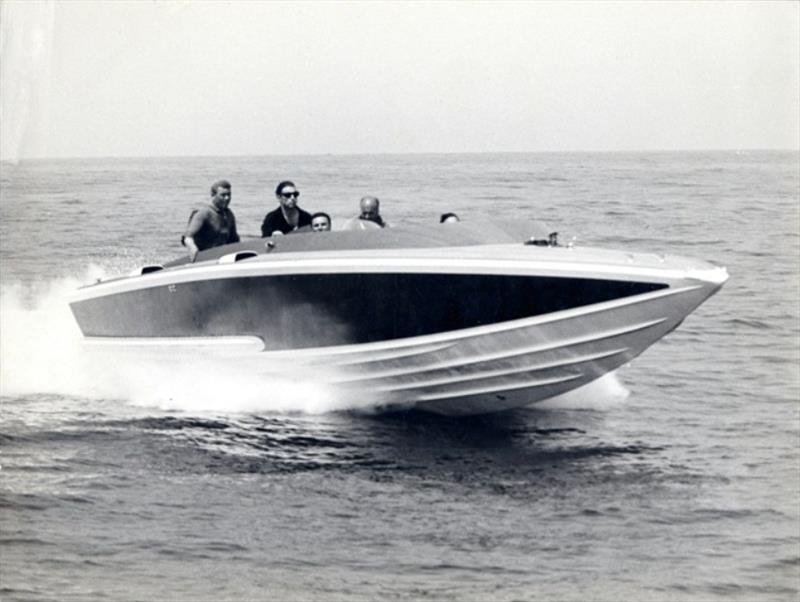
Italy becomes his new base, where he quickly begins a close collaboration with the Navaltecnica shipyard in Anzio, founded by Commander Attilio Petroni, a former naval officer. Renato thrives alongside such men of action, forming a true team, on land and at sea. Offshore racing, which flourishes in the 1960s, is still in its infancy. The cabin cruiser A Speranziella does not win the prestigious Cowes-Torquay race on its first attempt in 1961, but succeeds two years later, along with the Viareggio-Bastia-Viareggio race, with Petroni and Levi at the helm. The reputation of this “child of Bombay”, a brilliant designer and accomplished pilot, grows steadily as his extreme, finely drawn delta-shaped hulls, with long, deep strakes running from bow to stern, achieve success after success. The elegance and efficiency of his designs attract the attention of Italy’s industrial elite, in search of speed and prestige: Agnelli (Fiat), Olivetti (office equipment), Agusta (aviation), the renowned Riva shipyard, and others. And it is here that the trajectories of Hunt’s and Levi’s designs diverge, with the former benefiting, in terms of distribution, from the commercial power of the American yards. As with the V-shaped hull in the 1960s, the invention of the surface-piercing propeller (semi-submerged) in the 1970s is disputed between Europe and the United States. In reality, Levi’s “step-drive” appears to have preceded the work of America’s Arneson and Italy’s Buzzi.
Learn more : Fabio Buzzi, The power of destiny
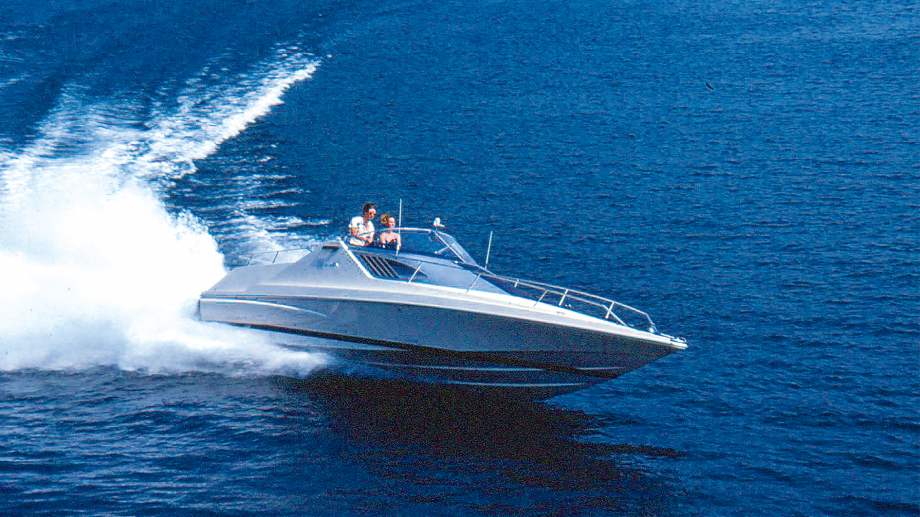
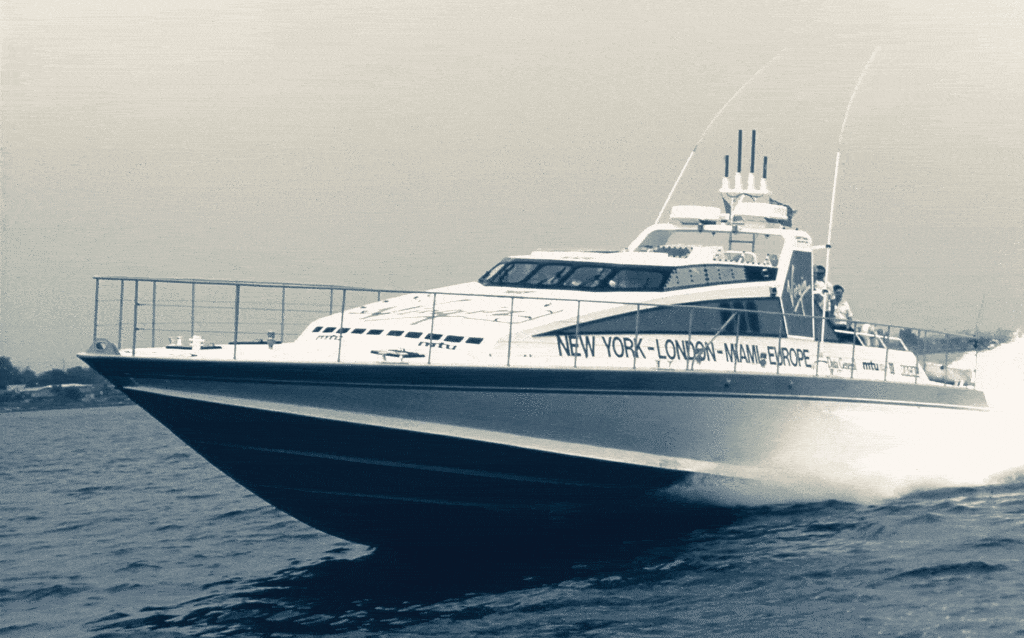
But the discreet “Sonny” never gets involved in disputes over who was first. His remarkable achievements speak for themselves. Though he may appear more elitist through his wealthy clientele, he remains disarmingly simple in all circumstances: “I am fortunate to meet people who are willing to take risks”. Despite his impeccable manners as a perfect gentleman, he is capable of turning his hand to almost anything – getting his hands dirty when needed, working with any material, overseeing construction, repairing machinery, and even navigating in the most demanding conditions. The boy who once dreamed, as a child, before the graceful vessels of the Arabian Sea achieves a defining moment of recognition in 1986. Richard Branson’s Virgin Atlantic Challenger II captures the legendary Blue Riband, setting a transatlantic record at an average speed of 35,69 knots in 3 days, 8 hours, and 31 minutes. “My great passion has been to solve problems”, he liked to say. In 1999, a 27-foot cabin cruiser from the Corsair series from Levi Designs makes a memorable appearance in the James Bond film The World Is Not Enough. It is hard to imagine a more fittingly British tribute to a man who, by then, was living peacefully on the Isle of Wight, where he passed away on November 12, 2016, at the age of 90.
Gérald Guétat
Key Milestones in the Career of Renato “Sonny” Levi
1926: Born in Karachi (Indian Empire)
1944-1948: Enlisted in the RAF (Great Britain)
1950-1959: Headed the design office of his father’s shipyard Afco in Bombay (India), designing fishing boats and patrol vessels for military navies (Great Britain, Italy, India…)
1956: Launch of the cabin cruiser Speranza Mia (11.75m) with 2 diesel engines of 60 hp and the first deep-V hull.
1960: Settled in Italy. Collaboration with Navaltecnica, founded in Anzio (Italy) by Attilio Petroni (commander in the military navy) and comrade-in-arms of Mario Levi, Renato “Sonny”‘s father.
1961: Launch of A’ Speranziella, a 36-foot cabin cruiser (11m), with two V8 Crusader engines of 300 hp. This design would see several iterations between 1962 and 1966.
1962: Creation of Ultima Dea (13.97m) with three Maserati engines of 430 hp, a variant of A’ Speranziella commissioned by Gianni Agnelli (FIAT).
1963: Victory of A’ Speranziella in the Cowes-Torquay offshore race, piloted by its designer.
1966: Launch at Delta shipyard (Italy) of Ultima Volta (11.20m) with two Fiat diesel engines of 850 hp.
1967: Launch of Surfury (11m), the very essence of the Levi deep-V hull. Victory in the Cowes-Torquay race.
1968: Launch of G50 (11.28m) at Delta shipyard with 4 BPM V8 engines of 450 hp for Gianni Agnelli. Speed: over 50 knots (over 92 km/h), hence its name.
1968: Launch of Hidalgo (11.20m), a Delta 38′ for Roberto Olivetti with two Cummins diesel engines of 370 hp.
1969: Launch of Bill Bull (10.30m), a Delta-type offshore hull for Count Agusta (helicopters) with two BPM Vulcano V8 engines of 400 hp.
1972: Presentation at the Genoa boat show (Italy) of the Dart 38 from Vega shipyard as well as the Sonny 18 with surface propeller (Levi Step Drive). Patent filed.
1972: Launch of Drago (13m) at Italcraft (Italy), the first production boat to exceed 50 knots (92.6 km/h).
1975: Launch of the Riva 2000 (11.25m), with three Riva V8 engines of 350 hp. Speed: 54 knots (100 km/h).
1976: World speed record for Archidiavolo at 67.964 knots (125.87 km/h), a Class 2 offshore hull with a BPM Vulcano V8 engine of 450 hp.
1986: Atlantic crossing record for Virgin Atlantic Challenger 72′ (22m) by Richard Branson at 35,69 knots (66,10 km/h) with two MTU diesel engines of 1000 hp.
1987: Awarded the title of “Royal Designer for Industry” by the British Crown.
2016: Passed away on the Isle of Wight (Great Britain).